The Bank of England's Megan Greene on Monetary Policy in a World of Supply Side Shocks | Odd Lots
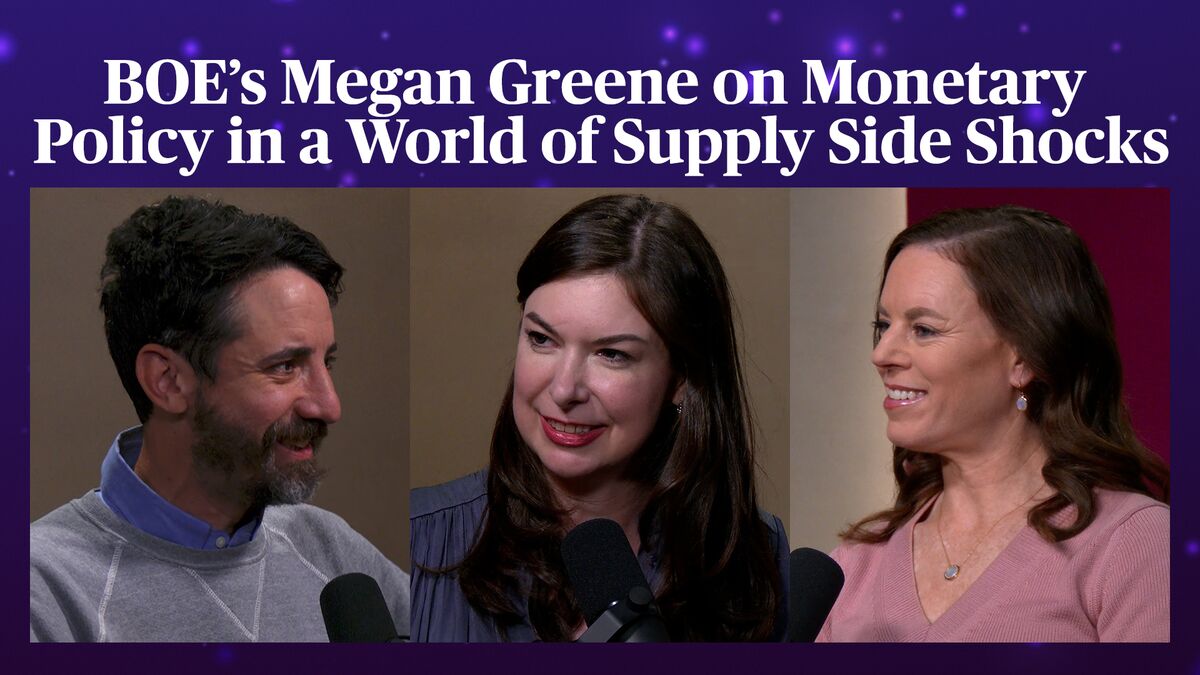
Ever since Covid, central banks around the world have had the same problem. They have tools that are designed to modulate demand, but so many challenges have involved the supply side of the economy. Whether we're talking about supply chain disruptions, the war in Ukraine, and now the war in Iran, these are all issues for which monetary policy is of limited value. Of course, the temptation is to "look through" these issues, recognizing the fact that these disruptions don't say much about the actual underlying state of the economy. On this episode we speak with Megan Greene, an external member of the Monetary Policy Committee at the Bank of England. We talk about the compounding effects of all these shocks (including the trade war), how she's thinking about the first- and second-order effects of each one, and why, for now, despite the underlying weakness of the UK economy, she remains squarely focused on the risks of higher inflation. (Source: Bloomberg)المصدر: Bloomberg | Source: Bloomberg
ملاحظة تحريرية | Editorial Note: نُشر هذا المقال في الأصل بواسطة Bloomberg. خبر (Khabr) هي منصة إعلامية أردنية مرخّصة تعمل بالذكاء الاصطناعي. نضيف قيمة تحريرية من خلال: تحليل ذكي للأخبار، ملخصات تلقائية، رواية صوتية بالذكاء الاصطناعي، ترجمة متعددة اللغات، وتدقيق الحقائق. هدفنا جعل الأخبار أكثر وضوحاً وسهولةً للقارئ العربي.
This article was originally published by Bloomberg. Khabr is a licensed Jordanian AI-powered news platform (Registration #82086). We add editorial value through: AI-powered news analysis, automated summaries, AI audio narration, multi-language translation (Arabic, English, French, Turkish), and AI fact-checking. Our mission is to make news more accessible and understandable for Arabic-speaking audiences worldwide.