The AI That Is Too Dangerous to Release: What It Means for Moroccan Businesses
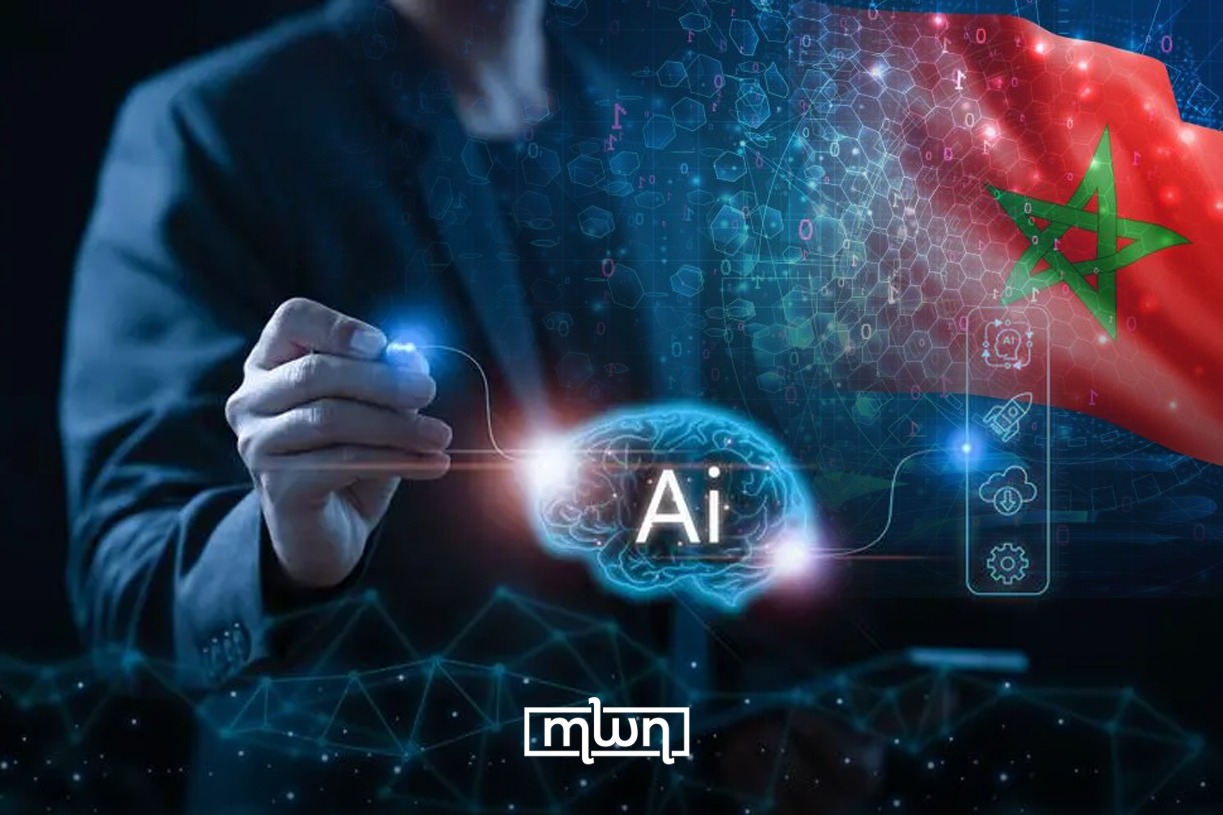
•A few days ago, Anthropic, one of the world’s leading artificial intelligence companies, did something unprecedented: it built what may be the most powerful AI model in history and then refused to rel...
•Not because it failed.
•Because it succeeded too well.
هذا الخبر من Morocco World News. خبر يقدم أدوات ذكاء اصطناعي للتلخيص والترجمة والاستماع.
المصدر: Morocco World News | Source: Morocco World NewsA few days ago, Anthropic, one of the world’s leading artificial intelligence companies, did something unprecedented: it built what may be the most powerful AI model in history and then refused to release it to the public.
Not because it failed. Because it succeeded too well.
The model is called Claude Mythos. And whether Moroccan business owners know it or not, what happens with this technology in the next 12 months will directly shape the competitive landscape of every sector in Morocco, from fintech in Casablanca to e-commerce in Marrakech.
What exactly is Claude Mythos?
Mythos is Anthropic’s latest AI model, currently withheld from public release under a controlled program called Project Glasswing. Only a handful of the world’s most powerful technology companies, including Amazon, Apple, Microsoft, Google, and Nvidia, have been granted access, and exclusively for defensive cybersecurity purposes.
The reason for this extraordinary restriction? The model’s offensive capabilities are simply too significant.
On Cybench, the standard public benchmark for AI cybersecurity challenges, Mythos achieved a 100% success rate, solving every single challenge. The benchmark is now considered too easy for the model. Anthropic has also reported that Mythos independently discovered thousands of critical vulnerabilities across major operating systems and web browsers, including vulnerabilities that had survived decades of human review and millions of automated security tests.
But cybersecurity is only one dimension of what this model can do.
On SWE-bench Verified, the gold-standard test for AI software engineering, Mythos scored 93.9%, compared to 80.8% for the previous Claude model and 57.7% for GPT- 5.4. On proof-based problems from the 2026 USA Mathematical Olympiad that appeared after the model’s training cutoff, Mythos scored 97.6%. The previous Claude model scored 42.3%. This is not an incremental upgrade. This is a different category of intelligence.
Why should a Moroccan business owner care?
Here is the honest answer: because the gap between companies that understand AI and companies that do not is about to widen dramatically.
Morocco is at a pivotal moment. The government’s Digital 2030 strategy targets 240,000 digital sector jobs, $10 billion in GDP contribution, and a top-50 global ranking in digital services. GITEX Africa 2026 just concluded its fourth edition in Marrakech, cementing the country’s position as the continent’s leading tech hub. The European Union and Morocco recently launched a formal digital dialogue focused on AI cooperation.
The infrastructure is being built. The policy is moving. The investment is arriving. But infrastructure without adoption is just concrete and cable.
The real question for Moroccan SMEs, the backbone of the national economy, is not whether AI is coming. It is whether they will be positioned to use it when it arrives, or whether they will watch foreign competitors leverage it first.
Three immediate implications for Moroccan businesses
- Cybersecurity is no longer optional.
If a model like Mythos can find thousands of previously undetected vulnerabilities in major global software, imagine what less powerful but publicly available AI tools can already do in the hands of malicious actors. Moroccan SMEs, particularly in e-commerce, financial services, and legal tech, must treat cybersecurity as a foundational business investment and not an afterthought. The threat landscape has fundamentally changed.
- The productivity gap will accelerate.
Mythos-class capabilities will eventually reach the market. When they do, a small team equipped with advanced AI will be capable of producing what previously required dozens of employees. Moroccan companies that have already integrated AI into their workflows, even using today’s tools, will adapt faster. Those starting from zero will face a steep and costly learning curve.
- Morocco has a narrow window of first-mover advantage.
Morocco is one of Africa’s most digitally progressive nations, with strong talent, improving infrastructure, and growing investor interest. But first-mover advantage is time-sensitive. The businesses and entrepreneurs who build AI literacy and implementation experience now, before Mythos-class models become widely available, will be the ones who define Morocco’s digital economy in 2030.
What Anthropic’s decision actually signals
It would be easy to read this story as a warning: a powerful AI, too dangerous for the public, locked away in a room with the world’s largest tech companies. But read more carefully and a different signal emerges.
Anthropic’s decision to withhold Mythos does not signal that AI is out of control, but rather that the field is maturing. For the first time, a leading AI laboratory chose restraint over competitive advantage, accepting the cost of delayed revenue in exchange for responsible deployment. That is a meaningful precedent. It also signals that the next generation of AI tools, when they do reach the market, will be more capable, more aligned, and more practically useful than anything available today. The question is not if your business will encounter these tools. It is whether you will be ready.
A word from the ground
As a professor of software development and AI at the City University of New York, and as someone who has spent years studying the intersection of artificial intelligence and the Moroccan entrepreneurial ecosystem, I have watched this moment approaching for some time.
The conversations I have with Moroccan entrepreneurs consistently reveal the same tension: curiosity, ambition, and early experimentation with AI tools, but a persistent lack of structured frameworks for implementation and frequent overwhelm at the speed of change in the field.
Claude Mythos is a signal, not a solution. The solution is building the capacity, human, organizational, and technical, to absorb and apply what is coming.
Morocco has the talent. It has the momentum. What it needs now is the strategy.
The post The AI That Is Too Dangerous to Release: What It Means for Moroccan Businesses appeared first on Morocco World News.
ملاحظة تحريرية | Editorial Note: نُشر هذا المقال في الأصل بواسطة Morocco World News. خبر (Khabr) هي منصة إعلامية أردنية مرخّصة تعمل بالذكاء الاصطناعي. نضيف قيمة تحريرية من خلال: تحليل ذكي للأخبار، ملخصات تلقائية، رواية صوتية بالذكاء الاصطناعي، ترجمة متعددة اللغات، وتدقيق الحقائق. هدفنا جعل الأخبار أكثر وضوحاً وسهولةً للقارئ العربي.
This article was originally published by Morocco World News. Khabr is a licensed Jordanian AI-powered news platform (Registration #82086). We add editorial value through: AI-powered news analysis, automated summaries, AI audio narration, multi-language translation (Arabic, English, French, Turkish), and AI fact-checking. Our mission is to make news more accessible and understandable for Arabic-speaking audiences worldwide.