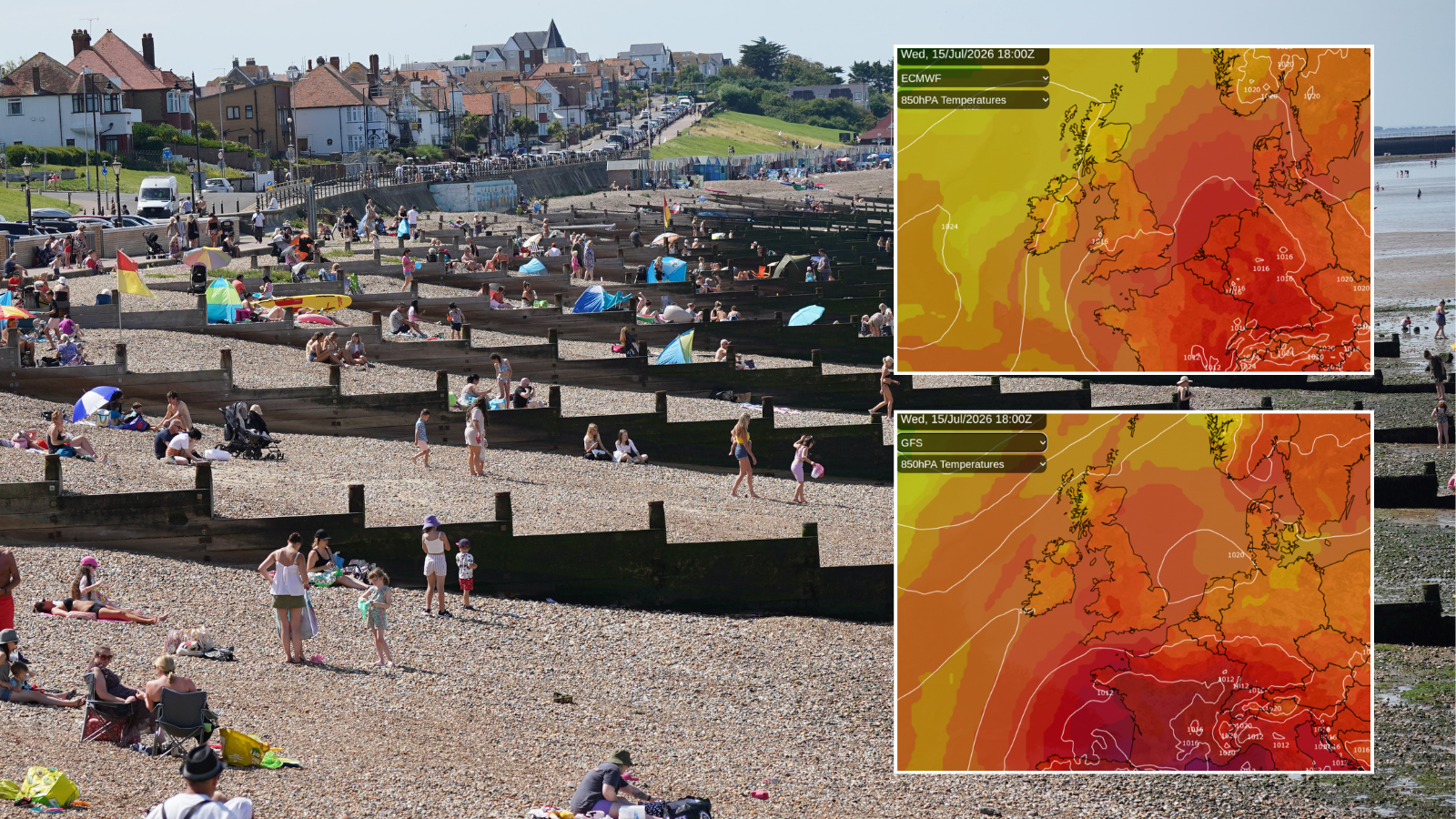
Temperatures climb as Britain set for sun-soaked weekend before July heatwave
•Temperatures are set to climb as Britain gears up for a sun-soaked weekend before another heatwave.Following England's hottest June on record, warmer climes are making a comeback this weekend, with te...
•TRENDING Stories Videos Your Say Wimbledon spectators are advised to steer clear of the more sweltering temperatures in the middle of the day and stay hydrated and sheltered where they can.But th...
•Back in June, temperatures reached 37.7C in Norfolk on June 26, the hottest June day on record.Temperatures are expected to hit around 32C on Monday as Britons are gearing up for another round of blaz...
هذا الخبر من GB News. خبر يقدم أدوات ذكاء اصطناعي للتلخيص والترجمة والاستماع.
المصدر: GB News | Source: GB NewsTemperatures are set to climb as Britain gears up for a sun-soaked weekend before another heatwave.
Following England's hottest June on record, warmer climes are making a comeback this weekend, with temperatures rising into the low 30s next week.
However, the next heatwave, projected to be around 12-days long, is set to be far more manageable than the temperatures the UK experienced last month.
This weekend, temperatures could sizzle on the outskirts of London, with highs of 30C expected over the next couple of days.
TRENDINGStoriesVideosYour SayWimbledon spectators are advised to steer clear of the more sweltering temperatures in the middle of the day and stay hydrated and sheltered where they can.
But the warming temperatures will not reach the same extent of heat and humidity which Britons endured back in June.
Back in June, temperatures reached 37.7C in Norfolk on June 26, the hottest June day on record.
Temperatures are expected to hit around 32C on Monday as Britons are gearing up for another round of blazing sunshine.
However, in the coming days, higher pressure is stationed further west, so that westerly winds will keep temperatures cooler than June, while lower humidity levels will also be experienced.
Such breeze is helpful to reduce humidity, which was the source of many people's disgruntlement during the June heatwave, characterised by scorching days and tropical nights.
To reach what is described as an official heatwave, there must be three days in a row with temperatures surpassing the regional threshold, which is 28C in the capital.
Further north, Manchester will keep lower temperatures, around 22 and 24C, while Glasgow will only see highs of around 21C.
LATEST WEATHER NEWS:
- Britain braces for another spell of hot weather as five regions hit by heat health alerts
- June was hottest ever on record for England, Met Office confirms
- Fresh heatwave brewing after period of cool as Britain to bask in glorious 30C
On Saturday, Britons will be able to enjoy a more blustery day thanks to a flow coming off the edge of the Atlantic.
Britons are advised to keep out of direct sunlight in the middle of the day to reduce the impact of UV, which is particularly strong at this time.
In northern England, western Scotland and Northern Ireland, Saturday could even call in some cloud and a drizzle of rain here and there.
On Sunday, Scotland will reap the benefits of the blustery breeze while the Midlands, East Anglia and south east England enjoying some classic summer weather.
The Atlantic could usher in a bit of rain in the early hours of Sunday.
The persistent hot weather has raised questions over the future of British summertime, with higher temperatures with ancient infrastructure.
As a result, the Met Office whipped up a "2056 scenario" to see how a heatwave, similar to that of 1976, would play out in a few decades.
In England, temperatures could hit as high as 45C, while Scotland only reaches 30C. Wales would reach around 38C.
Additionally, the research found that a similar heatwave could last up to two weeks.
Professor Stephen Belcher, at the Met Office, said: "Weather is the national conversation in the UK and the summer of 1976 lives on in many memories.
"Since then, our climate has fundamentally changed, with average UK summers having warmed by around 1.4C. Crucially extremes have changed too.
"It is a stark realisation to see the maximum temperatures reach 45C."
Our Standards: The GB News Editorial Charter


ملاحظة تحريرية | Editorial Note: نُشر هذا المقال في الأصل بواسطة GB News. خبر (Khabr) هي منصة إعلامية أردنية مرخّصة تعمل بالذكاء الاصطناعي. نضيف قيمة تحريرية من خلال: تحليل ذكي للأخبار، ملخصات تلقائية، رواية صوتية بالذكاء الاصطناعي، ترجمة متعددة اللغات، وتدقيق الحقائق. هدفنا جعل الأخبار أكثر وضوحاً وسهولةً للقارئ العربي.
This article was originally published by GB News. Khabr is a licensed Jordanian AI-powered news platform (Registration #82086). We add editorial value through: AI-powered news analysis, automated summaries, AI audio narration, multi-language translation (Arabic, English, French, Turkish), and AI fact-checking. Our mission is to make news more accessible and understandable for Arabic-speaking audiences worldwide.