Tech interventions in mental health are effective, but caution is key: Dr Thara, co-founder, SCARF
•Weather ePaper Today’s Paper Journalism of Courage Home ePaper Politics Explained Opinion India Business Premium Cities UPSC Entertainment Sports World Lifestyle Tech Subscribe Sign In TrendingUPSC Of...
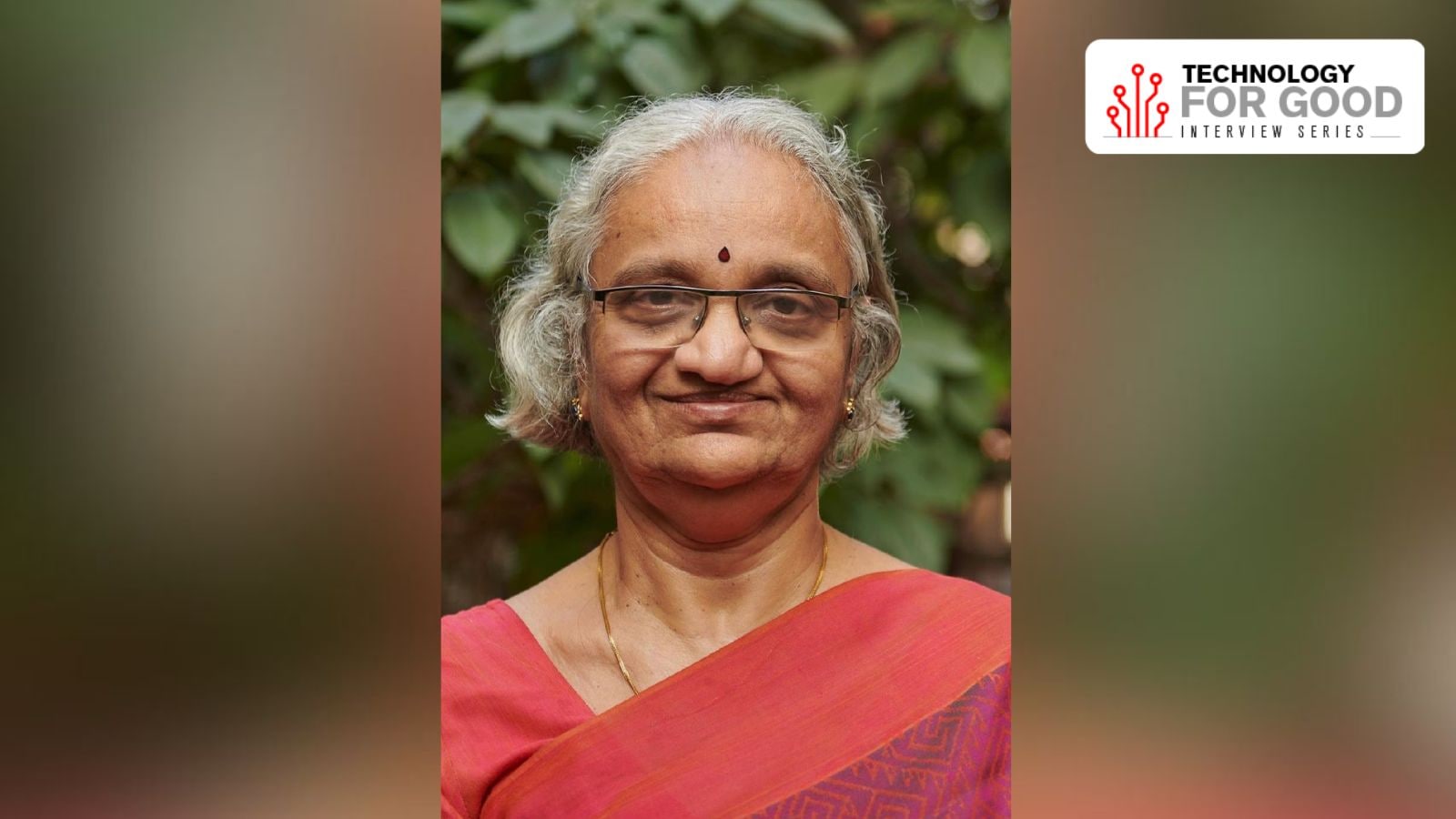
•Written by: Venkatesh Kannaiah14 min readApr 18, 2026 07:30 AM IST Dr Thara brings over four decades of experience spanning clinical care, research, community outreach, and policy engagement.
•(Express photo) Make us preferred source on Google Whatsapp twitter Facebook Reddit PRINT Dr Thara is the co-founder of the Schizophrenia Research Foundation (SCARF), a Chennai-based non-profit and an...
هذا الخبر من Indian Express. خبر يقدم أدوات ذكاء اصطناعي للتلخيص والترجمة والاستماع.
Weather ePaper Today’s Paper Journalism of Courage Home ePaper Politics Explained Opinion India Business Premium Cities UPSC Entertainment Sports World Lifestyle Tech Subscribe Sign In TrendingUPSC OfferIPL 2026US NewsPuzzles & GamesLegal NewsFresh TakeHealthResearch🎙️ Podcast Advertisement function checkAndLoadWindowSizeScript() { if (window.jQuery) { // jQuery is loaded, include your script jQuery(document).ready(function($) { // Your existing script for checking window width if (window.innerWidth) var page_w = window.innerWidth; else if (document.all) var page_w = document.body.clientWidth; if (page_w > 1024) { $(".add-left, .add-right").show(); } else { $(".add-left, .add-right").hide(); } }); } else { // jQuery is not loaded, check again after 0.2 seconds setTimeout(checkAndLoadWindowSizeScript, 200); } } // Initial call to the function checkAndLoadWindowSizeScript(); NewsTechnologyTech interventions in mental health are effective, but caution is key: Dr Thara, co-founder, SCARF Tech interventions in mental health are effective, but caution is key: Dr Thara, co-founder, SCARF Dr Thara has made significant contributions to strengthening mental health services in India, particularly in low-resource settings. Written by: Venkatesh Kannaiah14 min readApr 18, 2026 07:30 AM IST Dr Thara brings over four decades of experience spanning clinical care, research, community outreach, and policy engagement. (Express photo) Make us preferred source on Google Whatsapp twitter Facebook Reddit PRINT Dr Thara is the co-founder of the Schizophrenia Research Foundation (SCARF), a Chennai-based non-profit and an internationally recognised centre for mental health care, research, and training. A leading figure in mental health care in India, she brings over four decades of experience spanning clinical care, research, community outreach, and policy engagement. Dr Thara has made significant contributions to strengthening mental health services in India, particularly in low-resource settings. A pioneer in building mobile telepsychiatry services in rural Tamil Nadu, she has led the Madras Longitudinal Study, one of the longest-running follow-up studies on Schizophrenia globally. She completed her medical degree at Kilpauk Medical College, Chennai, followed by a postgraduate degree in Psychiatry from Madras Medical College and a PhD from the Madras University on disability in schizophrenia. She was conferred the Honorary Fellowship of the Royal College of Psychiatrists, UK and was awarded FRCP by the Royal College of Physicians, Edinburgh. Dr Thara spoke to indianexpress.com on SCARF’s work, the tech innovations in the mental health space, the challenges of social media addiction, and how AI is changing the mental health sector. Edited excerpts: Venkatesh Kannaiah: Tell us about the history of SCARF. Dr Thara: SCARF is a non-profit started by the late Dr Sarada Menon, a Padma Bhushan awardee and the first woman psychiatrist in the country. I was associated with her from the very beginning as a co-founder. We started with the objective of providing care and rehabilitation. Dr Menon, who had earlier been the director of the Institute of Mental Health (then called the Kilpauk Mental Hospital) for about 19 years, felt that there was not enough focus on rehabilitation. People did not really understand its importance in mental health. I was also keen that we should engage in research, because many aspects of mental health remain unanswered. So together, we started SCARF. Over time, it has grown, and now we have more than 200 staff members. It is a highly multidisciplinary team, including psychiatrists, psychologists, social workers, occupational therapists, nurses, administrators, accounts personnel, and others. When we started SCARF, we realised that public awareness about mental health was very low, especially in the 1980s and early 1990s. For instance, people didn’t know what schizophrenia was; they would say they couldn’t even pronounce it or understand it. Awareness is much better today. Venkatesh Kannaiah: Can you give a broad overview of your work at SCARF? Dr Thara: Our activities, when it comes to care delivery, span multiple settings. We have a very busy outpatient department where we treat not only schizophrenia and psychosis but also conditions like depression, anxiety, and marital issues. We also run a daycare programme which focuses on rehabilitation. In addition, we have several community programmes through which we provide care. We also offer home-based care for patients. Rehabilitation is mainstreamed into all our care programmes. On the research front, we are the only collaborating centre of the World Health Organization for mental health research and training in India. This is a significant recognition for a non-profit. It does not mean WHO funds us, but it gives us visibility and allows us to be involved in many of their programmes. We also run inpatient facilities. We have had three centres — one for men, one for women, and one for acutely ill patients who do not require long-term care. We also have a state-of-the-art dementia inpatient centre just outside Chennai. This makes us one of the larger facilities, even compared to many private medical colleges and some government centres. Venkatesh Kannaiah: What about your research focus? Dr Thara: In terms of research collaborations, we work with several leading global institutions, including the WHO, King’s College London, Johns Hopkins University in the US, and the University of Queensland, among others. Earlier, we had to establish ourselves as a credible research organisation; now, institutions approach us for collaboration. Our research is largely social, clinical, and community-based. We do not focus heavily on biological or lab-based research due to limitations in trained personnel and funding, although we do engage in it to a limited extent. We ensure that our research findings are integrated back into our service delivery programmes, rather than remaining standalone efforts. We also offer research fellowships and training. Venkatesh Kannaiah: Tell us about your early tech interventions in the field of mental health. Dr Thara: We were among the earliest mental health nonprofits to adopt technology aids, starting with telemedicine. Soon after the 2004 tsunami, the Tamil Nadu Government asked us to provide counselling for people in distress — those who had lost family members, property, and livelihoods. That is when we began telepsychiatry counselling. We were based in Chennai and connected with people in need of mental health support in Nagapattinam and Cuddalore. That was our first major technology-enabled intervention. This work continued, and we later pioneered mobile telepsychiatry in Pudukkottai. By this, I mean we had a bus fitted with telemedicine equipment. The bus travelled from one village to another, while community-level workers identified people with mental illnesses and brought them to the bus. The doctor would be in Chennai, connected remotely, and consultations would happen in real time. The bus also had a pharmacy, so medication could be dispensed immediately, while counselling was provided by local social and community workers. This was a real innovation. Even our international collaborators were very impressed — they said they had not seen anything like it. I had suggested to the Government of India that this model could be useful in regions with difficult terrain, such as the Northeast. It has since been replicated in a few other states. Today, telepsychiatry has evolved into teleconsultations. We no longer operate the mobile unit, but in our outpatient department, most consultants now offer teleconsultations at least once a week. This is especially useful for people who are elderly or unable to travel. For instance, in our dementia clinic, which is part of our larger elderly care programme, many patients face mobility challenges. Teleconsultations have been very effective for them. So, telemedicine is now fully mainstreamed into our work. That was our first major experience with technology. Venkatesh Kannaiah: Tell us about your experiments with VR. Dr Thara: More recently, we have started using virtual reality (VR). As you know, VR involves creating real-life scenarios and asking patients to respond to them. We are currently using it mainly for the rehabilitation of patients with chronic severe mental illness. For example, we create a scenario where a person has to leave their house and remember to collect six or seven essential items like a wallet, keys, and other belongings, and put them into a bag before leaving. While this may seem simple, it is a significant challenge for them. Similarly, we have scenarios such as navigating a shopping mall, where patients must identify and purchase specific items and complete the process, including billing. These are everyday tasks they could perform before the onset of illness, but now struggle with due to cognitive difficulties. We have developed these VR modules with the help of a tech partner, and we are using them for both dementia and schizophrenia. While VR is well established globally for dementia and for conditions like anxiety (for example, in exposure therapy and desensitisation), its use in schizophrenia, particularly for cognitive rehabilitation, is still evolving. In schizophrenia, the focus is not on paranoia but on cognitive functions such as attention, concentration, and memory, which are often impaired. VR helps patients practise and improve these functions. For patients with paranoia, VR is not used during acute phases. However, when symptoms subside, it can help improve overall functioning, allowing patients to manage daily life better so that paranoid thoughts do not dominate their behaviour. We are still in the experimental phase with VR. We are conducting feasibility studies and collecting data to evaluate its effectiveness. While patients enjoy the experience and find it engaging, we still need to assess how much it translates into real-world functional improvement. We have also developed mobile applications for students in schools and colleges as standardised screening tools for depression, anxiety, stress, and early psychosis. Based on their scores, the app provides guidance on next steps, such as speaking to a friend, a peer counsellor, or a doctor. We are also part of a large international study called INTREPID, and in India, our work is based in rural Kerala and Tamil Nadu. We identify individuals with mental illness, provide treatment, collect detailed data, and follow them over several years. We are now in the sixth year of follow-up. One important sub-study within INTREPID is the Ecological Momentary Assessment (EMA), where patients are given a phone with an app that prompts them several times a day to record their emotional state. This allows us to capture real-time emotional changes — when a person feels sad, anxious, or irritable — and relate them to specific events, such as interactions with family, missed meals, or other stressors. Typically, patients respond about six times a day, allowing us to map an emotional profile over time. EMA is a powerful tool for understanding the relationship between daily experiences and emotional responses. It has also been used in other areas of healthcare. Venkatesh Kannaiah: Tell us if there are India-specific mental health scenarios that tech tools fail to capture. Dr Thara: There are a few things we need to be aware of in the Indian context. And this is true of many low- and middle-income countries as well. For example, if you take distress or depression, in India, especially among women, it is often expressed through culturally embedded idioms, typically as somatic symptoms. It could be a headache, stomach pain, body pain, or general weakness. From experience, we know these often do not have a clear physical basis but are ways in which depression manifests. We call this somatisation. No AI or app can easily pick this up. That is something we have to be very careful about. It requires a trained clinician, because these patterns do not usually feature in the algorithms of most AI tools. The second issue is the immense linguistic and social diversity in India. Social norms, for instance, play a big role. In some rural settings, a woman may not make eye contact with a man who enters the house — that is a social norm. But in an urban context, the same behaviour might be interpreted as introversion or even a psychiatric issue. So, it is important to understand the person’s social context. Whether AI can fully understand such nuances is still uncertain. Another important factor is the role of family. I mentioned this earlier. Many of these tools are highly person-centric and do not take family dynamics into account. But in mental health, especially in India, the family plays a critical role. How AI will incorporate this, I am not sure, but it is something we need to think about. Then there is stigma. Distress is often communicated indirectly because of stigma. It may show up as withdrawal, silence, or changes in behaviour. Sometimes, even family-level behaviours reflect stigma. These are all social contexts that clinicians learn to recognise. While AI tools are useful, they are still incomplete. They are, in many ways, contextually underprepared for our society, given the cultural, social, and familial complexities I mentioned. Venkatesh Kannaiah: Tell us about the rise of self-help chatbots. Dr Thara: These self-help chatbots and apps are quite widespread. We are seeing increasing use of these tools, especially among young people. In fact, very recently, the Indian Psychiatric Society issued a circular about one such chatbot that had prompted a user and told them how to commit suicide. There are also platforms that students use during exam periods to vent out their worries and get some help. However, what we keep telling young people is this: apps can be useful for mild or minor problems. But once the issue becomes more serious, it is important to consult a mental health professional; you cannot rely only on an app. Apps can provide support, but they cannot clinically manage a condition. That is where one must draw the line. Venkatesh Kannaiah: On the growing social media addiction. Dr Thara: Honestly, it is one of the toughest conditions to manage. This is not just an issue among children, but also among homemakers. Many of them feel bored during the day, and once the family leaves, they tend to get hooked on social media. It is not that office workers are exempt. There have been some studies identifying key indicators of problematic use. One is the sheer number of times a person checks their phone. Another is whether they carry the phone everywhere, even into the bathroom. Also, waking up in the middle of the night to check the phone is a strong indicator. These are clear signs of increasing dependence on mobile devices. Venkatesh Kannaiah: What could get bad and what could get better with AI? Dr Thara: What could improve is the kind of emotional support people can get from AI. But there are limitations. One advantage is availability. AI is accessible all the time, whereas you cannot reach a mental health professional whenever you want. Secondly, AI is inexpensive. There is often little or no cost involved, which is especially important for young people, since professional care typically involves paying per session. So, for short-term emotional support or basic counselling, AI can be helpful. But it cannot serve as a long-term solution. Long-term care requires deeper evaluation, and AI does not really evaluate a person in that way. Another area where AI is useful is for professionals. It can reduce the time spent on documentation and basic screening as these tasks can be automated. That allows clinicians to focus more on therapy and direct patient care. However, it becomes problematic when there is overdependence or excessive reliance. For example, instead of seeking real-world help, people may turn only to apps, even in cases of severe depression. In cases involving suicidal thoughts, AI simply cannot help. Another concern is that it increases overall screen time. Since AI tools are accessed through devices, they add to the time people spend on gadgets. And as gadget use increases, human interaction tends to decrease. Just as there are good and bad counsellors, there are good and bad digital tools. There are responsible platforms and poorly designed ones. At present, there is very little regulation in this space. Apps can offer misleading or ineffective support, yet still be widely available.المصدر: Indian Express | Source: Indian Express
ملاحظة تحريرية | Editorial Note: نُشر هذا المقال في الأصل بواسطة Indian Express. خبر (Khabr) هي منصة إعلامية أردنية مرخّصة تعمل بالذكاء الاصطناعي. نضيف قيمة تحريرية من خلال: تحليل ذكي للأخبار، ملخصات تلقائية، رواية صوتية بالذكاء الاصطناعي، ترجمة متعددة اللغات، وتدقيق الحقائق. هدفنا جعل الأخبار أكثر وضوحاً وسهولةً للقارئ العربي.
This article was originally published by Indian Express. Khabr is a licensed Jordanian AI-powered news platform (Registration #82086). We add editorial value through: AI-powered news analysis, automated summaries, AI audio narration, multi-language translation (Arabic, English, French, Turkish), and AI fact-checking. Our mission is to make news more accessible and understandable for Arabic-speaking audiences worldwide.