Tasmanian government apologises over stolen body parts scandal
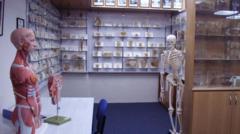
Tasmanian government apologises over stolen body parts scandal25 minutes agoShareSaveAdd as preferred on GoogleLana LamSydneyUniversity of TasmaniaSpecimens at a University of Tasmania museum were stolen from bodies and some displayed without permissionThe Tasmanian government has apologised for a decades-old scandal in which body parts taken from autopsies were secretly kept - and in some cases put on display - without the consent of families.The wrongdoing was uncovered last year after an investigation found that between 1966 and 1991 pathologists may have "actively sourced" 177 human specimens collected during autopsies before handing them to a university museum.The samples were given to the museum without approval of family members or the coroners who were responsible for the bodies.On Tuesday, several family members were in parliament as the state's health minister apologised for the "enduring distress, anger, pain, grief and trauma"."Although these historical practices ended 35 years ago, the deep impact this has had on the families and loved ones of the deceased continues to this day," Bridget Archer told parliament."It's important to remember that these were not just body parts or specimens or human remains. They were people."For Cheryl Springfield, the apology was a welcome development but more was needed."It's in the right direction, but it's not going to fix it all," she told local media before the apology.Her brother David Maher died in 1976, aged 14, in a car accident and when she found out that his body parts were part of the investigation, she was devastated."It's been absolutely a nightmare from that moment we were told."That disbelief has also been felt by John Santi, who was 13 in 1976 when his older brother Tony died, aged 19, in a motorcycle accident."We buried him 50 years ago, only to find out 50 years later that these people had stolen his brain," Sa...المصدر: BBC News | Source: BBC News
ملاحظة تحريرية | Editorial Note: نُشر هذا المقال في الأصل بواسطة BBC News. خبر (Khabr) هي منصة إعلامية أردنية مرخّصة تعمل بالذكاء الاصطناعي. نضيف قيمة تحريرية من خلال: تحليل ذكي للأخبار، ملخصات تلقائية، رواية صوتية بالذكاء الاصطناعي، ترجمة متعددة اللغات، وتدقيق الحقائق. هدفنا جعل الأخبار أكثر وضوحاً وسهولةً للقارئ العربي.
This article was originally published by BBC News. Khabr is a licensed Jordanian AI-powered news platform (Registration #82086). We add editorial value through: AI-powered news analysis, automated summaries, AI audio narration, multi-language translation (Arabic, English, French, Turkish), and AI fact-checking. Our mission is to make news more accessible and understandable for Arabic-speaking audiences worldwide.