SURGERY is also called an operation, and the place where it is performed is called an operating theatre. All types of surgery must be considered serious.
A common measure of how serious it could be is whether it will be performed under local or general anaesthesia. The former entails a procedure that does not require long-term hospital recovery, whereas the latter necessitates it because of the more invasive nature of the surgery and the recovery from general anaesthesia.
These terms seep into political and administrative systems, depending on the health of the polity. The more its health deteriorates, the more you hear of operations like Clean-up. Surgical strikes are usually preceded by strafing to soften the target, for an anaesthetic effect, if you like. The surgery being referred to is the proposed 28th constitutional amendment, which has been in the making for a long time.
Its extremely invasive nature required that the patient not only be numbed into a comatose state but also be made to suffer so much before the surgery that they would be thankful just to be alive, even if a wrong organ is amputated during the operation.
Let us assume that the amendment is passed. How are citizens supposed to react? The surgery does not affect all the limbs of our body politic equally. Punjab may not mind, thinking it has lost only a gallbladder, whereas Sindh may feel like a quadriplegic post-procedure. Balochistan and KP may see it as a near-death experience.
A more nuanced question is: who is Punjab? Is it the PML-N vote bank or the waseb nationalists? What do we mean by ‘how would Sindh react?’ Is it the PPP constituent, MQM, or Sindhi nationalists? What about the Pakhtuns, whose largest concentration is in Karachi?
How will citizens react to the amendment?
Could rural and urban Sindh be considered a monolith? Of course not. While the PPP has enjoyed a majority in the Sindh Assembly for close to two decades, it has had to contend with the sizeable presence of the MQM, either as a coalition partner or in opposition; hence, its culpability for the urban disaster the province is experiencing could be somewhat diluted. Rural Sindh is a different story; there, the PPP has been the undisputed king, not just surveying but supervising the governance meltdown.
How is the populace in Sindh supposed to respond to the centre grabbing back portfolios like education and health, restricting Sindh’s share in the NFC award, constructing new canals on the upstream Indus, and creating new provinces bypassing the provincial legislature?
Let us take the last-mentioned first. The prospect of Sukkur and Mirpurkhas divisions becoming provinces may have supporters and naysayers in equal measure, but what about Karachi? The proverbial ‘golden sparrow’ going under direct federal control?
This will be fought tooth and nail by the PPP and its strong base in rural Sindh, while Karachi’s business community and a large chunk of the population, sick of poor governance and a lack of civic amenities, may welcome it in the hope of better days.
Same for Gwadar in Balochistan; when it was a backwater fishing town, it was left to the whims of tribal chieftains running the province from Quetta. Now that the Makran coast has come under the Belt and Road arch, oligarchs sitting even farther than Quetta are eyeing its riches. This will be a godsend for the nationalists.
Balochistan warrants an entire series of articles. Let us return to Mehran and make things a bit more intractable. So what would be the PPP’s mantra for opposing and resisting all of this? The same old ‘no compromise on the 1991 Water Apportionment Accord’ will not resonate, not with smallholders like me, who far outnumber the large landowners throughout Sindh and Pakistan.
As tail-enders in the canal system, we grew up listening to our elders lament the lack of irrigation water. We now thirst for drinking water. Once its share under the Irsa accord enters Sindh, it is the provincial government’s responsibility to apportion it in keeping with established canal command area rights.
Sindh may be getting its share of water from the federation, but we, the Sindhi small-holders, are left not to the ‘mercy’ of the corrupt irrigation officials and their political masters, but to their brutality.
The majority of Karachi’s population, fighting for breath under the stranglehold of K-Electric, the Water & Sanitation Board, the Building Control Authority et al., should be thankful to have been taken to the amendment ER.
Alas! They would wake up to the reality that it was the lead surgeon who injected the water hydrant mafia, the security dome and the ethno-sectarian divide, causing mutation and calling for the surgical strike.
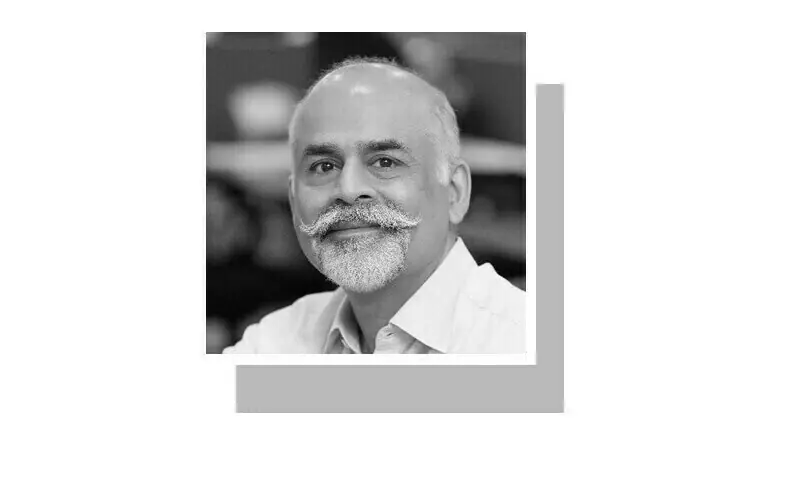
The writer is a poet. His latest publication is a collection of satire essays titled Rindana.
Published in Dawn, May 31st, 2026