⚡ عاجل: كريستيانو رونالدو يُتوّج كأفضل لاعب كرة قدم في العالم●⚡ أخبار عاجلة تتابعونها لحظة بلحظة على خبر●⚡ تابعوا آخر المستجدات والأحداث من حول العالم●
AI اقتراحات ذكية
AI مباشر|--مشاهد مباشر
1,076,102مقال401مصدر نشط228قناة مباشرة3,985خبر اليوم
آخر تحديث:منذ ثانيتين
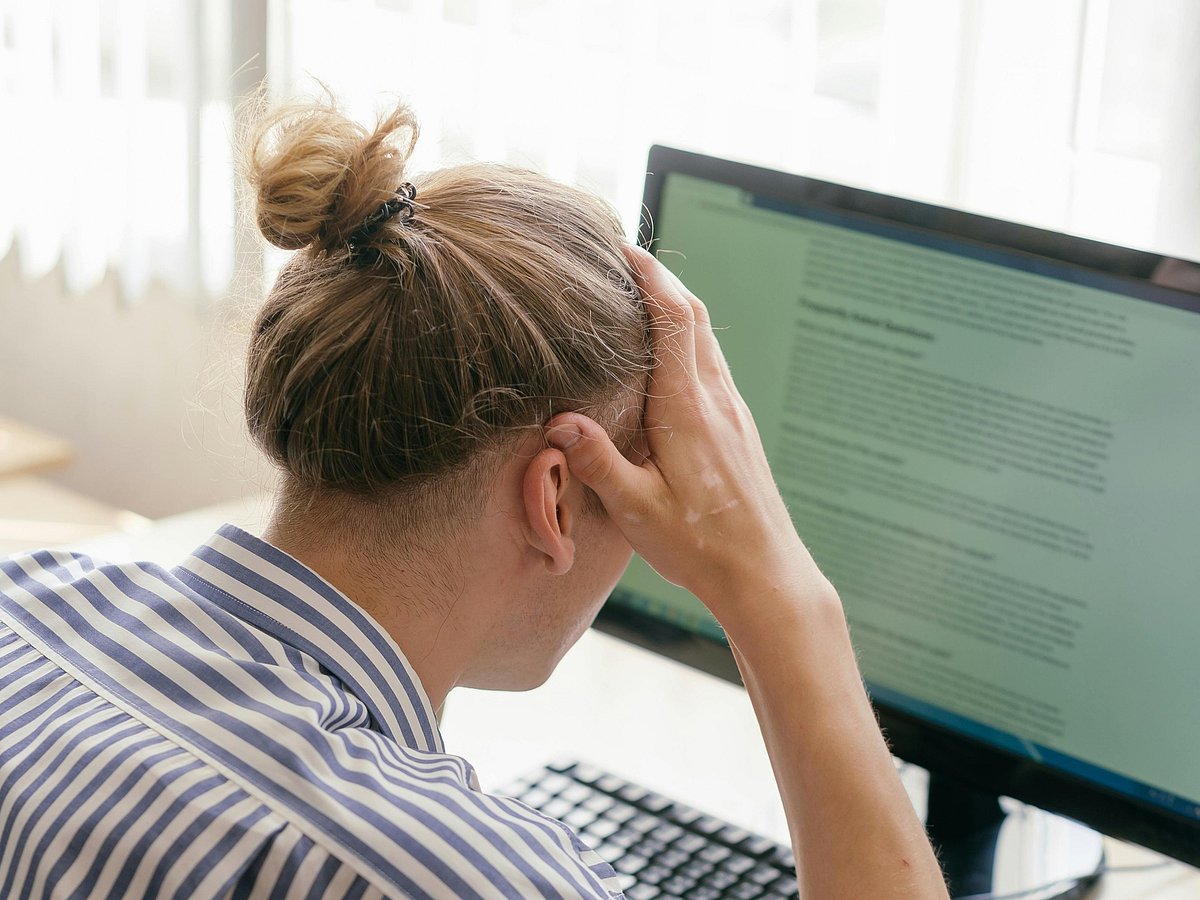
Stress in challenging times: Why fidgeting increases and posture suffers—UAE experts explain how to fix it
•She was fidgeting so furiously with her pen that it somehow flew out of her hand, into her colleague’s face.
•It happens, more often than she can count.
•Maybe not flinging a pen into her colleague’s desk, but fingernail biting and the occasional flying of stationery.
هذا الخبر من Gulf News. خبر يقدم أدوات ذكاء اصطناعي للتلخيص والترجمة والاستماع.
She was fidgeting so furiously with her pen that it somehow flew out of her hand, into her colleague’s face. It happens, more often than she can count. Maybe not flinging a pen into her colleague’s desk, but fingernail biting and the occasional flying of stationery.
Dubai-based Aditi doesn’t hold back from admitting that stress seeps into her habits, sometimes, without her realising it. “I was always a nail-biter, for one. I thought that I stopped, but in the past month, I just started doing it again," she says.
And even when there’s no immediate danger, the anticipation of probable threats, keeps the anxiety elevated, which manifests physically as fidgeting, and that includes tapping fingers, shaking legs and pacing.
For her, it’s nail-biting and fidgeting with stationery. For others, it might be desperate hair-pulling, foot tapping or even scribbling on the nearest piece of paper. There might not be immediate danger or a stressful reason nearby either, quite often, but fingers and toes tend to have a mind of their own.
Many default to endless scrolling, the phone becoming a fidget in itself.
And in times like these, these habits can worsen, further. The body often speaks first, and under stress, it rarely stays still.
Stress moves before it speaks
Amid prolonged uncertainty and geopolitical tension, the mind often translates stress into restlessness and fidgeting.
It comes down to the brain, as Dr Diana Maatouk, clinical psychologist at the Hummingbird Clinic explains. “When situations are uncontrollable, the brain stays in a state of alert, for a long period of time. This is tied to the body’s stress response system, which is often associated with the fight-or-flight mechanism.”
And even when there’s no immediate danger, the anticipation of probable threats, keeps the anxiety elevated, which manifests physically as fidgeting, and that includes tapping fingers, shaking legs and pacing.
Anxiety, redirected
It's the burden of excessive energy. The stress hormones, such as cortisol and adrenaline increase during these times. If there’s no direct action to ‘resolve’ the threat, the energy has nowhere to go. “Fidgeting becomes a kind of low-level physical outlet to release that tension,” she explains.
Furthermore, people get caught in the cycle of thinking, ‘what if’. The mind does mental gymnastics, which is closely linked to physical restlessness. The body mirrors the mind, and thoughts unravel. The movement becomes more erratic or frequent.
As a result, people find these repetitive motions calming. It’s a form of sensory feedback, and a form of control. Gradually, fidgeting, becomes a coping mechanism. When the brain starts to associate this fidgeting with relief, the habit is cemented, even when anxiety levels fluctuate.
Hardwiring the habit
A prevaricating sense of uncertainty keeps the anxiety heightened over time.
Dr. Olivia Pounds, Clinical Psychologist at The Hummingbird Clinic breaks down what is happening in the brain: During such prolonged stress, the brain changes and adapts in numerous ways. When the brain perceives a threat, the amygdala is activated and engages a wider stress-response network. Signals are sent, that increase alertness. If we can’t run or flight, this arousal manifests in behaviours such as nail biting or fidgeting as a way of regulation. “Over time, because these behaviours can reduce discomfort in the moment, they become reinforced. The basal ganglia then turns this into a habit over time becoming an automatic reaction to stress,” she says.
Moreover, the brain typically favours stronger, well-established pathways over weaker ones. “Over time, as the habit is reinforced by repeated stress, the association between stress and the behaviour strengthens, making it more difficult to break.
Additionally, in stressful situations, the prefrontal cortex is less active, resulting in reduced conscious control over automatic behaviours,” she explains. This makes it more difficult to override the habit, especially as it has already been encoded as a learned, efficient response.
The hidden toll on young minds
An Abu Dhabi-based mother who doesn’t wish to be named, had a bit of a difficult time initially, to ensure that her child focused on his studies at home during the period of distance learning. The seven-year-old would start pacing up and down, every chance he got, and once even took to scribbling on the walls out of boredom. “He didn’t like being home at all. He wanted to be with his friends and play football, and even thought that we were being unreasonable “
It was quite a challenge at first, as she too, had to manage her own office work from home. “He started scribbling for my attention, as if almost defiant, waiting for me to send him to school. But after my conversations, outings in the parks, he finally understood and calmed down. He got to play his friends and I had to keep reiterating to him, that he just needed to wait for a while.”
Sara Amhaz, a clinical psychologist based at LightHouse Arabia, Dubai, breaks it down further, agreeing that children and adolescents are often more vulnerable during these periods. It may not be because they experience more stress than adults, but, because they process it differently. “Unlike adults, they may not yet have the language or emotional awareness to fully articulate what they are feeling. As a result, distress is often expressed through the body rather than through words,” she says.
And that’s where the fidgeting behaviours emerge. While these release tension or provide a sense of control, for teenagers, they are further compounded by the pressures that they are already navigating, including identity development, academic expectations and social dynamics.
She also explains the impact of the digital world. "Through social platforms, they are exposed to a constant stream of information and peer conversations, not all of which parents are aware of. This exposure can intensify worry or confusion, and much of this emotional experience may remain hidden from adults,” she adds.
This risk does not just come from an event itself, but from what it disrupts. These changes seep into routine, shifts in environment, heightened stress in parents, or reduced emotional availability within the family influence how a child experience uncertainty, she says.
“What may look like a small habit is often a child’s way of communicating something they cannot yet explain. In many cultural contexts, there is also an emphasis on pushing through, staying strong, and not focusing on what feels out of one’s control,” explains Amhaz.
When it’s more than just a ‘habit’
You need to observe patterns, intensity, and impact, as well as distinguishing between temporary habits, stress responses, and neurodivergent patterns such as those seen in ADHD or sensory processing differences.
Families and individuals should pay closer attention when behaviours:
Become frequent, repetitive, or difficult to stop
Intensify during stress or uncertainty
Lead to physical consequences such as hair loss or skin damage
Interfere with daily functioning, concentration, appetite or sleep
Are accompanied by emotional distress such as irritability, anger, anxiety, or withdrawal.
In these cases, the behaviour is no longer just a habit. It is likely serving a regulatory function for underlying stress.
When you need to seek help:
The behaviour persists over weeks or months without improvement
The individual feels unable to control it
There is noticeable emotional distress or functional impairment
The behaviour escalates in frequency or severity
It begins to affect self-esteem or social interactions
How these habits can be prevented
While stress cannot always be avoided, its impact can be buffered through intentional strategies, explains Amhaz.
1. Encourage emotional expression Create safe spaces for children and adults to express feelings openly, without judgment. This can be as simple as building small, consistent moments into the day where emotions are acknowledged. For example, asking open questions like 'What was the hardest part of your day?' or “What is something that made you feel worried today?” can help children begin to name their feelings.
2. Maintain structure and predictability Consistent routines help regulate the nervous system, especially during uncertain times. This can include setting clear start and end times for school and work, building in regular breaks, and maintaining simple anchors such as meals, wind down routines, or shared family moments.
3. Offer practical regulation tools and skills Introduce healthier outlets such as sensory tools, drawing, movement, or structured play, alongside simple, evidence-based techniques like slow breathing or grounding exercises
4. Strengthen family co regulation Children rely on the emotional stability of adults. Calm, attuned caregivers can significantly reduce stress responses. Taking breaks, naming your own emotions, and using healthy coping strategies teaches them what regulation looks like in practice.
5. Be mindful of exposure Limit unfiltered exposure to distressing news or online content, particularly for younger individuals. It is equally important to be aware of verbal exposure.
6. Stay connected Within the home, creating intentional moments of connection such as shared meals, family games, or daily check in rituals can help maintain a sense of closeness. What matters most is consistency and feeling emotionally connected, rather than the format of the interaction.
7. Build a sense of control through small choices During uncertain times, offering age-appropriate choices can help restore a sense of agency. This could be as simple as choosing between two activities, planning part of their daily routine, or deciding how to approach a task. A sense of control reduces the need for the body to seek regulation through repetitive habits.
8. Notice and respond early Pay attention to subtle changes in behaviour rather than waiting for patterns to escalate. Early, supportive responses are often more effective than trying to reverse a well-established habit later.
Stress and the body posture
Stress wraps the body in an iron fist.
Just as fidgeting becomes a learned coping mechanism, so too does posture. A hunched back, rounded shoulders, say enough. The body, mirroring the mind’s unsettled state, begins to default to positions that feel protective. It is, in many ways, an extension of the same stress response, only subtler, and often harder to spot.
As Nikola Vagic, Consultant Orthopaedic Surgery, Medcare Orthopaedics and Spine Hospital-Sheikh Zayed Road, explains, “The body instinctively shifts into a protective mode, leading to subtle changes like rounded shoulders, a forward head position, or a tightened core. Over time, these patterns can become habitual, making posture appear more closed or guarded without the person even realising it.”
This constant state of internal alertness keeps the nervous system switched on, long after the immediate stressor has passed. The stress keeps the nervous system in a constant alert state. The muscles stay slightly contracted.
And so, the body never fully relaxes. The tension leads to stiffness, fatigue and discomfort in specific muscle groups.
Unsurprisingly, the strain tends to collect in familiar places. It gathers in the neck, shoulders, upper back and jaw. The lower back and hips can also be affected, particularly when stress alters movement patterns or reduces physical activity.
What emerges are what many specialists recognise as ‘stress postures’—physical imprints of prolonged mental strain. “Common stress postures include hunched shoulders, a forward head position, a rounded upper back, and a tendency to lean or collapse through the spine when sitting. Some individuals also hold their bodies very rigidly, with limited natural movement," he explains.
Even everyday movement begins to feel different. The stress leads to tight, elevated shoulders and a stiff neck, with a reduced range of emotion. “In the spine, it may present as increased curvature in the upper back or tension in the lower back. These changes can make everyday movements feel more effortful and uncomfortable," as Dr Vagic says.
Left unaddressed, these shifts start settling in. “Muscles adapt, and posture begins to reflect these long-standing habits unless actively addressed.”
The good news, however, is that just as these patterns are learned, they can be unlearned. “Improving posture linked to stress requires a combination of physical and mental approaches. Regular movement, stretching, and strengthening exercises can help restore balance, while practices such as breathing exercises, mindfulness, and adequate rest support the nervous system. Small, consistent changes like being mindful of posture during daily activities can make a meaningful difference over time.”
ملاحظة تحريرية | Editorial Note:
نُشر هذا المقال في الأصل بواسطة Gulf News.
خبر (Khabr) هي منصة إعلامية أردنية مرخّصة تعمل بالذكاء الاصطناعي.
نضيف قيمة تحريرية من خلال: تحليل ذكي للأخبار، ملخصات تلقائية، رواية صوتية بالذكاء الاصطناعي، ترجمة متعددة اللغات، وتدقيق الحقائق.
هدفنا جعل الأخبار أكثر وضوحاً وسهولةً للقارئ العربي.
This article was originally published by Gulf News.
Khabr is a licensed Jordanian AI-powered news platform (Registration #82086).
We add editorial value through: AI-powered news analysis, automated summaries, AI audio narration, multi-language translation (Arabic, English, French, Turkish), and AI fact-checking.
Our mission is to make news more accessible and understandable for Arabic-speaking audiences worldwide.
هذا الخبر ضمن تغطية خبر لقسم صحة.
نقدّم لك تحليلات ذكية وملخصات يومية لأهم الأخبار من مصادر موثوقة متعددة.
المصدر: Gulf News.
يوجد 6 مقالات مرتبطة بهذا الموضوع.
This article is part of Khabr's coverage of Health.
We provide AI-powered analysis, summaries, and multi-source aggregation to keep you informed.
Source: Gulf News.
Tags: stress, fidgeting, posture, UAE experts.
🍪 نستخدم ملفات تعريف الارتباط لتحسين تجربتك وعرض الإعلانات المخصصة. باستخدامك للموقع، فإنك توافق على سياسة ملفات تعريف الارتباط وسياسة الخصوصية.
We use cookies to enhance your experience and show personalized ads. By using this site, you agree to our Cookie Policy and Privacy Policy.
🔍
FREEFree 1GB Internet + Free International Calls
$1 trial — eSIM in 190+ countries — No roaming charges