‘Strait of Hormuz not owned by a single country’: UAE minister calls for ‘unconditional opening’
•A UAE minister has called for the full and unconditional opening of the Strait of Hormuz with “no strings attached” as the important oil chokehold remains closed by Iran after briefly being opened fol...
•Energy security and global economic stability depend on it.
•The weaponization of this vital waterway, in any form, cannot stand,” he wrote in a LinkedIn post on Thursday.Stay up to date with the latest news.
هذا الخبر من Khaleej Times. خبر يقدم أدوات ذكاء اصطناعي للتلخيص والترجمة والاستماع.
المصدر: Khaleej Times | Source: Khaleej TimesA UAE minister has called for the full and unconditional opening of the Strait of Hormuz with “no strings attached” as the important oil chokehold remains closed by Iran after briefly being opened following a fragile ceasefire.
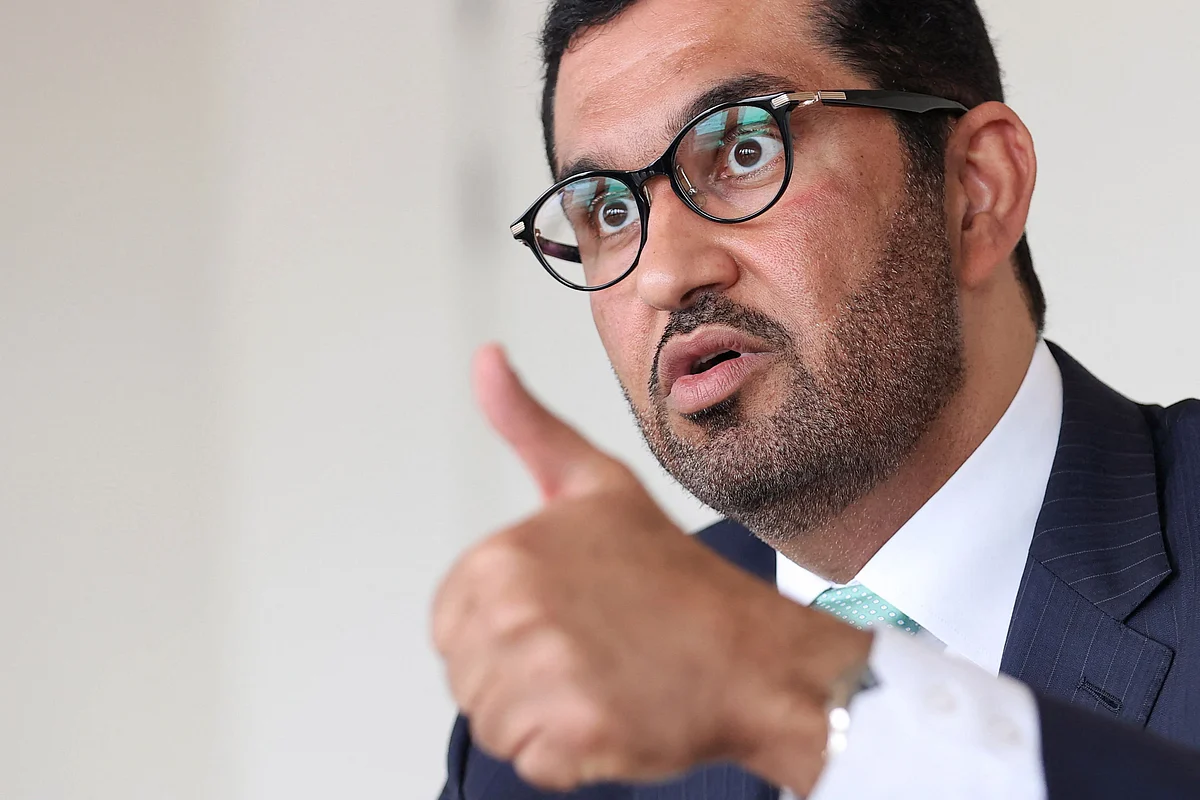
Sultan Al Jaber, the UAE Minister of Industry and Advanced Technology and CEO of Adnoc, condemned Iran for restricting access and “weaponizing” access to this vital waterway.
“The Strait must be open - fully, unconditionally and without restriction. Energy security and global economic stability depend on it. The weaponization of this vital waterway, in any form, cannot stand,” he wrote in a LinkedIn post on Thursday.
Stay up to date with the latest news. Follow KT on WhatsApp channels.
While the Strait is not owned by a single country, it is bordered by Iran on the north coast and Oman and the UAE on the south coast. Since February 28, the start of the war, Iran has claimed control of the passage, threatening and attacking “hostile ships” passing through it.
On Wednesday, Iran’s Foreign Minister Abbas Araghchi said that safe passage of ships “will be possible via coordination with Iran’s Armed Forces” for a period of two weeks. This comes after Tehran and Washington signed a shaky ceasefire on the condition that “safe passage” is guaranteed.
The Adnoc chief said Iran has made clear through its statements and actions that passage is subject to permission, conditions, and political leverage, saying it is “coercion, not freedom of navigation.”‘Dangerous precedent’
Closing the Strait of Hormuz would set a dangerous precedent, Al Jaber said, undermining the principle of freedom of navigation and stability of the global economy.
The critical waterway is strategically one of the world’s most important, with about 20 per cent of the world’s oil and liquefied natural gas (LNG) passing through, the BBC reports.
“Iran has made clear - through both its statements and actions - that passage is subject to permission, conditions and political leverage,” the UAE minister said.
He added that the Strait is a natural passage governed by the United Nations Convention on the Law of the Sea, and not “built, engineered, financed, or constructed by any state.”
230 oil-laden vessels
Al Jaber said that an estimated 230 vessels sit loaded with oil and ready to head out to see. 80 per cent of these cargoes are bound to Asia, which is an important market for UAE and Gulf energy giants.
Before the war began, the final oil cargoes that transited the Strait are just now arriving at the destination, the Adnoc chief said. “This is where the paper traded markets are meeting physical reality, and the 40-day gap in global energy flows is truly exposed,” he said. “The immediate priority is clear: close that gap. Restore the more than 20 per cent of globally traded energy that flows through this corridor.”He added, “Every day the Strait remains restricted, the consequences compound. Supply is delayed, markets tighten, prices rise. The impact is felt beyond energy markets, in economies, industries and households worldwide. Every day matters. Every delay deepens the disruption.”
Al Jaber said that the UAE has repeatedly stated its position following the illegal attacks on its energy and civilian infrastructure, and that Iran must be held accountable for its actions and fully liable for damages and reparations.
“Stability now depends on restoring real flows. Not partial access, not temporary measures, not controlled passage, but full and reliable supply,” he said.
ملاحظة تحريرية | Editorial Note: نُشر هذا المقال في الأصل بواسطة Khaleej Times. خبر (Khabr) هي منصة إعلامية أردنية مرخّصة تعمل بالذكاء الاصطناعي. نضيف قيمة تحريرية من خلال: تحليل ذكي للأخبار، ملخصات تلقائية، رواية صوتية بالذكاء الاصطناعي، ترجمة متعددة اللغات، وتدقيق الحقائق. هدفنا جعل الأخبار أكثر وضوحاً وسهولةً للقارئ العربي.
This article was originally published by Khaleej Times. Khabr is a licensed Jordanian AI-powered news platform (Registration #82086). We add editorial value through: AI-powered news analysis, automated summaries, AI audio narration, multi-language translation (Arabic, English, French, Turkish), and AI fact-checking. Our mission is to make news more accessible and understandable for Arabic-speaking audiences worldwide.