⚡ عاجل: كريستيانو رونالدو يُتوّج كأفضل لاعب كرة قدم في العالم●⚡ أخبار عاجلة تتابعونها لحظة بلحظة على خبر●⚡ تابعوا آخر المستجدات والأحداث من حول العالم●
AI اقتراحات ذكية
AI مباشر|--مشاهد مباشر
1,082,292مقال401مصدر نشط228قناة مباشرة4,059خبر اليوم
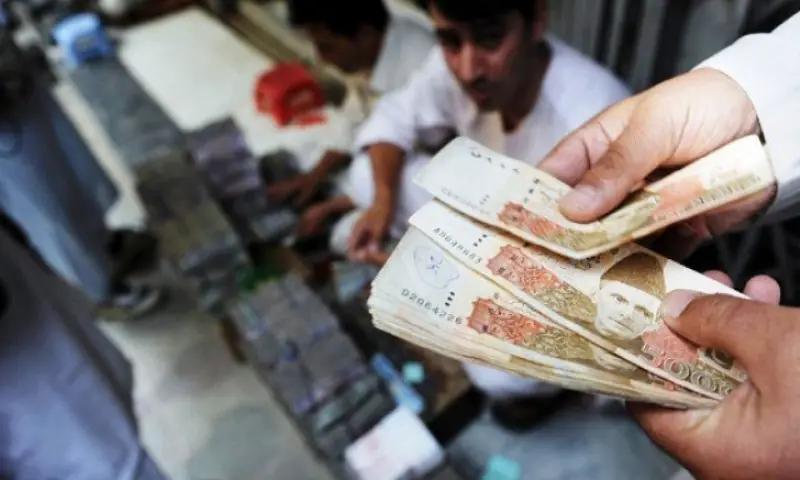
•ISLAMABAD: The federal government’s demand that provinces share the burden of the Federal Board of Revenue (FBR) collection shortfalls underscores an unsustainable fiscal strategy.
•The honest answer is that it is mostly political economy, not administrative incapacity, analysts say.
•There are some structural issues as well, but political economy remains at the heart of the problem.
هذا الخبر من Dawn. خبر يقدم أدوات ذكاء اصطناعي للتلخيص والترجمة والاستماع.
ISLAMABAD: The federal government’s demand that provinces share the burden of the Federal Board of Revenue (FBR) collection shortfalls underscores an unsustainable fiscal strategy. The honest answer is that it is mostly political economy, not administrative incapacity, analysts say. There are some structural issues as well, but political economy remains at the heart of the problem.
The Pakistan Economic Survey FY26 lists reforms ranging from digitalisation to enforcement that have yielded some gains; the larger question remains whether these measures can bridge the revenue gap without revisiting structural imbalances. Answering this question requires political will rather than wholly blaming the implementation organisation.
The retail sector, despite its 17.8 per cent share in GDP, remains largely outside the tax net due to political considerations. At the same time, the petroleum sector, valued at Rs6-7 trillion, also lies outside the tax ambit, even as the federal government aims to collect nearly Rs1.5tr through the petroleum development levy (PDL) in FY26. For FY27, the target for PDL is projected at Rs1.7tr, alongside expectations that provinces will give up between Rs1.3tr and Rs1.7tr to cover FBR shortfalls.
Without entering into technicalities, this effectively means that the federal government will withhold approximately Rs3tr from the provinces over and above the National Finance Commission award, without formally amending the accord.
Retail and petroleum sectors remain largely untaxed; fiscal targets are increasingly met through levies and provincial surpluses
This raises a fundamental question: is this a sustainable solution to the revenue collection problem, or merely a short-term measure to meet debt-servicing and defence spending requirements under the International Monetary Fund (IMF) programme?
Dr Ali Hasanain, associate professor of economics at Lums, said successive governments, this one included, have repeatedly announced retail registration schemes, and they keep collapsing at the same point. Traders are an organised, politically connected constituency that every ruling coalition needs, while the salaried class is not.
As a result, the path of least resistance is always to squeeze those already in the net, including salaried taxpayers, the corporate sector, and consumers, through indirect taxes, because withholding agents and employers do the collection for free.
“Calling it ‘inefficiency’ lets policymakers off too easily; the FBR’s capacity problems are real, but the binding constraint is that broadening the net imposes concentrated political costs while raising rates on existing payers imposes diffuse ones,” he said.
Development economist Dr Abid Qayum Suleri similarly argued that the FBR’s failure to bring sectors such as retail fully into the tax net is not simply an administrative problem. It reflects a combination of weak enforcement and lack of political will.
The same problem appears in federal and provincial finances. The survey shows that provinces generated a surplus of Rs1.64tr during July to March FY26, compared with Rs1.05tr last year, Dr Suleri said. Such surpluses help Islamabad meet consolidated fiscal targets, but repeated dependence on provincial savings can weaken the spirit of fiscal federalism if it squeezes provincial spending on health, education, water, climate resilience and local infrastructure.
For former FBR chairman Dr Irshad Ahmed, the current fiscal model is in a state of trap. “This time they begged provinces, but what will they do next time? How long will they survive on loan?” He also argued that the federal government is not willing to reduce its own protocols and expenditures.
On the ongoing reforms, he maintained that what is being done is “old wine in a new bottle,” which has already been tried and failed and will definitely fail again.
The survey does point to some tangible outcomes: tax returns filed rose 91.5pc to 7m, and net tax chargeable nearly doubled to Rs3.73tr. Production monitoring in the sugar sector generated Rs37bn in additional annual collection, while fake sales tax claims worth Rs9.8bn were blocked.
More than 25,000 taxpayers joined the digital invoicing system, covering a combined turnover of Rs39.3tr. Point-of-sales registered retailer turnover rose to Rs2.9tr, while AI-based audit selection identified over 200 cases involving Rs13.3bn. Customs enforcement against petroleum smuggling yielded an additional Rs284bn.
While the gains are real and meaningful, they are made within a deliberately constrained perimeter. Without addressing underlying incentives and structural imbalances, incremental reforms are unlikely to produce durable outcomes.
ملاحظة تحريرية | Editorial Note:
نُشر هذا المقال في الأصل بواسطة Dawn.
خبر (Khabr) هي منصة إعلامية أردنية مرخّصة تعمل بالذكاء الاصطناعي.
نضيف قيمة تحريرية من خلال: تحليل ذكي للأخبار، ملخصات تلقائية، رواية صوتية بالذكاء الاصطناعي، ترجمة متعددة اللغات، وتدقيق الحقائق.
هدفنا جعل الأخبار أكثر وضوحاً وسهولةً للقارئ العربي.
This article was originally published by Dawn.
Khabr is a licensed Jordanian AI-powered news platform (Registration #82086).
We add editorial value through: AI-powered news analysis, automated summaries, AI audio narration, multi-language translation (Arabic, English, French, Turkish), and AI fact-checking.
Our mission is to make news more accessible and understandable for Arabic-speaking audiences worldwide.
هذا الخبر ضمن تغطية خبر لقسم اقتصاد.
نقدّم لك تحليلات ذكية وملخصات يومية لأهم الأخبار من مصادر موثوقة متعددة.
المصدر: Dawn.
يوجد 6 مقالات مرتبطة بهذا الموضوع.
This article is part of Khabr's coverage of Economy.
We provide AI-powered analysis, summaries, and multi-source aggregation to keep you informed.
Source: Dawn.
Tags: tax, economy, finance.
🍪 نستخدم ملفات تعريف الارتباط لتحسين تجربتك وعرض الإعلانات المخصصة. باستخدامك للموقع، فإنك توافق على سياسة ملفات تعريف الارتباط وسياسة الخصوصية.
We use cookies to enhance your experience and show personalized ads. By using this site, you agree to our Cookie Policy and Privacy Policy.
🔍
FREEFree 1GB Internet + Free International Calls
$1 trial — eSIM in 190+ countries — No roaming charges