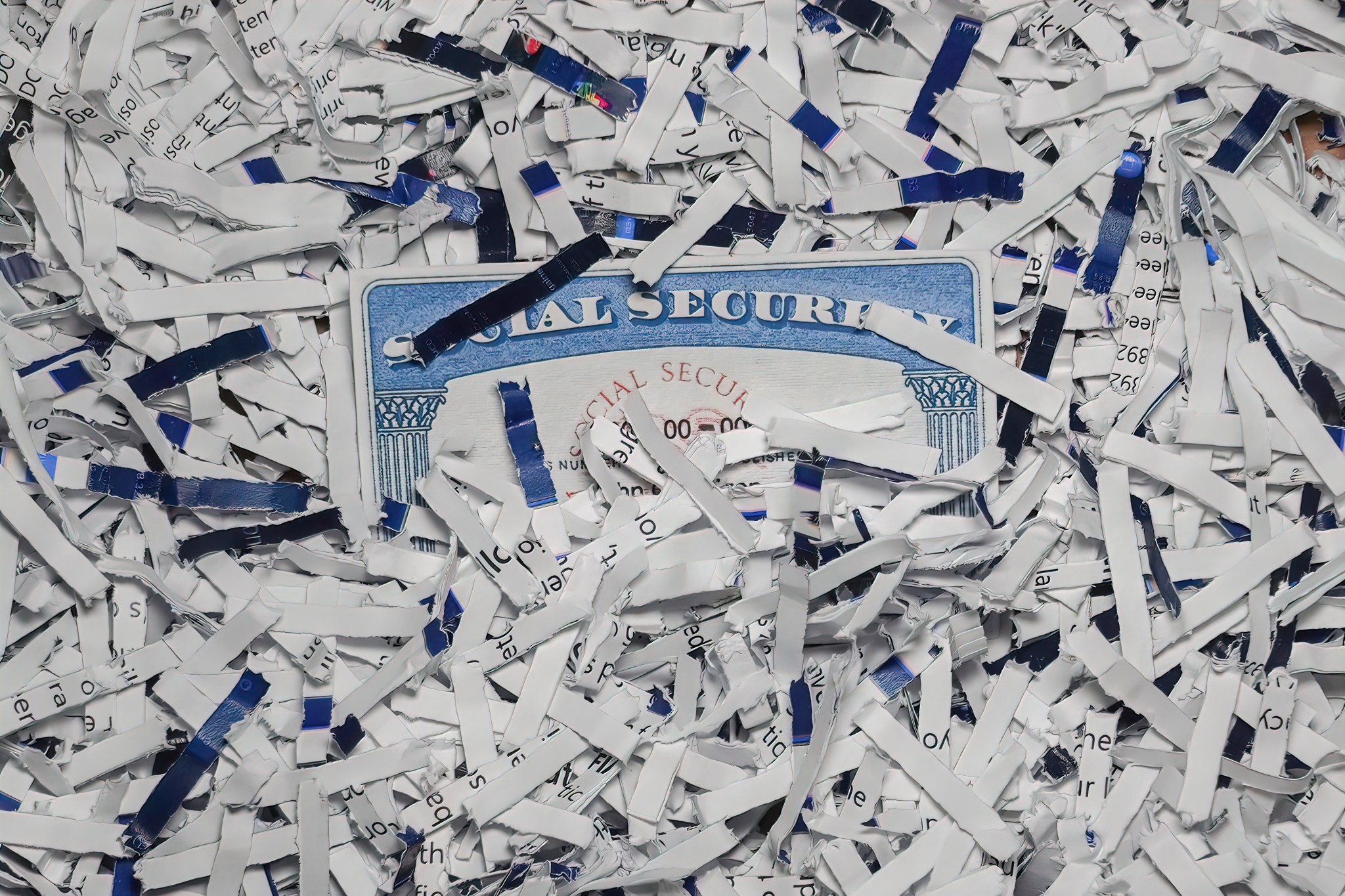
Social Security insolvency: How a six-figure cap to flatten benefits for the ultrawealthy could buy the program 7 critical years
•Amid the increasingly damning reports on the rising threat of America’s runaway deficits and debt, the looming disaster that could upend the lifestyle of tens of millions of elderly Americans is getti...
•In less than seven years, the Social Security retirement trust fund will go broke, and under federal law, its insolvency will automatically trigger gigantic reductions in benefits.
•According to estimates from the nonpartisan Committee for a Responsible Federal Budget (CRFB), low- and medium-income retired couples would respectively face hits of $11,200 and $18,400 a year, shrink...
هذا الخبر من فورتشن العربية. خبر يقدم أدوات ذكاء اصطناعي للتلخيص والترجمة والاستماع.
المصدر: فورتشن العربية | Source: فورتشن العربيةAmid the increasingly damning reports on the rising threat of America’s runaway deficits and debt, the looming disaster that could upend the lifestyle of tens of millions of elderly Americans is getting scant attention. In less than seven years, the Social Security retirement trust fund will go broke, and under federal law, its insolvency will automatically trigger gigantic reductions in benefits. According to estimates from the nonpartisan Committee for a Responsible Federal Budget (CRFB), low- and medium-income retired couples would respectively face hits of $11,200 and $18,400 a year, shrinking the dollars they’re pocketing from Social Security by around one-quarter. To grasp the weight of that sudden blow: America’s seniors, on average, depend on the nine-decades-old program for over half their livelihoods.
Social Security’s math problem is long-standing—and chronically ignored by Congress. Starting in 2010, the program began running cash flow negative, meaning that its outlays exceeded its tax revenues. Ever since then, it’s been paying benefits by drawing down the reserves accumulated when a far higher proportion of Americans were working than retiring versus the sharply falling ratio today. By 2033, the trust fund will run dry, triggering that immense, across-the-board drop that is slated to punish the most vulnerable Americans by collapsing all benefits an equal share regardless of income.
The challenge is daunting: Social Security is facing staggering cash shortfalls of around 4% a year through the year 2100. By the way, the One Big Beautiful Bill Act worsened the outlook by handing seniors a big tax break on their Social Security income, money that was previously helping replenish the trust fund. But now, the CRFB is proposing a fix that promises significant progress toward putting the program on a path to self-sufficiency.
How curbing Social Security benefits to affluent Americans could save the program
The CRFB think tank highlights that a cohort of couples are now getting benefits of $100,000 or more, and that the six-figure group will expand rapidly in the years to come as payouts wax alongside inflation or even faster. As an initial step, the CRFB advocates capping what these formerly super-high-earners, garnering the biggest payments, will receive going forward.
The plan—dubbed the “Six-Figure Limit,” or SFL—would set a max of $100,000 for couples who are now receiving the top benefits. The lid would be adjusted for marital status and age of collection. A single person wouldn’t receive more than $50,000, and a husband and wife, each leaving the workforce at 62, would get capped at $70,000. How about indexing? The CRFB presents two main options: In the first, benefits would rise from the SFL by the rate of inflation. That route would eliminate one-fifth of the solvency gap over the next 75 years, and save $100 billion through 2036. In an alternative scenario, the cap would stay fixed in nominal dollar terms, in our examples at $100,000 or $70,000 sans bumps for the CPI, for 20 or 30 years, and after those intervals grow in tandem with wages. That prescription erases one-quarter of the shortfalls and saves $190 billion over the next decade. It would also single-handedly delay insolvency for seven years.
The CRFB argues that those “high benefits far exceed what’s necessary to maintain an adequate standard of income, especially when one considers that Social Security represents only one-seventh the income of those in the top quintile [of all recipients].”
Of course, the program’s savings plug far less than half of Social Security’s future deficits. It will take additional modest, and also more radical fixes to bridge the yawning gaps. Jessica Riedl, a budget and tax fellow at the Brookings Institution, champions flattening benefits as the income scale rises. The Riedl plan would lift the low-earners toward $25,000 a year, and push the high-earners closer to the same $25,000 mark. “Benefits wouldn’t be totally flat, but they’d move in that direction,” Riedl told Fortune. “That formula would bring the revenues and benefits into annual balance over a couple of decades. The primary role would return to keeping seniors out of poverty, rather than offering wage replacement for high-earners.”
President Franklin Roosevelt, the father of Social Security, extolled the program as the guarantor “of some measure of protection for the average citizen … against poverty-ridden old age.” The CRFB template would help steer Social Security from what’s in part gravy for the well-to-do toward its original purpose as an essential safety net.
This story was originally featured on Fortune.com
ملاحظة تحريرية | Editorial Note: نُشر هذا المقال في الأصل بواسطة فورتشن العربية. خبر (Khabr) هي منصة إعلامية أردنية مرخّصة تعمل بالذكاء الاصطناعي. نضيف قيمة تحريرية من خلال: تحليل ذكي للأخبار، ملخصات تلقائية، رواية صوتية بالذكاء الاصطناعي، ترجمة متعددة اللغات، وتدقيق الحقائق. هدفنا جعل الأخبار أكثر وضوحاً وسهولةً للقارئ العربي.
This article was originally published by فورتشن العربية. Khabr is a licensed Jordanian AI-powered news platform (Registration #82086). We add editorial value through: AI-powered news analysis, automated summaries, AI audio narration, multi-language translation (Arabic, English, French, Turkish), and AI fact-checking. Our mission is to make news more accessible and understandable for Arabic-speaking audiences worldwide.