⚡ عاجل: كريستيانو رونالدو يُتوّج كأفضل لاعب كرة قدم في العالم●⚡ أخبار عاجلة تتابعونها لحظة بلحظة على خبر●⚡ تابعوا آخر المستجدات والأحداث من حول العالم●
AI اقتراحات ذكية
AI مباشر|--مشاهد مباشر
1,022,925مقال401مصدر نشط228قناة مباشرة4,251خبر اليوم
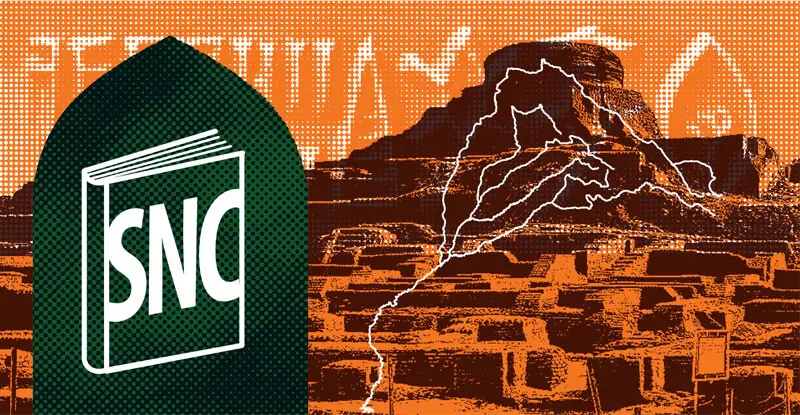
•Illustration by Abro
Introduced by the Imran Khan administration (2018-2022), the controversial Single National Curriculum (SNC) represented a final institutional attempt to preserve a state-cura...
•By the 2010s, this identity framework had begun to fracture under the weight of escalating sectarian violence, unprecedented Islamist terrorism and fraying civil-military relations.
•The Islamist violence intensified alongside growing political friction between the military and the Pakistan Peoples Party (PPP)-led government that took power in 2008.
هذا الخبر من Dawn. خبر يقدم أدوات ذكاء اصطناعي للتلخيص والترجمة والاستماع.
Illustration by Abro
Introduced by the Imran Khan administration (2018-2022), the controversial Single National Curriculum (SNC) represented a final institutional attempt to preserve a state-curated national narrative dating back to the 1970s.
By the 2010s, this identity framework had begun to fracture under the weight of escalating sectarian violence, unprecedented Islamist terrorism and fraying civil-military relations. The Islamist violence intensified alongside growing political friction between the military and the Pakistan Peoples Party (PPP)-led government that took power in 2008. The resulting instability triggered a national debate over the state’s religious narrative.
The conflict between the state and the Islamists exposed a stark ideological contradiction: anti-state extremists were utilising the exact same Islamist rhetoric that the state, mainstream religious parties, and centre-right groups had been championing, especially ever since the 1980s.
This forced a fundamental questioning of state-sponsored Islam, particularly its presence in school textbooks.
For decades, the Pakistani state crafted a national identity detached from the Subcontinent’s past. But changing dynamics within the country and in the region are pushing it towards a different imagination of itself — as the modern inheritor of the ancient Indus civilisation
This discourse was not entirely unprecedented. In the 1980s, intellectuals such as Sibte Hasan, K.K. Aziz and Ayesha Jalal created a counter-narrative by arguing that the state was distorting the foundational vision of Pakistan’s founder, Muhammad Ali Jinnah. They contended that Jinnah viewed Islam as an enlightened, humane and modern faith. This portrayal was in stark contrast to the rigid version of Islam and of Jinnah’s image sculpted by the state from the 1970s onward.
However, the counter-narratives remained largely confined to elite intellectual circles. Meanwhile, the official state narrative grew increasingly dominant, thoroughly propagated through textbooks, state-controlled media, and pro-state ulema [Islamic scholars] empowered by the Ziaul Haq dictatorship (1977-1988).
A second wave of academic criticism emerged during the 1990s and early 2000s. Led by scholars such as Dr Abdul Hameed Nayyar, Rubina Saigol and Ahmad Salim, this critique posited that the era’s escalating Islamist and sectarian violence was a direct consequence of classroom indoctrination.
According to Saigol, after the violent secession of East Pakistan in 1971, a pervasive state paranoia began to suffocate national rhetoric and reshape the curriculum. This insecurity culminated in the formal unveiling of the “Pakistan Ideology” in 1978. It was a construct born out of the fear that, without stitching a rigid interpretation of Islam into the country’s political and social fabric, Pakistan would face further disintegration.
Nayyar, Salim and Saigol further suggested that the state and its nationalist intelligentsia harboured a perpetual urge to divorce the roots of South Asian Muslims from those of other regional faiths, particularly Hinduism.
This ideological project gained urgency after the 1971 ‘East Pakistan debacle.’ In post-1978 textbooks, Pakistan was finally decoupled from its Subcontinental geography and tied to a civilisational claim that South Asian Muslims were genealogically linked to the birthplace of Islam in Arabia. Critics termed this the “Arabisation of Pakistan” — a claim that Arabs found rather amusing.
From the late 1970s, history textbooks largely disregarded the region’s pre-eighth century past, undermining everything prior to the Arab invasion of Sindh. The ruins and artefacts of ancient civilisations physically located within Pakistan, including the 5,000-year-old Indus Valley Civilisation, were treated as foreign phenomena rather than foundational elements of the nation’s own heritage.
Although an extensive 2003 study on this subject by Nayyar and Salim attracted brief interest from the ‘modernist’ military dictatorship of Pervez Musharraf (1999–2008), it yielded only superficial structural reforms.
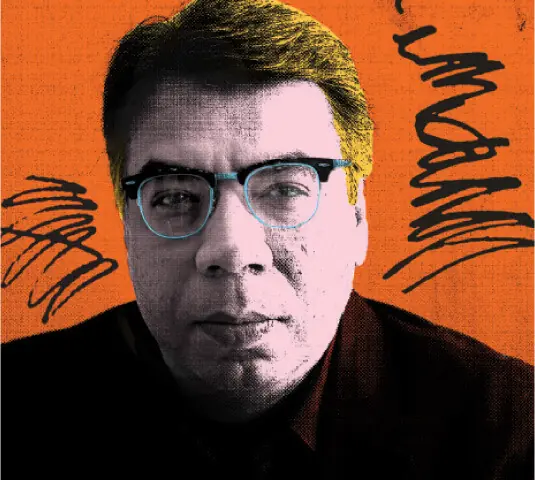
In 1996, the state narrative was more comprehensively challenged by Aitzaz Ahsan, a prominent intellectual and senior member of the PPP. Synthesising fragmented ideas into what became known as the ‘Indus Theory’, he formalised his thesis in his book The Indus Saga and the Making of Pakistan. The theory suggests that modern-day Pakistan is far from an artificial state hastily created in 1947. Instead, it is the organic, modern manifestation of a distinct 5,000-year-old civilisation anchored to the Indus River system.
According to Ahsan, the civilisational divide between Pakistan and India is fundamentally cultural and geographical rather than purely religious. It is driven by the separate evolution of two distinct societies: one born along the banks of the Indus River in Pakistan, and the other along the Ganges in India.
Versions of this theory had circulated since the 1950s. Their lineage can be traced back to the 1950 book Five Thousand Years of Pakistan by British archaeologist Sir Mortimer Wheeler. The concept was then revived in the 1970s by figures such as Sibte Hasan, eminent archaeologist Dr Ahmad Hasan Dani, and veteran Sindhi nationalist scholar G.M. Syed. However, the post-1971 state sidelined this paradigm in favour of its Arabian hypothesis. Ahsan’s mid-1990s formulation remains the Indus Theory’s most cohesive and articulate expression.
In 2010, the PPP-coalition government succeeded in passing the 18th Amendment to the Constitution, with the support of the main opposition party, the Pakistan Muslim League-Nawaz (PML-N). The amendment provided extensive autonomy to the provinces, devolving education from the federal government and loosening the Islamabad-driven national narrative.
Sindh took the lead, exercising its new authority to reintroduce the province’s ‘Sufi’ history and regional heroes into provincial textbooks, bypassing old federal frameworks. In 2015, the Sindh government reintroduced Jinnah’s August 11, 1947 speech into textbooks. This speech, in which Jinnah declared that the state would have nothing to do with the religion of its citizens, had been expunged from the curriculum after 1971.
Combined with the widespread availability of internet-driven literature challenging the state’s post-1971 narrative, these developments hurled the Indus Theory into mainstream national discourse like never before.
The state made a last-ditch effort to mitigate the erosion of the old narrative through the SNC, launched by Imran Khan in August 2021. While the SNC was a more radical manifestation of the traditional state narrative, it was ultimately rejected by the governments of Sindh and Balochistan. What’s more, its implementation triggered widespread confusion and disgruntlement among middle-class parents in Punjab, causing the project to stall after Khan’s regime was removed through an act of parliament in 2022.
Today, as Pakistan navigates its position as a rising regional power, both the government and the military establishment are prioritising pragmatism. Seeking to sustain this status while addressing Baloch separatism, Islamist violence and the Indian threat in a more systematic manner, the state is quietly integrating the Indus Theory into its own narratives.
An additional driver of this shift is the Hindu nationalist regime in India, which is aggressively reshaping the past to construct a Hindu-centric, civilisational identity. This has eroded India’s secular image internationally. Pakistan views this as an opportunity.
By embracing the Indus Theory, Pakistan seeks to position itself as a moderate, pragmatic nation-state with ancient roots in the civilisations that emerged along the Indus, the country’s largest river and ‘life giver.’
ملاحظة تحريرية | Editorial Note:
نُشر هذا المقال في الأصل بواسطة Dawn.
خبر (Khabr) هي منصة إعلامية أردنية مرخّصة تعمل بالذكاء الاصطناعي.
نضيف قيمة تحريرية من خلال: تحليل ذكي للأخبار، ملخصات تلقائية، رواية صوتية بالذكاء الاصطناعي، ترجمة متعددة اللغات، وتدقيق الحقائق.
هدفنا جعل الأخبار أكثر وضوحاً وسهولةً للقارئ العربي.
This article was originally published by Dawn.
Khabr is a licensed Jordanian AI-powered news platform (Registration #82086).
We add editorial value through: AI-powered news analysis, automated summaries, AI audio narration, multi-language translation (Arabic, English, French, Turkish), and AI fact-checking.
Our mission is to make news more accessible and understandable for Arabic-speaking audiences worldwide.
هذا الخبر ضمن تغطية خبر لقسم سياسة.
نقدّم لك تحليلات ذكية وملخصات يومية لأهم الأخبار من مصادر موثوقة متعددة.
المصدر: Dawn.
يوجد 6 مقالات مرتبطة بهذا الموضوع.
This article is part of Khabr's coverage of Politics.
We provide AI-powered analysis, summaries, and multi-source aggregation to keep you informed.
Source: Dawn.
Tags: Pakistan, narrative, political commentary.
🍪 نستخدم ملفات تعريف الارتباط لتحسين تجربتك وعرض الإعلانات المخصصة. باستخدامك للموقع، فإنك توافق على سياسة ملفات تعريف الارتباط وسياسة الخصوصية.
We use cookies to enhance your experience and show personalized ads. By using this site, you agree to our Cookie Policy and Privacy Policy.
🔍
FREEFree 1GB Internet + Free International Calls
$1 trial — eSIM in 190+ countries — No roaming charges