Six British WW1 heroes finally laid to rest more than a century after their deaths
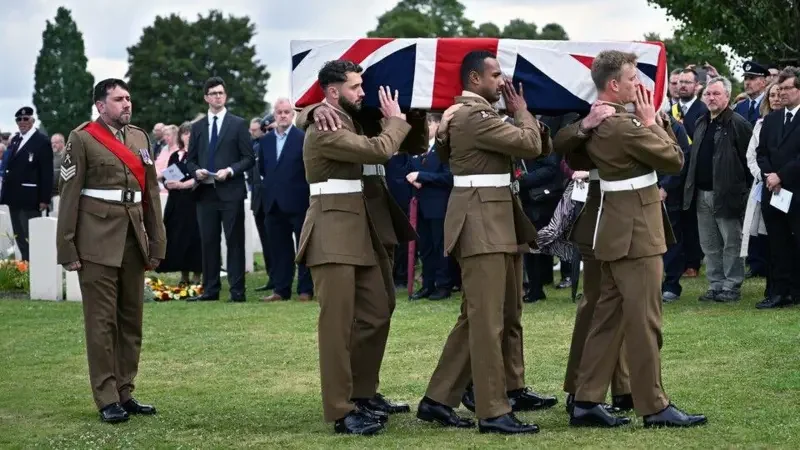
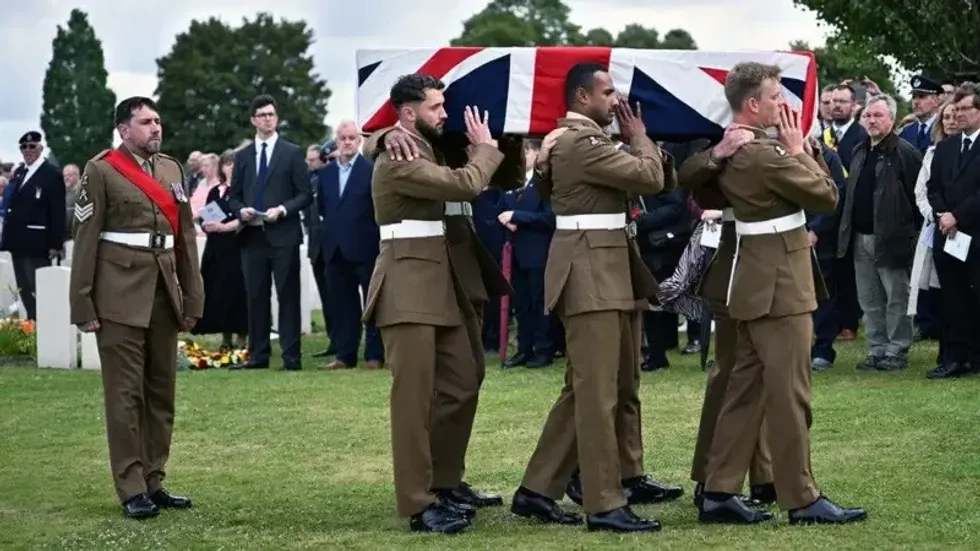
Six British First World War heroes have finally been laid to rest more than a century after their deaths.
The identities of the men, who were buried in Belgium, were revealed through DNA analysis.
They are Pte Horace Cook of Matching, Essex; Pte Frederick Martin and Pte Charles Russell, both of London; Pte Thomas Whitaker, of Bradford; Pte Courtney Hart, of Northampton; and Pte Joseph Turnley, of Bristol.
It is thought they were killed in a shell strike on October 6, 1918.
The British veterans' bodies are now in the Commonwealth War Graves Commission's Tyne Cot Cemetery, with headstones recognising their sacrifice.
The men still wore shoulder titles indicating their affiliation with the Queen's Royal West Surrey (QRWS) Regiment.
During 2020, archaeologists came across the remains while working on a site near the village of Geluwe.
Pte Turnley's great-nephew Paul Turnley, from Wiltshire, said receiving the news in December was "the biggest surprise".
He told the BBC: "Joseph was only known to us as a name on our family tree, but now he is a person."
A second relative, Joe Whitaker, added his great-great-uncle Pte Whitaker was found with a postcard of their home in Bradford.
He said: "We wrote a poem which I read today that conveyed his love of home."
Mr Whitaker described the service as a "real privilege" to attend.
LATEST DEVELOPMENTS
- Lifesaving defibrillator installed at station where 'heroic' army cadet, 15, saved child’s life
- WW2 veteran who took part in D-Day invasion dies aged 101
- Plans to honour WW2 veteran who died with no family as Royal British Legion prepares huge send off
He added: "When you think about the tens of thousands who don't get this opportunity, we feel incredibly lucky that we are among the few who can give him a proper resting place."
The MOD's Joint Casualty and Compassionate Centre, also known as the War Detectives, aims to identify the remains of British Armed Forces personnel found on historical battlefields.
They had created a list of men who could have been killed in Belgium during the conflict and narrowed down the names by contacting relatives and collecting DNA samples.
This led to the matches being found.
War detective Alexia Clark said: "I am delighted that they have now been laid to rest alongside their comrades in a dignified burial which they had been denied for so long."
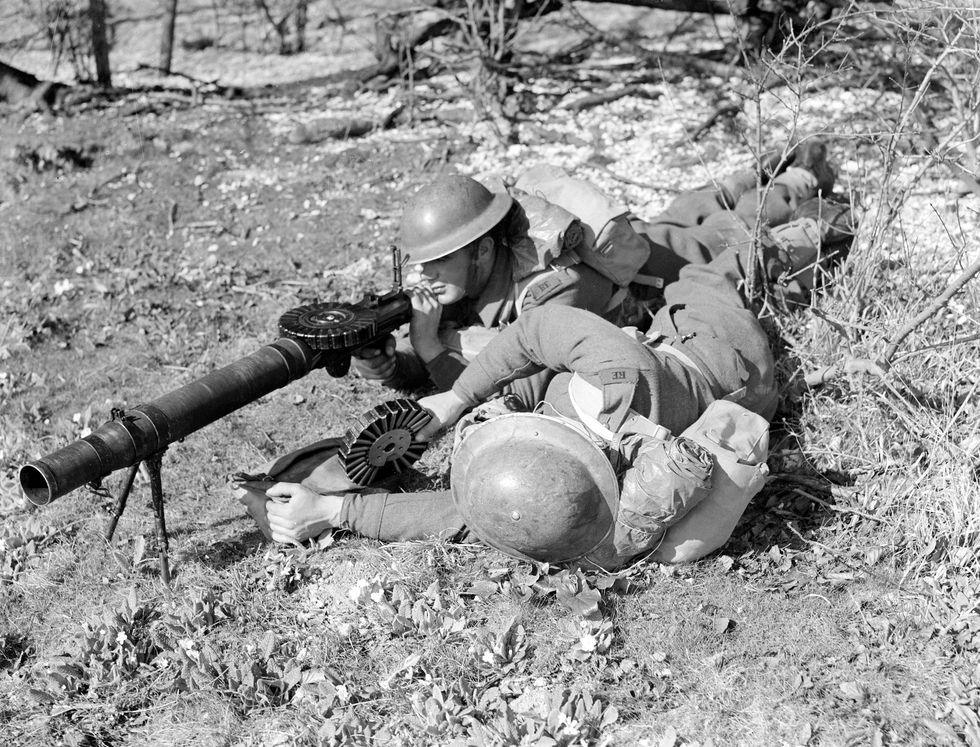
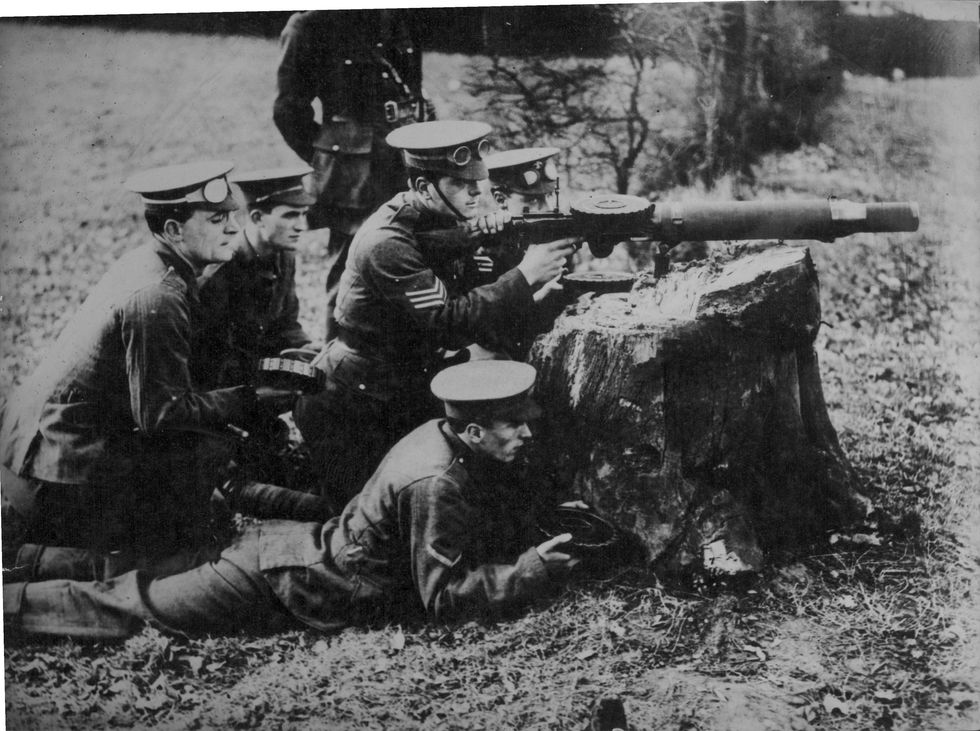
Evidence collected by archaeologists, including historical diary entries and equipment found, suggests the war heroes were tasked with a Lewis gun, an American-designed light machine gun mass-produced in Britain.
These weapons take several crew members to operate due to their size.
Issued to British and Commonwealth infantry in 1915, it became a primary source of portable fire support on the Western Front, allowing infantry platoons to advance more rapidly.
The weaponry weighs between 11.8kg and 12.7kg and fires 500 to 600 rounds per minute.
A spokesman for the Ministry of Defence said it was "clear they had died together".
Our Standards: The GB News Editorial Charter