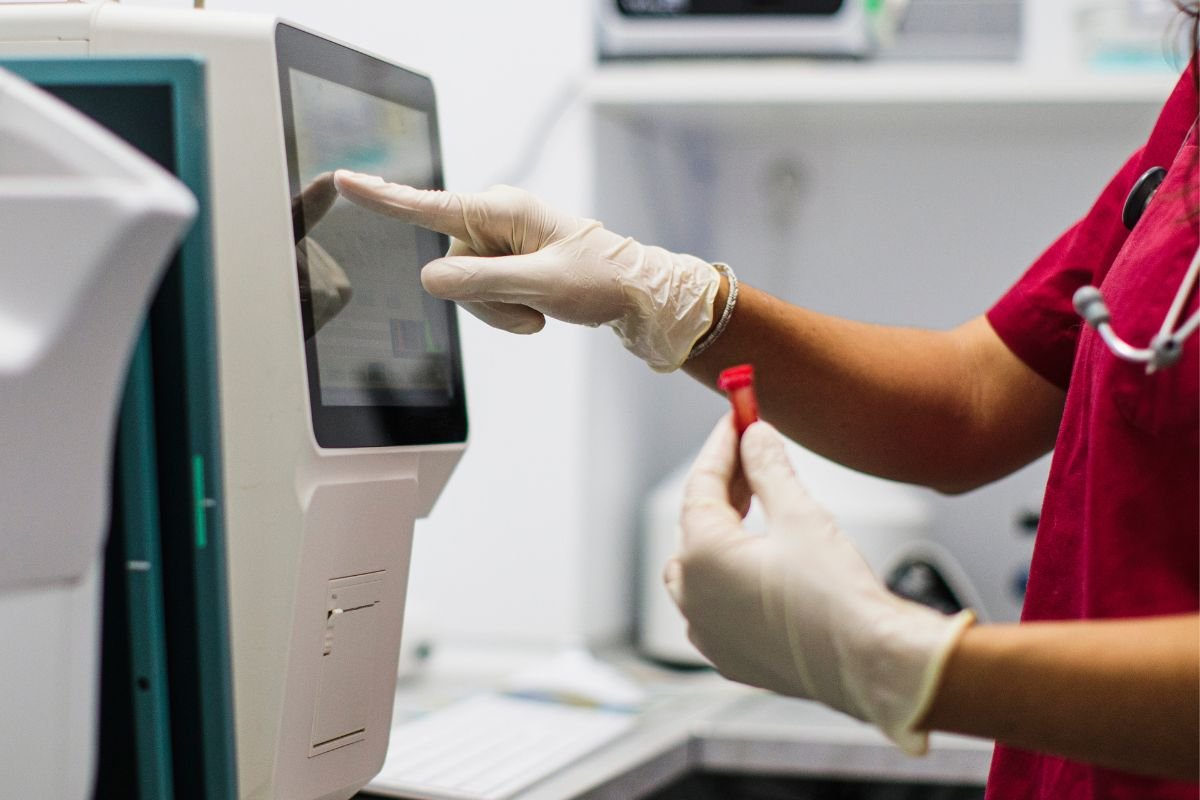
A simple blood test which measures the hallmark proteins associated with Alzheimer’s could detect the disease decades before symptoms appear, a study suggests.
The findings show Alzheimer’s may be present in midlife and already linked to cognitive differences, researchers said.
While more research is needed, experts said using blood tests to pinpoint changes in the brain earlier “could be incredibly valuable”.
Alzheimer’s happens when the proteins amyloid and tau abnormally build up in the brain.

For the study, researchers measured the levels of two amyloid biomarkers, as well as p-tau217, in the blood of 1,350 people without dementia in the US. The average age of patients was 61.
Analysis found high levels of the biomarkers in 86 patients, which were associated with worse cognitive performance, accelerated decline of verbal memory and slower processing speed in tests taken five years apart.
Researchers said the results, published in the Lancet, build on previous studies with older adults by “showing that evidence of Alzheimer’s disease neuropathology is present in midlife, although infrequent, and is already linked to measurable cognitive differences”.
“These findings support the concept that Alzheimer’s disease begins decades before clinical symptoms emerge and highlight the potential value of plasma biomarkers for early detection in the general population,” they added.
“Identifying individuals with early Alzheimer’s disease neuropathology through accessible, blood-based assays could help target preventive strategies and clinical trials aimed at delaying or preventing the onset of dementia, with implications for both clinical practice and public health policy.”
Elsewhere, a separate study also published in the Lancet suggests a new way of performing brain scans could detect tau protein tangles before symptoms appear.
Researchers compared Flortaucipir, a radioactive tracer used in Pet scans, to a newer agent called MK6240.
The study of 682 patients in the US and Canada found MK6240 identified more than twice as many tau-positive cases as Flortaucipir in early tau regions.
Flortaucipir, also known as Tauvid, is licensed in the UK but not routinely used on the NHS.
LATEST DEVELOPMENTS:
- The way you hesitate while speaking may hint at dementia, scientists warn
- Popular supplement linked to slower brain repair raises dementia concerns
- 'Breakthrough' dementia treatments costing up to £90k questioned over limited patient benefits
It is estimated that about a million people in the UK have dementia, with the figure expected to rise to 1.4 million by 2040.
Alzheimer’s – the most common form of dementia – makes up between 60 per cent and 80 per cent of cases.
Reacting to the studies, Dr Jacqui Hanley, head of research funding at Alzheimer’s Research UK, said: “These two studies add to a growing body of evidence showing progress in detecting the biological changes linked to Alzheimer’s disease much earlier in life, using a range of biomarkers from blood tests through to advanced brain imaging.
“Being able to identify these changes sooner than we can now could be incredibly valuable.
“If we can identify Alzheimer’s disease earlier on, it would open up opportunities for people to take part in studies of new treatments.
“We could also identify people who might benefit from disease-modifying treatments that are indicated for early-stage disease.
“In the UK, many people wait far too long for a dementia diagnosis, meaning they often miss out on these opportunities.
“This is why there’s so much excitement around the potential for blood tests, alongside other assessments.
“Accurate blood tests could improve how a diagnosis is made, as they are less invasive, scalable and potentially more accessible than existing tools such as PET brain scans and lumbar punctures.
“Detailed brain imaging remains important for understanding the extent and stage of disease more precisely, which is critical for research and treatment decisions.
“The study of tau PET scans suggests newer methods might detect Alzheimer ’s-related changes earlier than existing techniques, which could enable earlier identification of disease and more precise selection of participants for clinical trials.

“As exciting as the results of these two observational studies are, we will need further research in larger and more diverse groups of people before the approaches can be used routinely.”
The Blood Biomarker Challenge, a multimillion-pound initiative led by the Alzheimer’s Society, Alzheimer’s Research UK, and the National Institute for Health and Care Research, is aiming to make blood tests for dementia diagnosis available on the NHS by 2029.
Our Standards: The GB News Editorial Charter