ISLAMABAD: A Pakistan-led initiative to facilitate US-Iran talks has been held up, with Tehran yet to formally respond to proposals for dialogue despite back channel exchanges in recent days, a senior official told Dawn on Friday.
The official, who was speaking on background, said some ground had been covered, with messages relayed between Washington and Tehran, but the absence of a clear Iranian signal has slowed momentum at this critical stage.
“It is surprising that despite the obliteration of significant naval, air force, and other military and civilian infrastructure, Iran has not responded positively to calls for negotiations,” the official, who is familiar with the discussions, said.
He said both Pakistan and China had urged Iran to engage, but “Tehran has so far not conveyed its readiness to take part in the dialogue.”
He added that Pakistani leaders, despite Tehran not giving a reply, have remained in contact with Iranian President Masoud Pezeshkian and Foreign Minister Abbas Araghchi in an effort to revive the process persuading them to accept American offer of talks.
Pakistan has positioned itself as a facilitator in this process, leveraging its ties with US, its working relationship with Iran, and its strategic partnership with China. This initiative is being spearheaded by Army Chief and Chief of Defense Forces Field Marshal Asim Munir.
The official said that besides messages between the two sides, Pakistan was simultaneously building support for the prospective talks through parallel engagements with Gulf countries, Turkiye and Beijing. He underscored the challenge of convincing Arab countries, who remain staunchly opposed to Iran and are maintaining a harsh line against it, for not opposing de-escalation.
A framework for potential negotiations has already been discussed, and all sides have indicated Islamabad as a possible venue.
“Once Iran consents, negotiations are expected to take place there,” the Pakistani official said stressing that Iran’s go ahead was the only remaining element before the talks get underway. He claimed that US had even indicated that Vice President J.D. Vance could lead its delegation.
Yet, he feared, developments inside Iran were complicating decision making there. He said key decisions were now being shaped by the Islamic Revolutionary Guard Corps, with authority further diffused after strikes in which senior political and military figures, including Supreme Leader Ayatollah Ali Khamenei were martyred. This fragmentation, he suggested, was making it harder for Tehran to take a clear negotiating position.
Iranian position
When contacted an Iranian official in Tehran, meanwhile, pointed to a different set of constraints. The official, who too spoke on background, said the terms conveyed by Washington were unacceptable. “The conditions, or the 15-point proposal, put forward by the United States are too difficult to accept,” the official said, describing the situation as “highly complex.”
The Iranian official denied reports that Iran had refused to participate the dialogue in Islamabad, after a Wall Street Journal reported Iran “officially told mediators that it is unwilling to meet US officials in Islamabad in the coming days and considers US demands unacceptable”.
He said Iran’s immediate focus is on the war and not negotiations. Moreover, he cited deep mistrust of US intentions. “Recent US deployments to the region do not align with its stated intentions of pursuing talks, and therefore Iran has zero confidence in US,” he said.
As part of its planning for potential ground operations against Iran, US has deployed specialised military hardware and personnel in the region. Most notably, 18 A-10C Thunderbolt II “Warthog” close air support aircraft, designed specifically for providing low altitude protection for ground troops, have been moved to Middle East. Pentagon has also positioned USS Abraham Lincoln carrier strike group in the Arabian Sea, placed the 26th Marine Expeditionary Unit and thousands of additional Marines on ready mode, besides moving large numbers of heavy lift transport aircraft including C-17s and C-5s along with aerial tankers towards the theater.
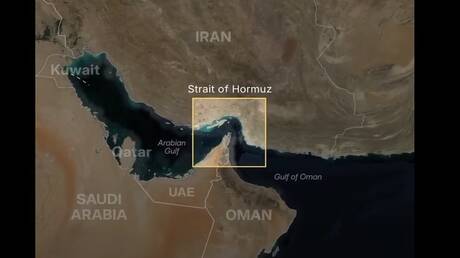
These movements coincide with Defense Secretary Pete Hegseth’s visit to paratroopers already involved in the operation and internal planning for two high risk ground assaults, including potential special forces raids or temporary occupation of Iranian islands in the Strait of Hormuz for seizing of highly enriched uranium.
Security concerns are also weighing on Tehran’s calculus. The Iranian official recalled that former Foreign Minister Kamal Kharazi, who was to be part of the negotiating team, was targeted few days back, similarly, former Secretary Supreme National Security Council Ali Larijani, who was pursuing an initiative for de-escalation, was assassinated.
“There are serious concerns that anyone participating in negotiations could also be targeted,” the worried Iranian official underlined.
Nevertheless, the official praised Pakistan for its efforts saying “Pakistani leaders were undoubtedly doing their best for cessation of hostilities.”
The initiative reflects Pakistan’s attempt to act as a middle power facilitator, using its access to multiple sides to keep channels open in a conflict that has disrupted energy flows, threatened shipping in the Strait of Hormuz and raised fears of a wider regional war.
Diplomats say the window for talks is narrow and fragile. They emphasize that while both sides have exchanged messages indirectly, the gap between US demands and Iranian expectations remains wide.
Pakistan’s immediate priority in this situation, another diplomat said, was to sustain the contacts and prevent a complete breakdown. He said whether or not that could translate into formal negotiations will depend on decisions in Tehran and Washington, where military developments continue to shape the pace and direction of diplomacy.
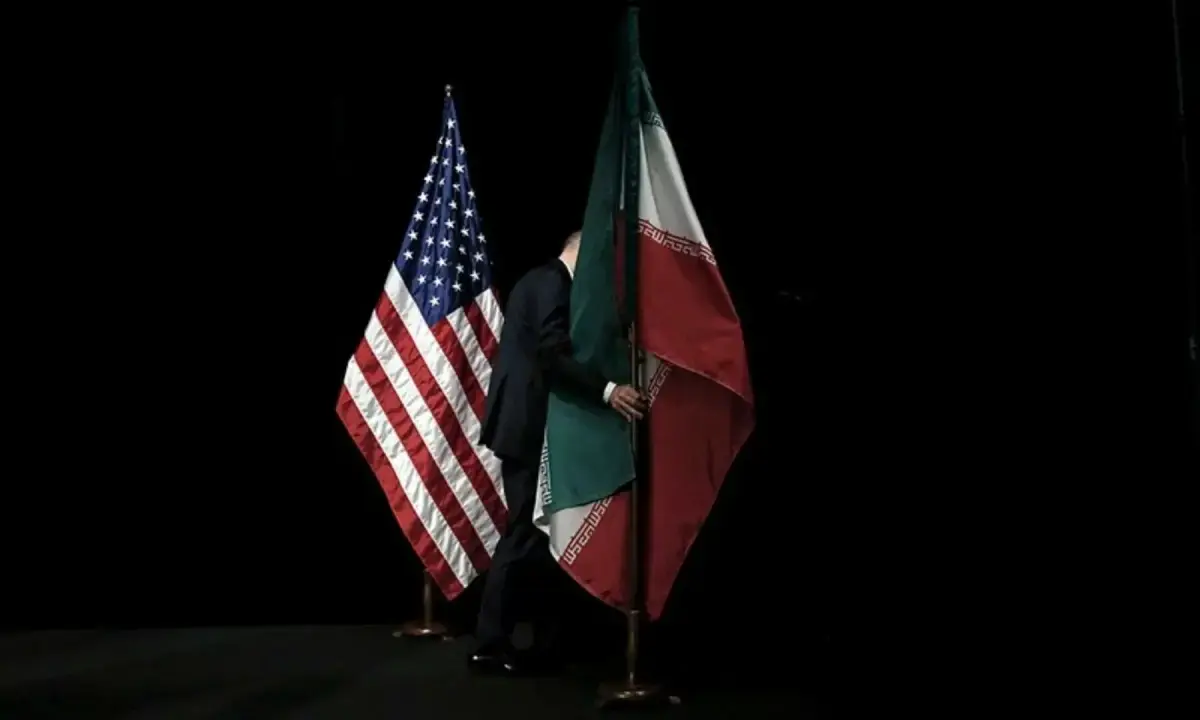
Header image: In this file photo, a staff member removes the Iranian flag from the stage after a group picture with foreign ministers and representatives of the US, Iran, China, Russia, Britain, Germany, France and the European Union during Iran nuclear talks at the Vienna International Center in Vienna, Austria in July 14, 2015. — Reuters/ File