Senegal’s Faye launches a new party, formalising his split with Sonko
•play Live Sign upShow navigation menuNavigation menuNewsShow more news sectionsAfricaAsiaUS & CanadaLatin AmericaEuropeAsia PacificMiddle EastExplainedSportOpinionVideoMoreShow more sectionsFeaturesEc...
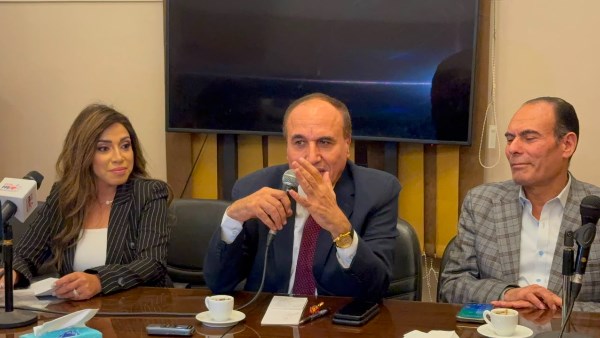
•xwhatsapp-strokecopylinkgoogleAdd Al Jazeera on GoogleinfoThe launch of Kiiraay–The Republican Patriots marks President Bassirou Diomaye Faye's bid to build an independent political base [Andre Pain/P...
•The creation of Kiiraay-The Republican Patriots on Saturday formalised the collapse of the alliance between Faye and Sonko after months of tensions over the direction of the government and Senegal’s m...
هذا الخبر من Al Jazeera English. خبر يقدم أدوات ذكاء اصطناعي للتلخيص والترجمة والاستماع.
play Live Sign upShow navigation menuNavigation menuNewsShow more news sectionsAfricaAsiaUS & CanadaLatin AmericaEuropeAsia PacificMiddle EastExplainedSportOpinionVideoMoreShow more sectionsFeaturesEconomyHuman RightsClimate CrisisInvestigationsInteractivesIn PicturesScience & TechnologyPodcastsTravelSponsored Contentplay Live Click here to searchsearchSign upNewsSenegal’s Faye launches a new party, formalising his split with SonkoMonths of tensions between president and his onetime ally culminate in a political split that will reshape Senegal’s political landscape. xwhatsapp-strokecopylinkgoogleAdd Al Jazeera on GoogleinfoThe launch of Kiiraay–The Republican Patriots marks President Bassirou Diomaye Faye's bid to build an independent political base [Andre Pain/Pool via AP]By Al Jazeera staffPublished On 26 Jul 202626 Jul 2026Dakar, Senegal – Senegalese President Bassirou Diomaye Faye has launched a new political party, formalising his split with former ally Ousmane Sonko and setting up a struggle for control of the reform movement that swept them to power in 2024. The creation of Kiiraay-The Republican Patriots on Saturday formalised the collapse of the alliance between Faye and Sonko after months of tensions over the direction of the government and Senegal’s mounting economic challenges. The new party grew out of the Diomaye President coalition, which backed Faye’s successful 2024 presidential campaign. Speaking before supporters in Dakar, Faye portrayed Kiiraay as a movement centred on institutions rather than personalities. “Kiiraay-The Republican Patriots is an open house,” Faye said, adding that the party would be guided by “ethics” and “transparency”. He said the movement would be open to “young people, women, farmers, fishermen, teachers, health workers, the diaspora” and all citizens committed to serving the republic. In another message directed at his supporters, Faye said political office should not be treated as a reward. “Responsibilities will be duties and not rewards,” he said, adding that transparency would remain one of the party’s guiding principles. The launch completes the political rupture between two men whose alliance overturned Senegal’s political establishment. Faye and Sonko rose together through the African Patriots of Senegal for Work, Ethics and Fraternity (PASTEF). Sonko, a former tax inspector, emerged as one of Senegal’s most influential opposition figures by campaigning against corruption, promising economic sovereignty and attracting strong support from young voters frustrated by unemployment and the rising cost of living. When Sonko was unable to stand in the 2024 presidential election, PASTEF nominated Faye as its candidate. Campaigning under the slogan “Diomaye is Sonko”, Faye won the presidency and later appointed Sonko as prime minister. But tensions gradually emerged over how the government was run, its economic policy and the direction of the governing coalition. The relationship deteriorated further as Senegal grappled with the fallout from previously undisclosed public debt, forcing the government to confront difficult economic decisions and renewed engagement with international lenders. The political rupture deepened at the end of May when Faye dismissed Sonko as prime minister and dissolved the government. Days later, Sonko announced PASTEF would not participate in the new cabinet, cementing the split between the former allies. For Faye, Kiiraay represents an attempt to build an organisation anchored in the presidency rather than in PASTEF’s political machinery. Whether he can do so remains uncertain. Much of Faye’s rise to power was closely tied to Sonko’s popularity and PASTEF’s nationwide grassroots network. The new party, therefore, will be judged on whether it can build support beyond voters who backed Faye as Sonko’s chosen successor. The split has also raised broader questions about the government’s ability to govern effectively while navigating economic pressures and maintaining its regional influence. Kabir Adamu, founder of Beacon Consulting Ltd and a Nigeria-based security analyst specialising in the Sahel, told Al Jazeera the consequences could extend well beyond party politics. “The dismissal of Ousmane Sonko has torn the ruling coalition asunder, creating a seismic political crisis. With the president and the now-opposition parliamentary leader at an impasse, Senegal faces a dangerous period of legislative paralysis and economic instability. “The very foundations of the PASTEF party’s unity are being tested, and the path forward for the nation is shrouded in uncertainty. It is also likely that this domestic challenge will prevent President Faye from exercising the responsibilities ECOWAS expects of him.” Adamu said, referring to the regional bloc, the Economic Community of West African States. For Sonko, the challenge is different. Although no longer part of the government, he remains one of Senegal’s most influential politicians and continues to command loyalty within PASTEF. The emergence of two competing political camps leaves both men claiming to represent the reform agenda that helped bring them to power. The split has occurred as Senegal faces mounting economic pressures. The government is working to restore confidence in the public finances after an audit revealed previously undisclosed liabilities under the former administration. At the same time, Faye’s government faces pressure to deliver on promises to tackle corruption, create jobs and ensure Senegal receives greater benefits from its oil, gas and mineral wealth. The political split could further complicate those challenges. Mubarak Aliyu, a Nigeria-based political and security risk analyst specialising in West Africa and the Sahel, told Al Jazeera that the timing of the rupture could have significant implications for the country’s economic recovery. “At a time when Senegal is undergoing a severe debt crisis, the timing of this political rift could prove highly consequential for the country. The policy paralysis created by the fight for what Sonko believes to be economic sovereignty and Faye’s insistence on pragmatic austerity and debt restructuring could easily spill into fiscal decision-making at the exact moment Senegal can least afford a legislative deadlock. A debt crisis punishes hesitation and mixed signals, and this rupture supplies both,” Aliyu said. For many Senegalese, however, the ultimate measure of either camp will not be the political split itself but whether it can deliver on promises of reform and improve living standards. Benjamin Dwomoh-Doyen, executive director of the African Chamber of Content Producers (ACCP), told Al Jazeera he hoped Senegal’s leaders would place the country’s interests above political rivalry. “We had hoped for a resolution of differences and unity, especially as we continue to advocate for a united continent. Senegal has long been a beacon of democratic stability in West Africa. “The rupture in its ruling camp is regrettable and risks diverting energy from governance and regional stability. For the sake of national cohesion and the welfare of the Senegalese people, we trust the leadership will prioritise the greater good over political differences,” he said. Advertisement AboutAboutShow moreAbout UsCode of EthicsTerms and ConditionsEU/EEA Regulatory NoticePrivacy PolicyCookie PolicyCookie PreferencesAccessibility StatementSitemapWork for usConnectConnectShow moreContact UsUser Accounts HelpAdvertise with usStay ConnectedNewslettersChannel FinderTV SchedulePodcastsSubmit a TipPaid Partner ContentOur ChannelsOur ChannelsShow moreAl Jazeera ArabicAl Jazeera EnglishAl Jazeera Investigative UnitAl Jazeera MubasherAl Jazeera DocumentaryAl Jazeera BalkansAJ+Our NetworkOur NetworkShow moreAl Jazeera Centre for StudiesAl Jazeera Media InstituteLearn ArabicAl Jazeera Centre for Public Liberties & Human RightsAl Jazeera ForumAl Jazeera Hotel PartnersFollow Al Jazeera English:المصدر: Al Jazeera English | Source: Al Jazeera English
ملاحظة تحريرية | Editorial Note: نُشر هذا المقال في الأصل بواسطة Al Jazeera English. خبر (Khabr) هي منصة إعلامية أردنية مرخّصة تعمل بالذكاء الاصطناعي. نضيف قيمة تحريرية من خلال: تحليل ذكي للأخبار، ملخصات تلقائية، رواية صوتية بالذكاء الاصطناعي، ترجمة متعددة اللغات، وتدقيق الحقائق. هدفنا جعل الأخبار أكثر وضوحاً وسهولةً للقارئ العربي.
This article was originally published by Al Jazeera English. Khabr is a licensed Jordanian AI-powered news platform (Registration #82086). We add editorial value through: AI-powered news analysis, automated summaries, AI audio narration, multi-language translation (Arabic, English, French, Turkish), and AI fact-checking. Our mission is to make news more accessible and understandable for Arabic-speaking audiences worldwide.