Sen Blackburn says sports betting hearing likely first of ‘several’ as Congress weighs federal action
•Marsha Blackburn says Congress is not done looking into the rapid expansion of sports betting and prediction markets.In fact, Wednesday's hearing may have only been the beginning.Blackburn, R-Tenn., w...
•Plus, she stressed the importance of protecting the integrity of American sports before the problem gets worse."One of the things for consideration today [was] looking at the impact on the integrity o...
•"And we are going to have to parse out what part of that should be federal and what is best left to state regulators."That question sat at the center of the hearing.Sports betting is currently regulat...
هذا الخبر من Fox News. خبر يقدم أدوات ذكاء اصطناعي للتلخيص والترجمة والاستماع.
المصدر: Fox News | Source: Fox NewsSen. Marsha Blackburn says Congress is not done looking into the rapid expansion of sports betting and prediction markets.
In fact, Wednesday's hearing may have only been the beginning.
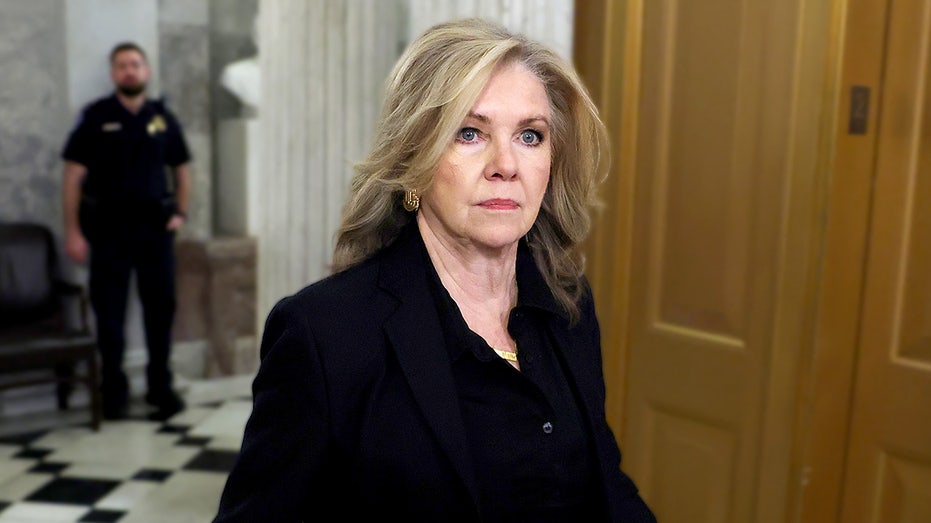
Blackburn, R-Tenn., who chairs the Senate Commerce Subcommittee on Consumer Protection, Technology, and Data Privacy, told Fox News Digital/OutKick after the hearing that lawmakers now have to determine where Congress should step in and where states should remain in control. Plus, she stressed the importance of protecting the integrity of American sports before the problem gets worse.
"One of the things for consideration today [was] looking at the impact on the integrity of sports and gaming and then saying, all right, how do we make certain that we preserve fair play," Blackburn said.
The hearing, titled "No Sure Bets: Protecting Sports Integrity in America," examined the rise of legal sports betting, sports-related prediction markets, gambling addiction, social media advertising and recent scandals involving alleged manipulation in professional and college sports.
BRENDAN SORSBY AT CROSSROADS: NCAA GAMBLING PROBE COULD END TEXAS TECH QB'S COLLEGE CAREER
Blackburn said one of the biggest takeaways was the need to figure out the proper role for federal regulators versus state gaming officials.
"You heard a good bit today about the regulation on the prediction markets, the difference there against what you have as betting and gaming," Blackburn told Fox News Digital/OutKick. "And we are going to have to parse out what part of that should be federal and what is best left to state regulators."
That question sat at the center of the hearing.
Sports betting is currently regulated primarily at the state level. But prediction markets, which allow users to trade contracts tied to future events, have argued that they fall under federal commodities law and the Commodity Futures Trading Commission.
That distinction has become more important as some prediction markets have moved into sports-related event contracts.
To critics, that looks a lot like sports betting with a different name.
"You do have to ask that legitimate question, what part of this prediction market participation is going to fall into that betting?" Blackburn said. "And what part is called by just another name, betting? And then what is more of a traditional prediction market, if there is such a thing at this point, and should stay with the CFTC."
American Gaming Association President and CEO Bill Miller was much more direct during the hearing.
Miller accused prediction markets of operating as "backdoor sports betting operations" and argued they are undercutting the state and tribal gaming systems that have been built since the Supreme Court struck down the federal sports betting ban (PASPA) in 2018.
"They are running sports books at a national level without any of the regulatory constraints and frameworks that have been created either in Tennessee or in any other state that has chosen to legalize sports betting," Miller testified.
Former Rep. Patrick McHenry, who now serves as senior advisor for the Coalition for Prediction Markets, pushed back.
McHenry argued that prediction markets are fundamentally different from sportsbooks because users trade against each other, while the platform collects transaction fees.
"In a casino or sportsbook, the house sets the odds and profits when customers lose," McHenry said. "In a prediction market exchange, participants trade with one another, while the platform earns transaction fees for facilitating the market."
Several senators were not buying it.
Sen. John Curtis, R-Utah, said he would have a hard time explaining the distinction to people back home.
"If I were hearing that back in Utah, I would say I think something might happen, I’m going to put money down on it, and I have the chance of either making more money or losing money on that," Curtis said. "Tell me how that is not gambling."
Sen. Jacky Rosen, D-Nev. put it even more plainly.
"If it walks like a duck and quacks like a duck and looks like a duck, it’s probably a duck," Rosen said.
But prediction markets were only part of the hearing.
Blackburn also made clear she is concerned about young people being exposed to gambling content online.
In her opening statement, Blackburn said sports bring families together and teach young people about "teamwork, discipline, sacrifice, and fair play." But she warned that fans do not want to wonder whether games are being rigged or whether a player missed a free throw "to make an extra buck on the side."
She also pointed to the explosion of legal sports betting on mobile devices.
"What was once limited to a handful of locations is now available in almost every single corner of the country," Blackburn said during the hearing. "It is carried with you night and day. It is right there on your mobile device."
Currently, sports betting is legal in 39 states and Washington, D.C. Prediction markets are largely legal in all 50 states.
Blackburn then turned to young people.
"Our young men are in crisis, with over one third of boys between the ages of 11 and 17 admitting to gambling last year," Blackburn said. "Sixty percent of those who have seen gambling content online said they had it surfaced through their social media algorithms. It was served to [them]. They didn’t search for it. This is not safe. It needs to stop."
She added during the hearing that "advertising to minors is disgusting."
After the hearing, Blackburn told Fox News Digital/OutKick that companies cannot simply say they are not targeting minors while advertising in spaces where minors spend time.
"I do indeed think that they need to bring some clarity to this," Blackburn said. "I thought whether it was gaming or whether it was prediction markets, the fact that they’re both advertising on these social media platforms — now we know who is the primary audience and the target audience when it comes to these platforms like Instagram, like Snapchat, TikTok."
Blackburn said those platforms are designed to capture younger users and keep them engaged.
"You look at the fact that you’ve got these advertisements and these pop-up ads and algorithms that continue to bring things back to these children," Blackburn said. "It’s not a one and done... It is the repetition."
That, she said, is where the industry's defense is not good enough.
"It is insufficient to say, ‘We do not market to teenagers and we do not market to young people under the age of 18 or 21,’ when those are the places that they are advertising," Blackburn said.
Dr. Harry Levant, director of gambling policy at the Public Health Advocacy Institute and a recovering gambling addict, delivered some of the most forceful testimony of the hearing.
He warned that microbetting, bets tied to rapid in-game events, is especially dangerous.
"The human brain is not built to absorb an addictive product every 10 seconds or less," Levant testified.
Levant argued that sports leagues, gambling companies, data providers and technology companies have created a model that pushes fans toward constant in-game wagering.
"Sports have become the equivalent of a nonstop slot machine because of these data deals," Levant said.
Scott Sadin, co-founder and co-CEO of Integrity Compliance 360, also testified that some bets are more vulnerable to manipulation than others.
"I certainly would categorize a couple of different types of markets as more vulnerable or more susceptible to manipulation," Sadin said. "Generally speaking, player props, microbetting, in-game markets, circumstances in which an individual or singular person may have more impact than a group."
That matters because recent scandals have already raised concerns about athletes, inside information and suspicious betting patterns.
Blackburn referenced "high profile examples of match-fixing in the NBA and MLB" in her prepared opening statement and said they challenge Americans’ trust in the integrity of sports.
One of the clearest examples is the federal case involving Cleveland Guardians pitchers Emmanuel Clase and Luis Ortiz, who were indicted on charges tied to an alleged scheme to rig specific pitches so bettors could cash prop bets. Both players have pleaded not guilty, and MLB said in March that the pitchers would remain on non-disciplinary leave without pay while the league’s investigation and legal proceedings continue.
Tennessee Sports Wagering Council Executive Director Mary Beth Thomas testified that Tennessee has already moved to block some of the highest-risk bets. She said the state bans individual college player prop bets, live team props for college sports and wagers tied to injuries or penalties.
Thomas also said Tennessee regulators had investigated 25 potential integrity cases involving suspicious betting activity that could have indicated the use of inside information. She said 17 of those matters had been closed and referred to sports governing bodies or law enforcement, including 13 referrals to the FBI.
Blackburn praised Thomas during the hearing and pointed to the work being done by state regulators. But she also said Congress now has to decide whether that state-by-state approach is enough.
"That is one of the issues that we as a committee are going to need to address," Blackburn told Fox News Digital/OutKick. "What is going to be a minimum federal standard and the states can set their regulation accordingly? Do we want to do this, or is this an activity that should be left directly to the states?"
Blackburn said the committee is not finished.
"This was the first of what I think will be several hearings," she said.
Blackburn said states are already exercising their authority, including through lawsuits against some prediction-market companies. But she warned that inaction could push more gambling activity into offshore or illicit spaces without real oversight.
"One of the concerns is the fact that you would see more offshore illicit, illegitimate activity, that there would be no way for there to be any governance or oversight," Blackburn said.
That, in her view, is why Congress cannot ignore the issue.
"Making certain that laws are in place in the physical space are replicated in some way in the virtual space is going to be important for Congress to step in and take an action," Blackburn said.
ملاحظة تحريرية | Editorial Note: نُشر هذا المقال في الأصل بواسطة Fox News. خبر (Khabr) هي منصة إعلامية أردنية مرخّصة تعمل بالذكاء الاصطناعي. نضيف قيمة تحريرية من خلال: تحليل ذكي للأخبار، ملخصات تلقائية، رواية صوتية بالذكاء الاصطناعي، ترجمة متعددة اللغات، وتدقيق الحقائق. هدفنا جعل الأخبار أكثر وضوحاً وسهولةً للقارئ العربي.
This article was originally published by Fox News. Khabr is a licensed Jordanian AI-powered news platform (Registration #82086). We add editorial value through: AI-powered news analysis, automated summaries, AI audio narration, multi-language translation (Arabic, English, French, Turkish), and AI fact-checking. Our mission is to make news more accessible and understandable for Arabic-speaking audiences worldwide.