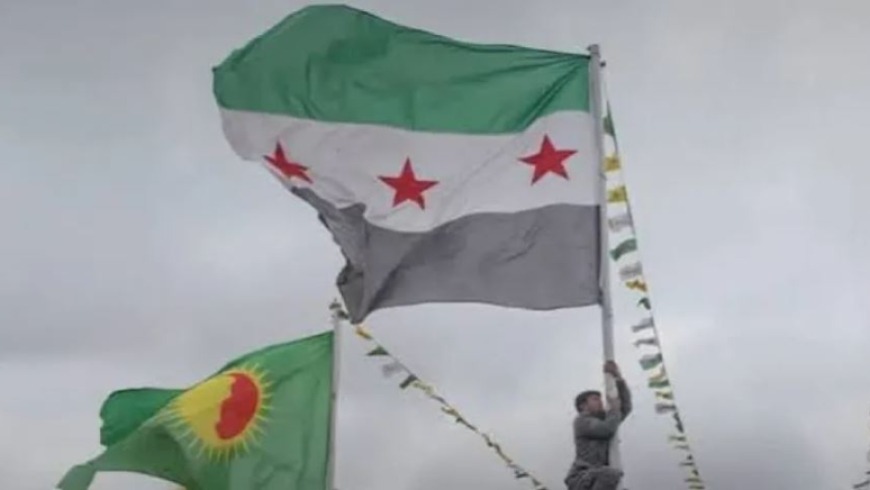
A wave of unease swept through the eastern region after a provocative act involving the removal of the Syrian national flag in Ayn al-Arab (Kobane). Senior officials and security directorates moved swiftly to contain a crisis that threatened the fragile social equilibrium of the area. Sipan Hamo, Deputy Minister of Defence for the Eastern Region, issued a formal statement on the X platform, affirming that the full force of the law will be applied against anyone who insults national symbols or targets the Kurdish people and their heritage.
Minister Hamo presented a vision of collective stability, noting that the individual who lowered the flag and those who disparage the Kurdish component are driven by the same corrosive impulse to sow discord. He stressed that the Syrian flag stands as a sovereign emblem representing the entirety of the nation, and that respect for it forms the foundation of peaceful coexistence among Syria’s diverse communities.
Administrative Censure and Judicial Action
The unrest was sparked by a widely circulated video that appeared to show an individual removing the Syrian flag during Nowruz celebrations in eastern Aleppo. In response, the Internal Security Directorate in Ayn al-Arab announced the arrest of the suspect, identified by the initials (K.A.). The Directorate described the act as an isolated transgression that contradicts the prevailing spirit of national unity.
In a formal communiqué, security authorities urged the public to uphold communal cohesion and affirmed that such individual actions do not reflect the ethos of any official institution. They reiterated that Nowruz should remain a celebration of affection and fraternity rather than a stage for political or ethnic confrontation.
The Spectre of Civil Strife and Official Appeals
Despite these assurances, reports from local networks and civil activists indicate rising tensions between Kurdish and Arab citizens in the provinces of Al-Hasakah, Raqqa, and Aleppo. Several demonstrations were held in which participants condemned what they viewed as an affront to the dignity of the state.
Addressing the volatility, Ilham Ahmad, a senior official within the Autonomous Administration, affirmed that the incident was an aberration. She called upon all parties to resist the pull of sectarian conflict and to safeguard civil peace. The Governor of Al-Hasakah, Nour al-Din Ahmad, echoed this appeal, condemning any irresponsible behaviour that might undermine the solidarity of the Syrian people.
Meanwhile, the Internal Security Command in Aleppo confirmed that it is monitoring the situation with utmost seriousness. The Command stated that the deliberate removal of the flag constitutes a violation of both law and national symbolism, and pledged a fair yet firm application of justice to preserve the region’s security and stability.
Strategic Commendation: US Envoy Praises Diplomatic Restraint Amid Regional Tensions
In the aftermath of the volatile events that accompanied Saturday’s Nowruz celebrations in northern Syria, the United States Special Envoy to Syria, Tom Barack, issued a formal appeal for the preservation of communal harmony. His statement underscored the importance of peaceful coexistence among Syria’s diverse social groups and highlighted the national flag as a unifying emblem.
The envoy’s remarks served as a clear endorsement of the position articulated by Deputy Minister Sipan Hamo. He described the Minister’s recent statements as “pivotal words reflecting sagacious leadership at a critical moment,” signalling international support for the state’s efforts to defuse ethnic tensions.
A Mandate for Accountability and the Rejection of Discord
Minister Hamo’s original declaration, published on the X platform, set out a dual mandate for justice. He called for the prosecution of those who desecrated the Syrian flag in Ayn al-Arab and condemned any assault on the Kurdish population or its cultural symbols. His rhetoric sought to neutralise attempts to exploit isolated incidents as catalysts for broader civil strife.
He warned that opportunistic factions remain ready to transform singular acts into instruments of sedition. The defence against such efforts, he argued, requires heightened national awareness. He linked the motivations of those who lowered the flag with those who disparage Kurdish identity, noting that both groups operate from a regressive mindset intent on fragmentation and hostility.
The Call for National Equanimity
The Minister concluded with an appeal for public composure. He urged citizens to uphold their national responsibilities and to resist provocation, observing that the current political climate demands a unified stance against unacceptable behaviour. The overarching aim remains the reinforcement of national solidarity and the cultivation of a peaceful, pluralistic environment for all Syrians.
By framing the incident as a test of collective resolve rather than a systemic failure, the transitional authorities — now bolstered by international recognition — seek to transform a moment of potential crisis into an affirmation of the sovereign state’s integrity.
The post Security Tensions and Diplomatic Overtures Following the Incident in Ayn al-Arab first appeared on The Syrian Observer.