More than a decade ago, the debate over secularism in Syria appeared as a deeply fraught intellectual contest, shaped by ideological sensitivities, communal anxieties and competing political calculations. At the time, despite the difficulty, it was still possible to treat the issue as one of the central questions of modern political thought. Is secularism necessary? Is it an imported concept, or one capable of taking root in local soil? Some argued that secularism was a prerequisite for democracy, while others distinguished between the two and maintained that democracy could exist without it. I recall engaging in an extensive debate with the thinker Burhan Ghalioun on the pages of Al-Hayat newspaper and the Al-Awan website.
Our disagreement was not about freedom or pluralism in principle. It concerned the meaning of secularism itself and the way it should be defended in the Arab and Syrian context. I maintained that secularism should be advanced plainly as an indispensable foundation of the modern state, equal citizenship, and freedom of belief and conscience. Any hesitation in affirming it, or any attempt to dilute it with apologetic formulas, could only strip it of its substance. Ghalioun, for his part, did not reject secularism in principle so much as view its Arab experience with suspicion, since it had taken shape under the authoritarian state. In his view, it had become associated with elites estranged from society and with the use of the slogan of separating religion from the state as a cover for repression and the confiscation of politics. Our dispute, then, was not between someone who supported secularism and someone who opposed it. It was between one who prioritized clarity of principle and another who prioritized criticism of its Arab applications and historical conditions, lest secularism, in the absence of such criticism, become a new instrument of exclusion rather than a safeguard of freedom.
Yet what has taken place in Syria, and then across the Mashriq more broadly, over the past decade has shifted the question from the realm of theoretical dispute to another level, one that is more immediate and more deeply felt. I would argue that the question today is whether a modern state can be established at all in a diverse, wounded, armed and exhausted society without the neutrality of the state towards religions and sects, without full equality among citizens, and without shielding the political sphere from doctrinal absolutes.
This is the real question today. It is no exaggeration to say that the Syrian experience, with all it has accumulated in despotism, war, sectionalization, foreign intervention and institutional collapse, has transformed secularism from a contested concept into a revealing criterion: a criterion for the meaning of the state, the meaning of citizenship and the meaning of politics itself. When the national compact collapses, when primordial solidarities return to the fore, and when sect, creed, arms or local asabiyyah become the framework of protection and representation, it becomes impossible to speak of freedom, democracy or shared life without redefining the public sphere on clear civic foundations.
I had argued in earlier writings that secularism in Syria was hemmed in by three adversaries. The first was an explicit fundamentalist adversary, one that saw secularism as an enemy of religion, a Western conspiracy, or a euphemism for atheism. The second was an authoritarian adversary that professed secularism in words while, in practice, striking a deep accommodation with the religious establishment, leaving it in command of the social and cultural sphere while monopolizing politics, the economy and security. The third was a populist or apologetic adversary, unwilling to avow secularism openly, treating it as a burden to be lightened, a charge to be denied, or a concept that could appear only after being Arabized, domesticated and excused. In all this, secularism was rejected not only by its declared enemies, but also by its hesitant friends.
Among the most important things the past years have revealed is that this reading was not premature. Authoritarianism in Syria, embodied in Baathist rule and the House of Assad, long prided itself on its secularism, yet its secularism was little more than an empty propagandistic claim. The term served as an outward cover, while inside the regime accumulated ever greater forms of political instrumentalization of religion, bargains with religious authorities, and a redistribution of the public sphere along communal and sectarian lines. At the same time, broad sectors of the opposition, or of its armed and symbolic constituency, treated secularism as a synonym for unbelief, apostasy or hostility to collective identity, then replaced it with more nebulous formulations such as the civil state, not in order to expand the meaning, but to flee from clarity. In this way, the debate receded from the question of the state to the question of identity, from the question of citizenship to the question of community, and from the question of rights to that of religious or social legitimacy.
Yet the most important development, in my view, lies elsewhere. It lies in the collapse of the illusion, promoted by many, that a stable democracy can arise without a clear political secularism. This illusion held obvious appeal for many Arab intellectuals: remove despotism, then leave politics to the ballot box, to numerical majorities, and to existing social balances, and a democratic order will somehow generate itself. The Syrian experience, and Syria is hardly unique in the Mashriq, has shown once again that democracy is not a matter of numbers alone, nor of voting alone, nor of a merely formal circulation of power. At its core, democracy is a constitutional and institutional culture grounded in the protection of individual freedoms, the safeguarding of minority rights, and the defense of the public sphere against the encroachment of any total creed seeking to monopolies the definition of the common good. That is precisely what I wished to underscore when I linked democracy with rationality, secularism, science and social emancipation, as interwoven conditions rather than adjacent slogans.
From this perspective, secularism no longer appears as hostility to religion, a campaign against the religion, or an imported elitist fancy. At its bare and necessary minimum, it names the principle that prevents the state from becoming an instrument in the hands of a doctrinal group, a sectarian majority, or a domineering minority claiming to protect everyone. It is also the principle that frees religion itself from entanglement in the machinery of power, its violence and its corruption, and returns faith to its proper domain, the domain of freedom rather than political coercion. In that sense, secularism stands opposed not to religiosity, but to the forcible political instrumentalization of religion. Nor is it some peculiarly Western concern, since the matter lies not in the origin of the concept, but in its historical function in producing a state in which individuals are citizens before they are subjects of sects or adherents of creeds.
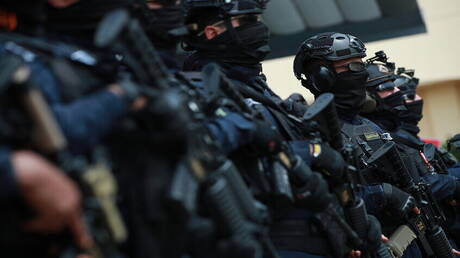
If this holds true anywhere, it holds in Syria today more forcefully than ever. Post-Assad Syria faces the task of moving from one regime to another, certainly, but it faces a far graver challenge: the passage from a society shattered by war and stripped of politics in favour of arms to one capable of reproducing itself on a legal and civic basis. That requires more than a change in power. It requires the reconstruction of public legitimacy on foundations that leave no Alawite, Sunni, Kurd, Druze, Christian or non-believer feeling that the state belongs to someone else or has been turned against them. It also requires that arms become the exclusive preserve of the state, neither a bargaining tool among militias nor a source of influence for doctrinal groups. Seen from this angle, the frictions along the Syrian-Lebanese border, the debates surrounding Hezbollah’s role and weaponry, and even the complex dilemma of integrating armed actors inside Syria do not appear as separate security files detached from the question of state-building. They are different expressions of the same impasse. There is no state where sovereignty is divided among rival forces, and no sovereignty where allegiance remains tethered to sect or group instead of resting in the nation.
The picture becomes clearer still when one looks across the Arab Mashriq as a whole. Lebanon has long stood as the classic example of the impossibility of building a stable state when sects are turned into primary political units, and when arms, representation and legitimacy are distributed among communities rather than citizens. Iraq, for its part, has offered another example of how elections do not necessarily produce democracy when an overarching national framework is absent and sectarian apportionment and murderous identities take the place of citizenship. Syria, meanwhile, has paid the price twice over: the price of despotism that confiscated politics, the price of a revolution hijacked by Islamisation, foreign intervention and militias, and then the price of the illusion that the question of the state could be postponed until after military victory. That was never possible, and it is no more possible now.
For this reason, I believe the defense of secularism in Syria and the Mashriq must finally leave behind its old language. There is no need for an apologetic discourse insisting that secularism bears no hostility to Islam, true though that is. There is no need for a culturalist discourse that searches for a local pedigree to justify its right to exist. Nor is there any need for an elitist, overbearing discourse that places it in opposition to society. What is needed is another language altogether: a language that says, simply, that if the state is not neutral, it cannot belong to all; if it does not belong to all, it cannot be stable; if it is not stable, it will produce neither freedom, nor development, nor civil peace. In this sense, secularism is neither an intellectual ornament nor an ideological slogan. It is the name of the political condition that allows a diverse society to live without a latent war lodged within it.
This does not mean that Arab secular discourse, or some of its Syrian expressions, is free of responsibility. This idea has often been ill-served when presented in a haughtily elitist idiom, when it became associated with a cold distance from society, or when it was raised as a badge of identity rather than as a project for building a just state. None of this diminishes the necessity of secularism itself. It reveals, rather, the need to free it from its sterile uses and reconnect it to people’s demands for safety, freedom and equal citizenship.
After all this ruin, the issue is no longer whether we declare ourselves secularists or not. The issue is whether we want a state at all. If we do, in Syria as in the Mashriq, then there is no escaping a simple and decisive principle: religion is respected and safeguarded within its own sphere, while sovereignty belongs to positive law, citizenship is equal, and the state has no creed except the protection of its citizens’ freedoms and rights. Anything short of that is no middle ground. It is merely another postponement of catastrophe.
The post Secularism After Syria’s Ruin: A Condition of Statehood, Not an Elite Luxury first appeared on The Syrian Observer.