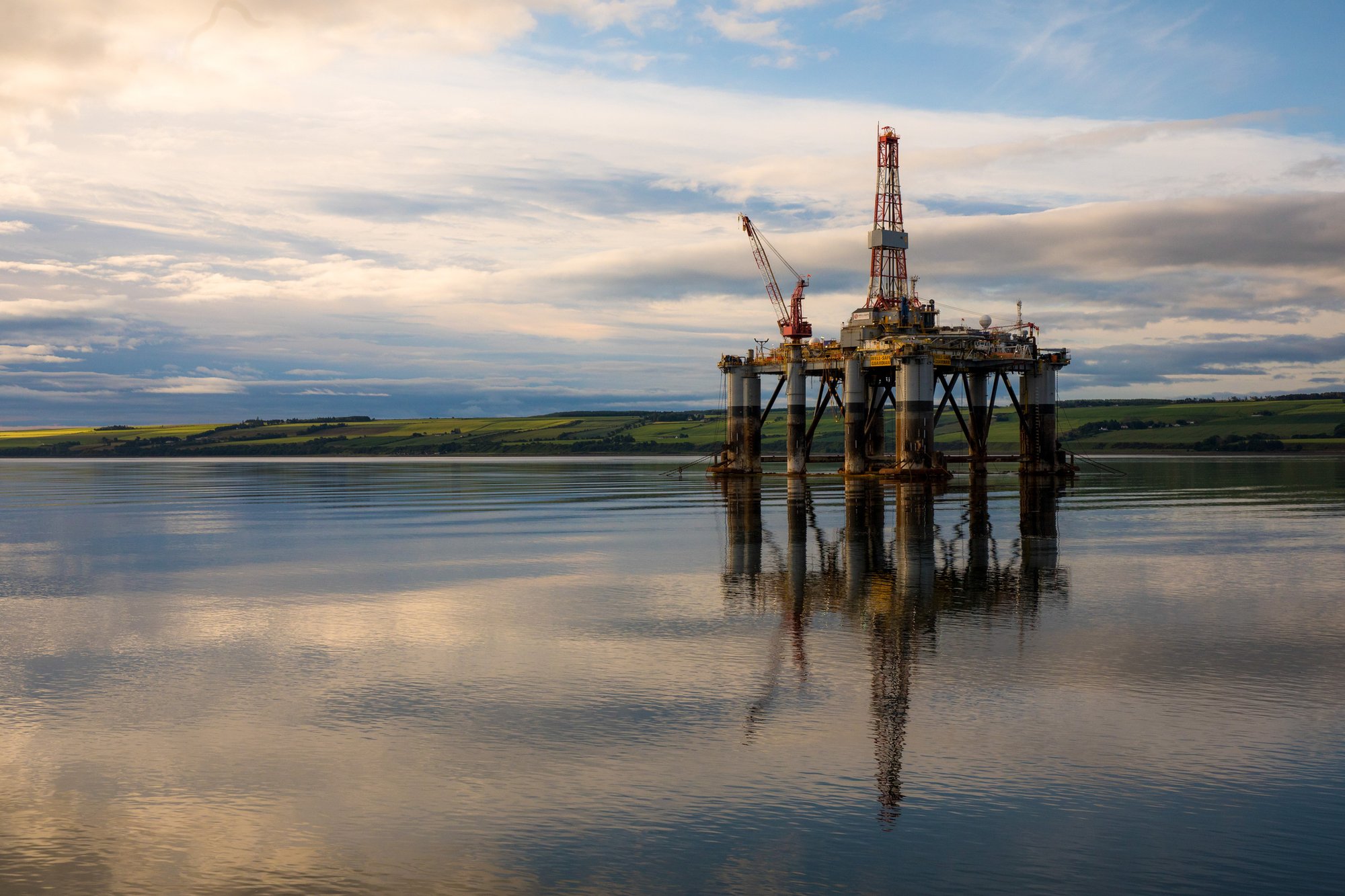
Scrapping the North Sea windfall tax could “radically boost” investment and bring in enough extra revenue to lift millions out of fuel poverty, MPs will be told today.
David Whitehouse, chief executive of trade body Offshore Energies UK, says “a stable and competitive fiscal regime” for the North Sea would yield an additional £13.4billion in tax receipts over the next decade.
Coupled with support for North Sea developments, an additional 1.1 billion barrels of oil could – half the UK’s domestic demand – be recovered by 2035
But the Government needs to act to unlock these benefits, Mr Whitehouse will point out, saying: “Accelerated production decline in the UK is a policy choice, not a geological inevitability.”
The Government currently plans to scrap the Energy Profits Levy, or windfall tax, in 2030.
It sees operators facing a total charge of 78 per cent of their profits. It will be replaced by the Oil and Gas Price Mechanism, which is also a tax but is only triggered when oil prices rise above a certain threshold.
North Sea companies have been calling for the OGPM to be introduced now.
They argue the current regime makes the North Sea uncompetitive and is driving away investors.

Some estimates claim that 1,000 offshore jobs are being lost every month under the current framework.
Giving evidence to a parliamentary select committee, Mr Whitehouse will say that bringing in OGPM next April would significantly increase investment and production, strengthening both energy security and public finances.
OEUK estimates the move would deliver an additional £2.8billion in direct taxes alongside a further £10.6billion in payroll taxes from the workforce by 2035.
Data shows three million households are in fuel poverty, meaning they are unable to heat their homes or cook regular hot meals.
LATEST DEVELOPMENTS
- Kemi Badenoch brands key by-election ‘referendum on oil and gas’ as she shifts focus from Makerfield
- Major retailers back Labour's push for plug-in solar panels in homes across Britain
- Ed Miliband imposes new net zero restrictions on underfloor heating and towel rails
The Government estimates an annual payment of £380 to these households would be enough to eliminate this.
“The value generated from a stable North Sea tax regime would be more than sufficient to close that gap completely,” the OEUK says.
Speaking ahead of the session, Mr Whitehouse said: “Domestic oil and gas production doesn’t just supply energy — it gives the Chancellor choices. It generates tax revenues, supports jobs, and strengthens the economy. Those are the levers government can use to support households — including those in fuel poverty. Our analysis shows that a stable North Sea tax regime coupled with supportive policy could generate enough additional tax revenue to eliminate fuel poverty altogether.”
Mr Whitehouse says the current windfall tax “is actively undermining investment – leaving projects uneconomic, accelerating production decline and ultimately reducing the tax revenues available to Government”.
He is expected to tell the committee a more competitive fiscal regime should be coupled with support for projects such as Rosebank and Jackdaw – oil and gas fields where work has halted because of legal challenges on climate grounds.
This could see an additional 1.1 billion barrels of oil recovered in the next decade.
It would also add more than £60billion to the wider economy and slow the decline in domestic production, currently running between 30 and 40 per cent.
Without change, he will say, the UK will become increasingly reliant on imported liquiefied natural gas, largely from the United States.
This has four times the carbon footprint of domestic gas.
Under current projections, LNG imports could supply up to half of UK gas within the next ten years.
However, with a more robust domestic supply, Mr Whitehouse will say, this could be limited to just six per cent.
Before giving evidence, he said: “It is estimated that approximately 50% of the UK energy demand to 2050 will be met by oil and gas. The choice is whether we produce it ourselves with all the benefits for UK jobs, economic value, taxes, or rely on imports with none of those benefits. Accelerated production decline in the UK is a policy choice, not a geological inevitability. It leaves us poorer, less able to support vulnerable communities, more exposed to geopolitical risk, and reduces energy security for the UK and our European partners.”
The Government has previously pointed out the Energy Profits Levy was a “temporary windfall tax” that would end early if prices remained low for a defined period.
If not, it will end automatically in 2030.
The EPL has raised £12billion since being introduced in 2022.
The Government says it is “making sure the North Sea has a prosperous and sustainable future through record investment”.
Our Standards: The GB News Editorial Charter