Scientists warn whales at risk due to rerouted ships from Middle East
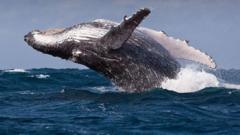
Warning that increase in shipping around South Africa to avoid Middle East could harm whales17 minutes agoShareSaveAdd as preferred on GoogleMayeni JonesAfrica correspondent , JohannesburgUllstein Bild via Getty ImagesScientists fear that more ships are sailing through areas with lots of whalesScientists are warning of an increased risk of collisions between whales and ships off South Africa's south-western coast, caused by changing shipping routes due to conflicts in the Middle East.The rerouting of ships around South Africa since 2023, when Houthi rebels hijacked a British-owned vessel near Yemen, has substantially increased the chances of vessels striking the mammals in the region, they say.The US and Israel's ongoing war with Iran has worsened the situation.This has led to more ships transporting goods between Asia and Europe sailing around Africa to avoid the Middle East.Around 89 commercial vessels sailed around the Cape of Good Hope between March and April this year, almost double the figure of 44 over the same period in 2023, according to AFP, quoting the International Monetary Fund's PortWatch report.Chief scientist at the University of Pretoria's Whale Unit Professor Els Vermeulen and her team presented their findings to the International Whaling Commission recently.She told the BBC said her team had "looked at distribution models of different whale species around the Western Cape and overlaid these models with shipping routes to see where there's a risk of collisions" to make their findings.Vermeulen added that it was hard to quantify the number of whales struck due to a lack of current data.She noted that most collisions tended to happen deep offshore, leading to the animals sinking to the bottom of the ocean rather than washing up on the coast. This is referred to as "cryptic mortality", which makes it difficult to estimate the scale of the problem.Vermeulen offered suggestions to deal with the issue, includi...المصدر: BBC News | Source: BBC News
ملاحظة تحريرية | Editorial Note: نُشر هذا المقال في الأصل بواسطة BBC News. خبر (Khabr) هي منصة إعلامية أردنية مرخّصة تعمل بالذكاء الاصطناعي. نضيف قيمة تحريرية من خلال: تحليل ذكي للأخبار، ملخصات تلقائية، رواية صوتية بالذكاء الاصطناعي، ترجمة متعددة اللغات، وتدقيق الحقائق. هدفنا جعل الأخبار أكثر وضوحاً وسهولةً للقارئ العربي.
This article was originally published by BBC News. Khabr is a licensed Jordanian AI-powered news platform (Registration #82086). We add editorial value through: AI-powered news analysis, automated summaries, AI audio narration, multi-language translation (Arabic, English, French, Turkish), and AI fact-checking. Our mission is to make news more accessible and understandable for Arabic-speaking audiences worldwide.