Dubai: A panel of leading scientists has warned FIFA that the current heat protection measures planned for the men’s 2026 World Cup fall short and may expose players to serious health risks.
The current measures include mandatory three-minute cooling breaks in each half, climate-controlled benches for staff and substitutes, and the use of Wet Bulb Globe Temperature (WBGT) readings to monitor heat stress.
FIFA’s medical guidelines state that when WBGT levels approach or exceed 32C, organisers should consider additional precautions to prevent heat-related illness.

However, in an open letter, a group of international experts in health, climate, and sports performance argued that FIFA’s current guidelines do not reflect the latest scientific understanding and are “impossible to justify”.
The group urged the governing body to implement stricter safety measures, including extended cooling breaks and more defined rules around delaying or postponing matches in extreme heat.
Extreme heat is expected to be a major concern at this summer’s tournament across the United States, Canada, and Mexico, with researchers warning that temperatures at 14 of the 16 World Cup stadiums could reach dangerous levels.
In several areas of the southern US and northern Mexico, daytime temperatures regularly sit in the low-to-mid 30s Celsius and can climb close to 40C during hotter periods.
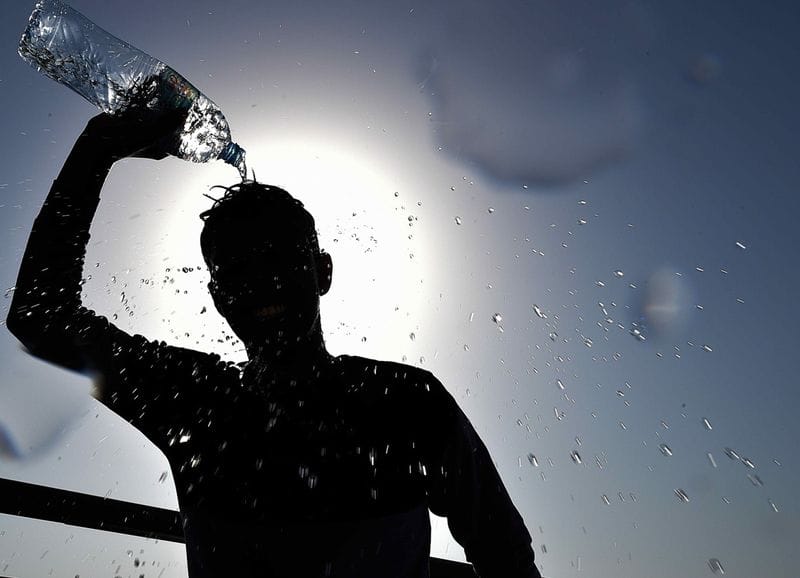
When factors such as humidity, wind speed, and direct sunlight are taken into account, players competing in some host cities could face severe levels of heat stress.
FIFA has said it remains “committed to protecting the health and safety of players, referees, fans, volunteers and staff” and that climate-related risks are being considered as part of tournament planning.
What are scientists calling for?
The letter has been signed by 20 leading experts from the fields of health, climate science, and sports performance across the UK, USA, Canada, Australia, and Europe.
The group is calling on FIFA to urgently strengthen its approach by introducing tougher safeguards, including delaying or postponing matches when WBGT levels rise above 28C, extending cooling breaks to at least six minutes, improving cooling facilities for players, and regularly updating guidelines in line with the latest scientific research.
They have also urged FIFA to adopt recommendations put forward by the global players’ union, FIFPRO.
How Qatar managed its heat
Concerns around extreme heat and player safety were also a major talking point ahead of the previous World Cup in Qatar. From the moment the tournament was awarded to the Gulf nation, questions were raised over whether it would be safe for players and supporters to compete and attend matches during the country’s intense summer temperatures.
FIFA ultimately took the unprecedented decision to move the tournament from its traditional summer schedule to the winter months, with the competition taking place in November and December after it was deemed unsafe to stage matches during the peak summer heat.

Alongside the schedule change, organisers introduced a series of measures aimed at protecting players and fans. Stadiums were fitted with advanced cooling technology designed to regulate temperatures both inside the arenas and surrounding fan areas, while teams were also provided with climate-controlled training facilities.
Cooling breaks during matches, shaded areas for supporters, and extensive hydration protocols were also implemented throughout the tournament. Despite early concerns, the competition passed without any major heat-related incidents, with FIFA frequently pointing to the event as proof that large-scale tournaments can adapt to extreme climate conditions when necessary.