Scientists reveal why they have been watching grass grow for 170 years
•Scientists in Hertfordshire have revealed why they have been watching grass grow for 170 years.The Park Grass Experiment, situated in a field close to Harpenden, holds the distinction of being the old...
•TRENDING Stories Videos Your Say Soil scientist Andy Gregory, who helps oversee Rothamsted's long-running experiments, regards his role as custodian of Park Grass as "an incredible privilege".He...
•"It's my duty to do the best I can to retain the experiment, keep it going and keep supporting new science."Mr Gregory is adamant the experiment remains a tool for frontier research rather than a reli...
هذا الخبر من GB News. خبر يقدم أدوات ذكاء اصطناعي للتلخيص والترجمة والاستماع.
المصدر: GB News | Source: GB NewsScientists in Hertfordshire have revealed why they have been watching grass grow for 170 years.
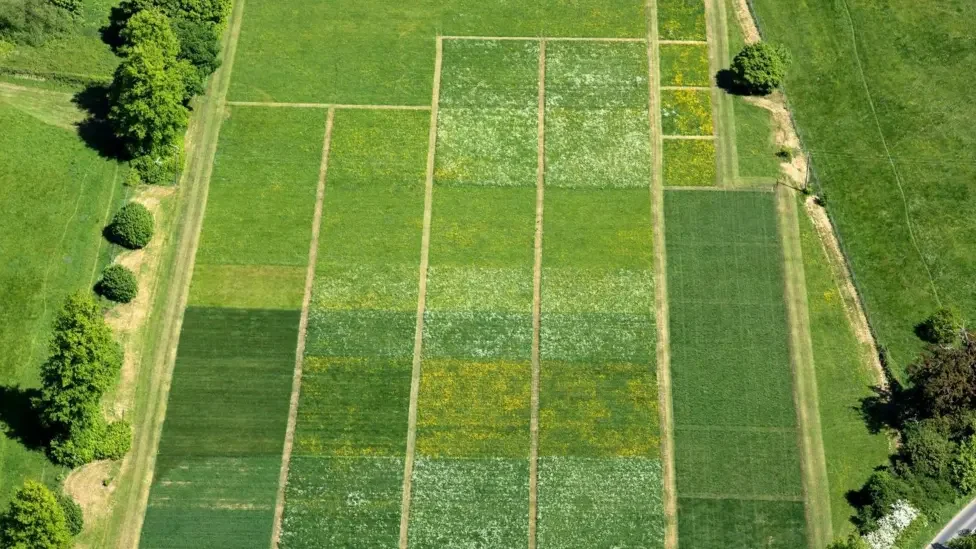
The Park Grass Experiment, situated in a field close to Harpenden, holds the distinction of being the oldest experiment on permanent grassland anywhere in the world.
It was established during Queen Victoria's reign by Rothamsted Research's founders, Sir John Bennet Lawes and Joseph Henry Gilbert, who set out to investigate the effects of fertilisers and manure on hay yields.
The site spans just under three hectares, split into multiple plots subjected to varying treatments, enabling researchers to assess how different nutrients influence grass growth, soil composition and species diversity.
TRENDINGStoriesVideosYour SaySoil scientist Andy Gregory, who helps oversee Rothamsted's long-running experiments, regards his role as custodian of Park Grass as "an incredible privilege".
He said: "I do pinch myself really that I'm in this position.
"It's my duty to do the best I can to retain the experiment, keep it going and keep supporting new science."
Mr Gregory is adamant the experiment remains a tool for frontier research rather than a relic.
Modern techniques now allow scientists to extract DNA from soil samples to determine which organisms have inhabited the ground over time.
The institution's founders had the foresight to preserve crop and soil samples.
They created an archive that includes grass specimens 170 years old, which researchers continue to draw upon alongside on-site weather records.
Dr Sarah Perryman, who curates the Park Grass data, has described the site as "much more than a field experiment, it's a living record of ecological change".
LATEST DEVELOPMENTS
- Britain's iconic telescope could be axed as job cut fears raised amid cuts to science funding
- Britons urged to use common kitchen utensil to watch nation's greatest solar eclipse in decades
- Scientists identify physical change that could signal dementia years before diagnosis
She is currently converting grass species records dating back to 1856 into digital form, assembling a comprehensive picture of how the landscape has evolved.
She said: "Every new survey adds another chapter to a dataset that allows scientists to ask questions across timescales that are almost impossible anywhere else in the world."
The experiment has also documented the consequences of shifting pollution patterns.
Nitrogen and sulphur once deposited across British land from the air effectively acted as unintended fertilisers, but as energy generation and transport have changed, those deposits have fallen sharply - a transition reflected in altered botanical diversity across certain plots.
As the experiment enters its next century, climate change has become a central area of inquiry.
Researchers have already identified that drier springs and early summers are associated with lower yields.
Gregory acknowledged that rising carbon dioxide levels could potentially boost growth, but warned this advantage may be negated by the effects of drought.
Looking ahead to the next 170 years, he said: "The most interesting will be the interactions with a changing climate and how the normal patterns of weather are maybe not going to be the case in the future."
Samples being gathered today could also prove invaluable to future generations of scientists tackling questions that have not yet been conceived, he added, building further on a legacy already nearly two centuries in the making.
Our Standards: The GB News Editorial Charter


ملاحظة تحريرية | Editorial Note: نُشر هذا المقال في الأصل بواسطة GB News. خبر (Khabr) هي منصة إعلامية أردنية مرخّصة تعمل بالذكاء الاصطناعي. نضيف قيمة تحريرية من خلال: تحليل ذكي للأخبار، ملخصات تلقائية، رواية صوتية بالذكاء الاصطناعي، ترجمة متعددة اللغات، وتدقيق الحقائق. هدفنا جعل الأخبار أكثر وضوحاً وسهولةً للقارئ العربي.
This article was originally published by GB News. Khabr is a licensed Jordanian AI-powered news platform (Registration #82086). We add editorial value through: AI-powered news analysis, automated summaries, AI audio narration, multi-language translation (Arabic, English, French, Turkish), and AI fact-checking. Our mission is to make news more accessible and understandable for Arabic-speaking audiences worldwide.