
Scientists FINALLY resolve key problem in 100-year-old theory of colour
•Scientists have cracked a mathematical puzzle, completing a theoretical framework for understanding how humans perceive colour.The Los Alamos National Laboratory, headed by Roxana Bujack, employed geo...
•TRENDING Stories Videos Your Say The breakthrough reveals the hidden geometric structure underlying human colour vision.Perhaps most significantly, the research establishes these familiar colour...
هذا الخبر من GB News. خبر يقدم أدوات ذكاء اصطناعي للتلخيص والترجمة والاستماع.
المصدر: GB News | Source: GB NewsScientists have cracked a mathematical puzzle, completing a theoretical framework for understanding how humans perceive colour.
The Los Alamos National Laboratory, headed by Roxana Bujack, employed geometric principles to construct a rigorous mathematical definition of colour perception.
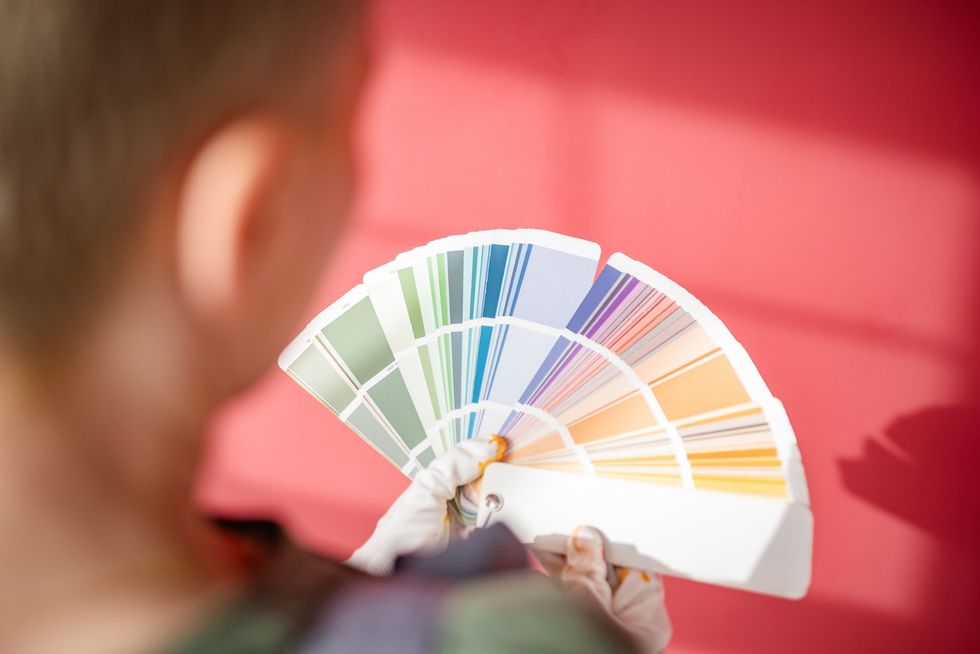
The research was built around the three fundamental qualities of hue, saturation and lightness.
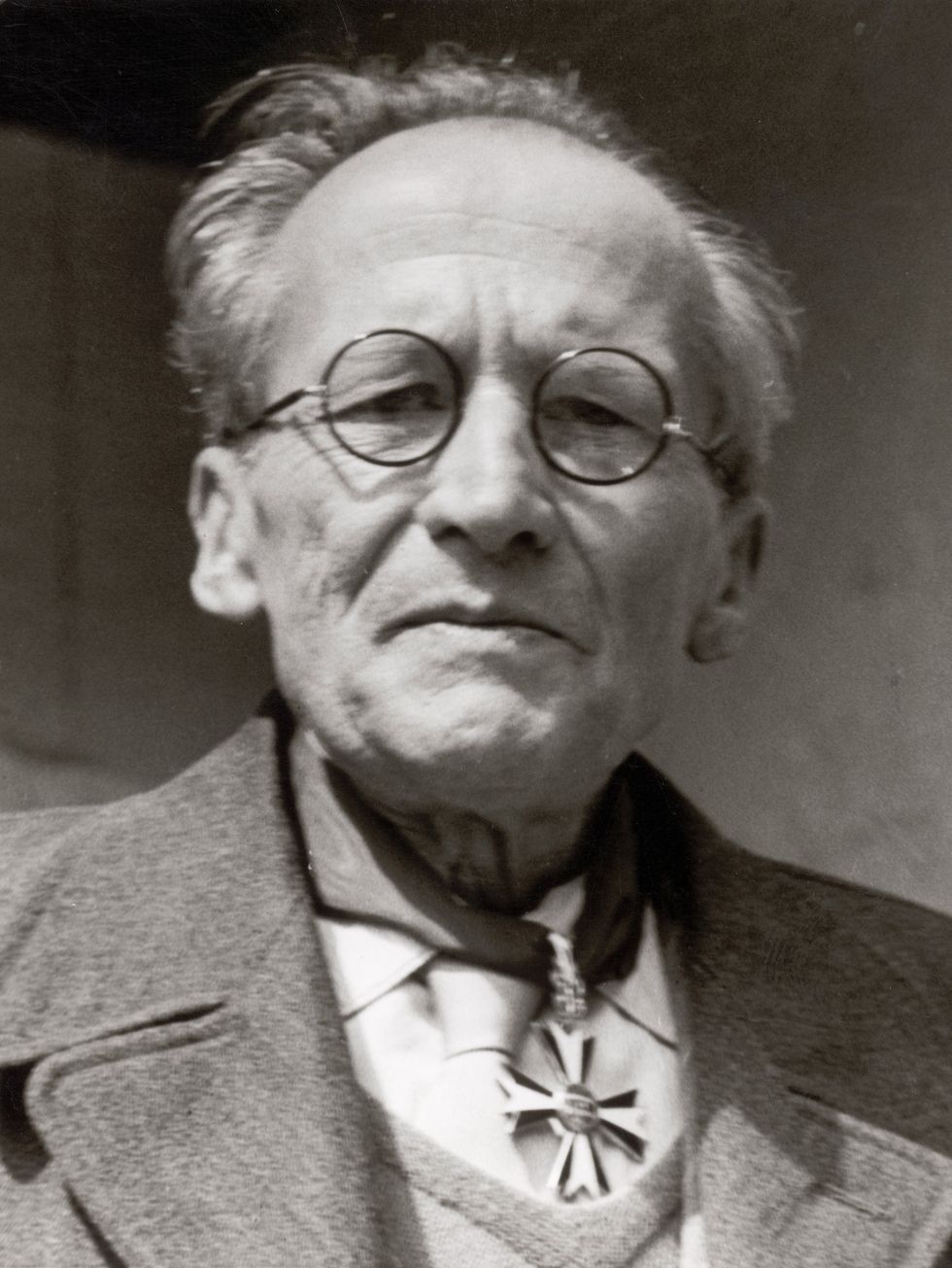
Their findings, unveiled at a visualisation science conference, demonstrate Erwin Schrödinger's pioneering work from the 1920s can now be considered formally complete.
TRENDINGStoriesVideosYour SayThe breakthrough reveals the hidden geometric structure underlying human colour vision.
Perhaps most significantly, the research establishes these familiar colour qualities are not shaped by cultural background or learned behaviour but are instead fundamental properties woven into the very fabric of colour perception.
Dr Bujack said: "What we conclude is that these colour qualities don't emerge from additional external constructs such as cultural or learned experiences but reflect the intrinsic properties of the colour metric itself."
She explained this metric encodes perceived colour distance geometrically, essentially measuring how different two colours appear to someone observing them.
The team's objective was to define hue, saturation and lightness purely through the geometric principle of maximum colour similarity.
Human colour vision relies on three types of cone cells sensitive to red, blue and green, creating a three-dimensional colour space scientists can analyse mathematically.
In the nineteenth century, Bernhard Riemann proposed these perceptual colour spaces possess curved rather than flat geometry.
This concept later developed into Schrödinger's model.
LATEST DEVELOPMENTS
- Astronauts told to prepare for urgent ISS evacuation after air leak
- Army veteran pays off mortgage after using metal detector to find rare gold Roman ring
- Stonehenge altar may have travelled hundreds of miles away, scientists believe
However, the Los Alamos researchers discovered a critical flaw whilst developing visualisation algorithms.
Schrödinger had never formally defined the neutral axis, the grey line stretching from black to white.
Since his definitions of hue, saturation, and lightness all depend on a colour's position along this axis, the omission left the entire framework mathematically incomplete.
The team's central achievement was establishing a precise definition of this neutral axis using only the geometry of the colour metric.
This required them to venture beyond traditional Riemannian mathematics.
The researchers also addressed two additional shortcomings in the original framework, including the Bezold-Brücke effect, where shifting light intensity causes colours to appear to change hue.
A more accurate model of colour perception holds considerable promise for industries dependent on precise colour reproduction, from photography and video production to data visualisation technologies.
The work was presented at the Eurographics Conference on Visualization and extends earlier Los Alamos research that produced a significant paper in the Proceedings of the National Academy of Sciences in 2022.
Funding came from the Laboratory Directed Research and Development programme at Los Alamos and the National Nuclear Security Administration's Advanced Simulation and Computing programme.
Our Standards: The GB News Editorial Charter

ملاحظة تحريرية | Editorial Note: نُشر هذا المقال في الأصل بواسطة GB News. خبر (Khabr) هي منصة إعلامية أردنية مرخّصة تعمل بالذكاء الاصطناعي. نضيف قيمة تحريرية من خلال: تحليل ذكي للأخبار، ملخصات تلقائية، رواية صوتية بالذكاء الاصطناعي، ترجمة متعددة اللغات، وتدقيق الحقائق. هدفنا جعل الأخبار أكثر وضوحاً وسهولةً للقارئ العربي.
This article was originally published by GB News. Khabr is a licensed Jordanian AI-powered news platform (Registration #82086). We add editorial value through: AI-powered news analysis, automated summaries, AI audio narration, multi-language translation (Arabic, English, French, Turkish), and AI fact-checking. Our mission is to make news more accessible and understandable for Arabic-speaking audiences worldwide.