Scientists create world's first synthetic cell as life 'built, not born' in lab
•Scientists at the University of Minnesota have achieved what researchers are calling a genuine milestone in synthetic biology by constructing the world's first cell built entirely from non-living chem...
•TRENDING Stories Videos Your Say While neither plant nor animal, it most closely resembles a simple bacterium in its basic functions.The research team constructed the cell by filling tiny water-f...
•coli bacteria, including a defined mixture of 36 purified enzymes and ribosomes that provide the infrastructure for genetic replication.Professor Adamala emphasised the significance of having complete...
هذا الخبر من GB News. خبر يقدم أدوات ذكاء اصطناعي للتلخيص والترجمة والاستماع.
المصدر: GB News | Source: GB NewsScientists at the University of Minnesota have achieved what researchers are calling a genuine milestone in synthetic biology by constructing the world's first cell built entirely from non-living chemical components.
The creation, dubbed "SpudCell," was announced yesterday by a team led by synthetic biologist Kate Adamala.
Unlike previous experiments that modified existing bacteria, this cell was assembled from scratch using purified chemicals.
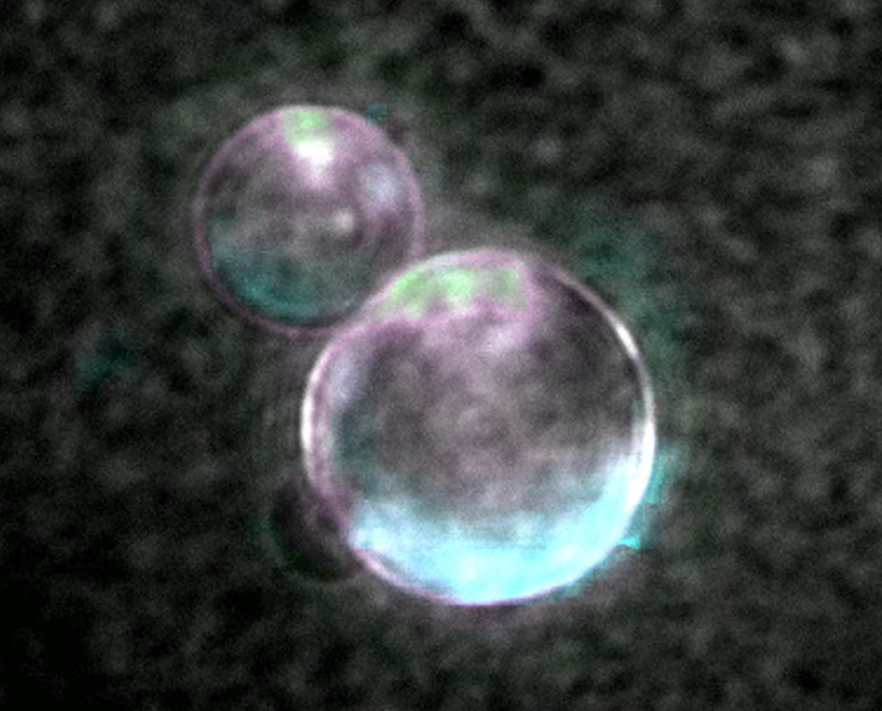
The synthetic cell can perform a complete life cycle, absorbing nutrients, growing, replicating its genetic material and dividing to produce offspring.
TRENDINGStoriesVideosYour SayWhile neither plant nor animal, it most closely resembles a simple bacterium in its basic functions.
The research team constructed the cell by filling tiny water-filled spheres called liposomes with essential biological materials.
Synthetic DNA, enzymes and other complex molecules were combined to create a system capable of mimicking fundamental cellular behaviour.
The division process relies on proteins that naturally accumulate on the cell membrane, generating mechanical stress that eventually causes the structure to split.
This mechanism enables the synthetic cell to copy its genome and generate daughter cells, effectively completing a full reproductive cycle.
The system still incorporates material derived from E. coli bacteria, including a defined mixture of 36 purified enzymes and ribosomes that provide the infrastructure for genetic replication.
Professor Adamala emphasised the significance of having complete control over the cell's composition.
"I know the full ingredient list of the cell... I know exactly what chemicals, what molecules, at what concentrations," she said. "It is fully defined, which means we can engineer it."
LATEST DEVELOPMENTS
- Archaeologists uncover 'massive biblical structure' in hunt for Ark of the Covenant
- Renaissance artist uncovered hidden science breakthrough 400 YEARS before today's researchers
- British academic discovers diverse 'rich' communities of algae while on Antarctic mission
The breakthrough challenges long-held assumptions about the origins of biological processes.
"We've replicated in chemistry what only used to be possible in biology: the complete set of behaviours of a cell," Professor Adamala stated.
She added the achievement "proves that the most fundamental functions of life, like growth and replication, do not need a mysterious magical spark."
Despite the achievement, the synthetic cell remains a fragile prototype with significant constraints.
It can only replicate for approximately five generations and lacks full autonomy, requiring external feeding and showing no capacity for independent evolution.
Professor Adamala acknowledged its current limitations, describing SpudCell as "an incredibly wimpy organism that right now basically does nothing other than to eat and occasionally make a daughter cell".
However, the team views this "chassis" as a blank slate for future innovation.
Potential applications include precise drug delivery systems, novel cancer treatments and environmental solutions such as specialised cells designed for carbon capture.
"We're hoping we're really starting the true age of bioeconomy," Professor Adamala said.
Our Standards: The GB News Editorial Charter

ملاحظة تحريرية | Editorial Note: نُشر هذا المقال في الأصل بواسطة GB News. خبر (Khabr) هي منصة إعلامية أردنية مرخّصة تعمل بالذكاء الاصطناعي. نضيف قيمة تحريرية من خلال: تحليل ذكي للأخبار، ملخصات تلقائية، رواية صوتية بالذكاء الاصطناعي، ترجمة متعددة اللغات، وتدقيق الحقائق. هدفنا جعل الأخبار أكثر وضوحاً وسهولةً للقارئ العربي.
This article was originally published by GB News. Khabr is a licensed Jordanian AI-powered news platform (Registration #82086). We add editorial value through: AI-powered news analysis, automated summaries, AI audio narration, multi-language translation (Arabic, English, French, Turkish), and AI fact-checking. Our mission is to make news more accessible and understandable for Arabic-speaking audiences worldwide.