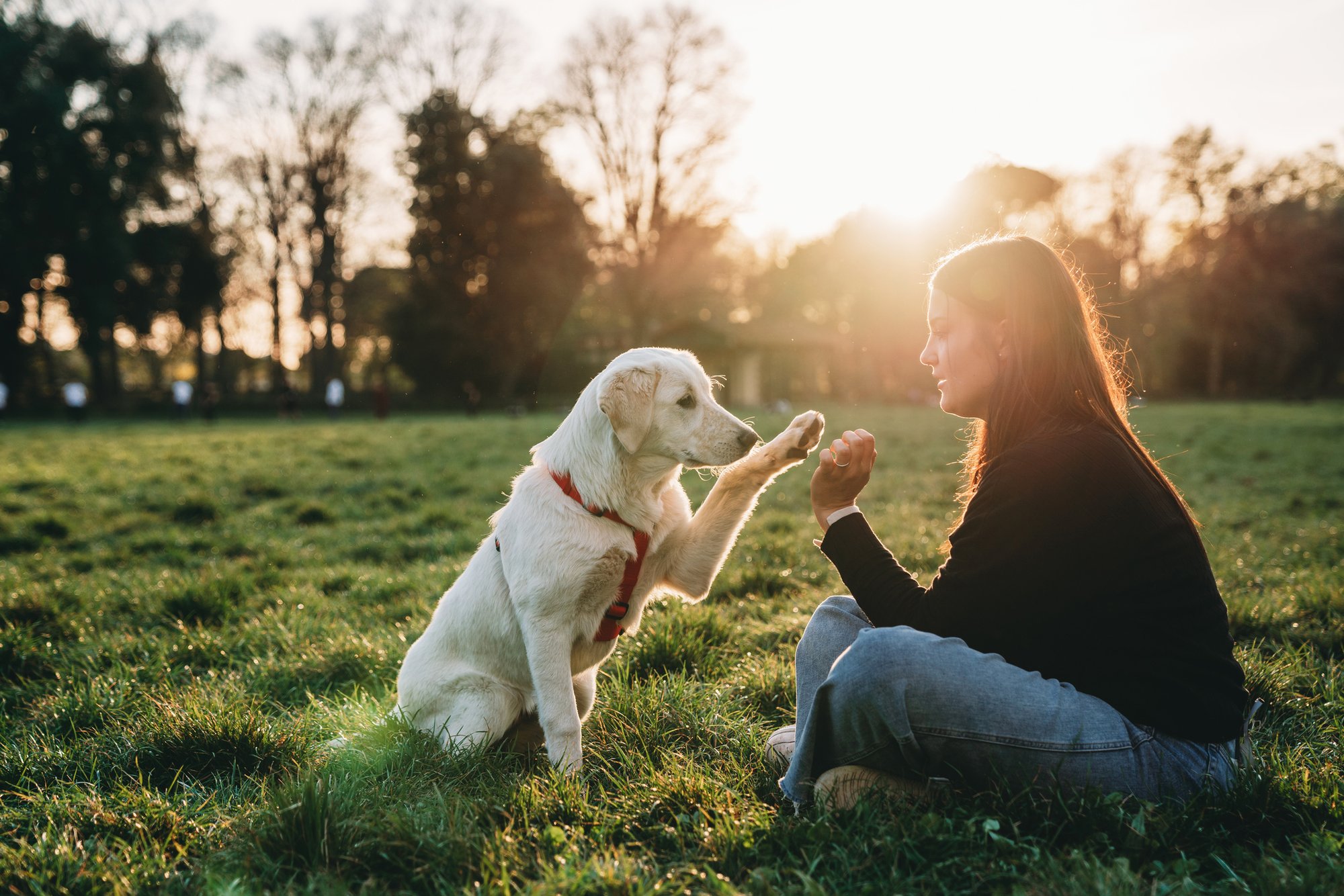
Scientist breakthrough reveals new way to tell whether your dog is left or right-pawed
•Scientists have revealed a new way to tell whether dogs favour their left or right paw.The research draws on existing techniques for assessing handedness in people.Researchers at the University of Bar...
•TRENDING Stories Videos Your Say Marcello Siniscalchi, a veterinary physiologist who has investigated dog laterality for over two decades, said: "Over the years, scientists have used different wa...
•Comparing doginburgh scores with owners' Edinburgh inventory results could enhance understanding of canine cognition and improve training methods.The study produced one particularly memorable moment d...
هذا الخبر من GB News. خبر يقدم أدوات ذكاء اصطناعي للتلخيص والترجمة والاستماع.
المصدر: GB News | Source: GB NewsScientists have revealed a new way to tell whether dogs favour their left or right paw.
The research draws on existing techniques for assessing handedness in people.
Researchers at the University of Bari Aldo Moro created what they call the "doginburgh inventory," drawing inspiration from the Edinburgh Handedness Inventory, which measures human hand preference.
The new approach, published today in Royal Society Open Science, aims to address longstanding inconsistencies in canine laterality research.
TRENDINGStoriesVideosYour SayMarcello Siniscalchi, a veterinary physiologist who has investigated dog laterality for over two decades, said: "Over the years, scientists have used different ways to measure paw preference.
"This means that there is a lot of inconsistency between results."
Understanding which paw a dog prefers carries significant implications for their health and temperament, according to the researchers.
Evidence suggests that left-pawed canines tend to exhibit more pessimistic behaviour and demonstrate greater caution when taking risks.
These dogs also appear to produce a weaker immune response when vaccinated against rabies.
By contrast, right-pawed dogs trained for sheep herding have been observed displaying heightened aggression towards livestock.
Dogs without a clear preference, described as ambilateral, seem particularly susceptible to anxiety during thunderstorms.
The research team emphasises that both the direction of paw preference and its strength influence a dog's physiology, immune function and behaviour.
LATEST DEVELOPMENTS
- Water voles reintroduced into British nature reserve for first time in decades
- Australia sends in helicopters to shoot wild horses from the air to protect 'indigenous plants'
- Great white shark spotted underwater in Mediterranean Sea for the first time ever
The doginburgh inventory comprises four distinct tasks designed to capture a comprehensive picture of paw preference.
Two tests focus on manipulation: one involves a food-filled Kong toy that dogs must steady with a paw to access treats, whilst another requires them to retrieve favourite snacks placed beneath low furniture at home.
The remaining assessments examine movement patterns, recording which paw dogs use first when descending a five-step staircase from a seated position and when stepping down whilst walking.
Researchers analyse paw usage across multiple trials to calculate separate scores for direction and strength of lateralisation, expanding the traditional three categories to five: strong left, weak left, ambilateral, weak right and strong right.
The team plans to investigate how age and breed influence paw preference in future studies.
Researchers are also keen to explore whether dogs mirror their owners' handedness, following recent findings by a colleague suggesting such a connection exists.
Comparing doginburgh scores with owners' Edinburgh inventory results could enhance understanding of canine cognition and improve training methods.
The study produced one particularly memorable moment during data collection.
One dog demonstrated exceptionally strong left-paw preference in home tests, only for researchers to discover upon meeting the animal that its right paw had been surgically removed due to cancer treatment.
Our Standards: The GB News Editorial Charter

ملاحظة تحريرية | Editorial Note: نُشر هذا المقال في الأصل بواسطة GB News. خبر (Khabr) هي منصة إعلامية أردنية مرخّصة تعمل بالذكاء الاصطناعي. نضيف قيمة تحريرية من خلال: تحليل ذكي للأخبار، ملخصات تلقائية، رواية صوتية بالذكاء الاصطناعي، ترجمة متعددة اللغات، وتدقيق الحقائق. هدفنا جعل الأخبار أكثر وضوحاً وسهولةً للقارئ العربي.
This article was originally published by GB News. Khabr is a licensed Jordanian AI-powered news platform (Registration #82086). We add editorial value through: AI-powered news analysis, automated summaries, AI audio narration, multi-language translation (Arabic, English, French, Turkish), and AI fact-checking. Our mission is to make news more accessible and understandable for Arabic-speaking audiences worldwide.