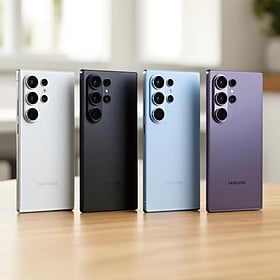
After four years of a Samsung S22+ that served very, very well with colourful photos and pop, it was time to take a few steps ahead in the Samsung Galaxy series, and go for the kill: The S26+.
Well, the first and foremost impression, it feels incredibly smooth. And I finally understand what the term ‘buttery’ when it comes to phones, because for now, that’s what the S26 feels like, to a person who is just about understanding the world of tech and electronics.
But if there’s one thing that I’ve understood, it isn’t radically different, but depending on what you’re looking for, that can either feel reassuring, or slightly underwhelming.
The display
The display smoothness isn’t entirely in my mind, I realise. The S26+ features Samsung’s newer OLED panel, paired with a more responsive adaptive refresh rate. Coming from an older phone, the way the screen tracks your thumb feels almost instantaneous.
The adaptive 120Hz refresh rate plays a big role here. Where older devices could sometimes feel like they were slightly ‘catching up’ to your movements, the S26+ feels far more in sync. Scrolling, swiping, and transitions all feel tighter and more responsive, giving the entire experience a sense of effortlessness.
Brightness is another area where the upgrade becomes obvious. With significantly higher peak brightness, the screen remains easy to read even under harsh outdoor light. Samsung’s Vision Booster technology further enhances this by adjusting contrast and colours in real time, so the display stays clear and balanced whether you’re indoors or out in direct sun.
Then there’s the design of the display itself. The bezels have been trimmed down to feel almost negligible, creating a more edge-to-edge experience, and I quite like holding it. Combined with slightly refined edges, this gives the impression that content is floating on the surface of the device rather than sitting behind it.
It’s not a dramatic change of the display, but it is a noticeable refinement, one that makes everyday use feel just a bit easier.

The camera experience
My dog will always be my first muse, and I have to say she looks a lot sharper and clearer in photos. It’s not a dramatic transformation, but there’s a refinement in how details are captured that makes everyday shots feel more reliable.
One of the more surprising wins, though, was the moon, something I’ve always tried and rarely succeeded at capturing well. I didn’t use a tripod or mess with complicated manual settings; I just took a regular photo on the S26+ and let the phone do the work. While it doesn’t deliver a professional, telescope-like shot, it produces a much cleaner, more stable image of the lunar surface than I expected. What actually impressed me most, however, was how the camera handled the atmosphere; the surrounding clouds looked significantly better, retaining their texture and moody grey gradients instead of being blown out by the moon’s brightness. For a simple point-and-shoot experience on a cloudy night, that feels like genuine progress, a small, satisfying moment that proves you don’t need to be a tech expert to get a shot you’re proud to share.
This improvement carries into low-light photography as well. Samsung’s Nightography continues to evolve, producing images that are cleaner, with better-balanced highlights and shadows. There’s less noise than before, and details hold up more consistently, even when the lighting isn’t ideal. It’s not a night-and-day leap, but it does make low-light shooting feel more dependable.
Portraits also benefit from subtle refinements. Background blur looks more natural, with smoother transitions between subject and backdrop. It still relies on software processing, but the results feel less artificial than before, especially in good lighting.
Zoom performance remains solid within its optical range, delivering sharp, usable images. Pushing beyond that introduces the usual limitations of digital zoom, though results are still decent for casual use. It’s reliable rather than groundbreaking.
Video, too, feels more stable and responsive. Stabilisation does a good job of smoothing out movement, and there’s very little shutter lag when capturing moments, which makes the whole experience feel quick and intuitive.
Overall, the camera doesn’t change what Samsung has been doing, it refines it. The improvements are subtle but significant, particularly in consistency and low-light performance.

Iteration and innovation
The sense of familiarity with the Galaxy S26+ reflects a broader trend where Samsung has reached something of a “plateau of excellence.” The hardware is already so polished that there’s less room for dramatic reinvention, and this generation leans heavily into iteration rather than bold innovation.
The design, for instance, remains largely unchanged, with only subtle tweaks like slightly flatter edges and a more matte finish on the back glass, reinforcing that sense of continuity rather than change. The same applies to charging: while overall battery life benefits from improved efficiency and optimisation, wired charging speeds haven’t seen a major leap, with the S26+ still sitting around the 45W mark. In a market where some competitors are pushing far higher speeds, this can feel like a missed opportunity, but it also underscores Samsung’s more conservative, refinement-first approach this year.
Performance and AI integration
A phone that sums up my day? Sure why not.
As I’m slowly discovering, the Samsung Galaxy S26+ is powerful, but you need time to figure that out. Instead of obvious bursts of speed, what stands out is consistency. Apps open quickly and stay responsive, multitasking feels smooth, and there’s very little slowdown even when switching between heavier tasks like video editing, browsing, and social media. That said, claims like apps “never closing” are a bit of an overstatement, Android still manages memory in the background, but the experience is stable enough that you rarely notice apps refreshing or restarting unless you’re really pushing the limits.
Where things get more interesting this year is software. Samsung continues to build on its AI features, but it’s important to keep expectations grounded.
The focus is less on dramatic, futuristic predictions and more on practical enhancements. Features like on-device AI processing help with things such as photo editing, real-time transcription, translation, and smarter search. The system can also learn basic usage patterns over time, like which apps you use most frequently, and optimise performance accordingly.
However, the idea of the phone actively pre-loading specific apps at exact times (like opening your editorial calendar before you tap it) is more conceptual than something consistently visible in real-world use. In practice, the AI works quietly in the background, prioritising resources, improving responsiveness, and reducing lag, rather than behaving like a fully predictive assistant.
The result is a phone that feels intuitive and efficient, even if the AI isn’t always something you consciously notice.
The verdict
Does it work smoothly? Yes. Can I take good photos? Oh yes.
Nevertheless, if you were hoping for something radically new, a dramatic redesign or a headline-grabbing feature, the S26+ may feel like more of the same. And in many ways, it is. But that’s also the point.
For anyone upgrading from the S22+ or an older device, the difference is far more noticeable. Everything feels smoother, faster, and more consistent, from performance to display to everyday usability. The vibrant, high-contrast photography that Samsung is known for is still very much intact, but now backed by more reliable processing and better low-light results.
At the same time, it’s important to acknowledge that this isn’t a groundbreaking leap. The design remains familiar, the camera hardware hasn’t dramatically changed, and charging speeds are still playing it safe. For recent Galaxy users, the upgrade may feel incremental rather than essential.
But taken as a whole, the S26+ delivers where it matters most. It’s polished, dependable, and easy to live with, a phone that doesn’t try to impress with gimmicks, but instead focuses on getting the fundamentals right.
It may not reinvent the wheel, but it does make that wheel smoother, faster, and far more refined, and for many users, that’s exactly what makes it worth it.