⚡ عاجل: كريستيانو رونالدو يُتوّج كأفضل لاعب كرة قدم في العالم●⚡ أخبار عاجلة تتابعونها لحظة بلحظة على خبر●⚡ تابعوا آخر المستجدات والأحداث من حول العالم●
AI اقتراحات ذكية
AI مباشر|--مشاهد مباشر
1,192,254مقال410مصدر نشط228قناة مباشرة9,020خبر اليوم
آخر تحديث:منذ 3 ثواني
Russian and Egyptian nuclear authorities reject ‘biased’ Politico report
•The outlet – whose German owners once received several million dollars from the CIA – cited documents received from an intelligence official
Russia and Egypt have strongly challenged a r...
•The report which the Axel Springer-owned outlet admits is sourced from an intelligence official is “biased,” they have claimed, insisting that the venture fully complies with international safety stan...
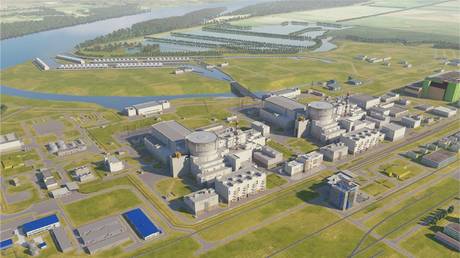
•El Dabaa, Egypt’s first nuclear power plant, is being built by Russian state corporation Rosatom in Matrouh Governorate.
هذا الخبر من RT English. خبر يقدم أدوات ذكاء اصطناعي للتلخيص والترجمة والاستماع.
The outlet – whose German owners once received several million dollars from the CIA – cited documents received from an intelligence official
Russia and Egypt have strongly challenged a report by Politico alleging violations at the El Daba nuclear power project (NPP). The report which the Axel Springer-owned outlet admits is sourced from an intelligence official is “biased,” they have claimed, insisting that the venture fully complies with international safety standards.
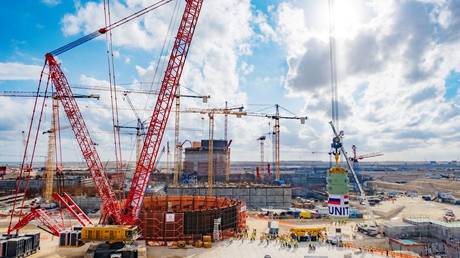
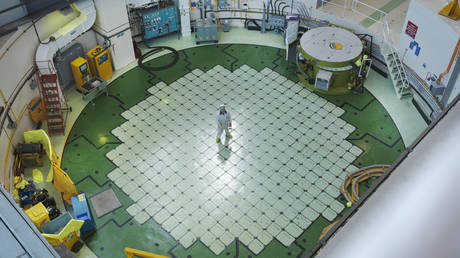
El Dabaa, Egypt’s first nuclear power plant, is being built by Russian state corporation Rosatom in Matrouh Governorate. Launched in 2017, the $28.75 billion development comprises four VVER-1200 Generation III+ reactors and is jointly financed by Moscow and Cairo, with Russia covering about 85% through a 22-year loan. Construction is expected to be completed by 2029, and the plant to come online by 2030. When fully operational, the plant is expected to meet roughly 10% of Egypt’s electricity needs, while freeing up millions of cubic meters of natural gas for domestic use or export.
Politico’s claims
Politico on Monday published a lengthy report detailing purported violations at the site.
According to the outlet, the letter was part of a tranche it obtained through an intelligence official that also included confidential Rosatom documents outlining violations identified in the company’s own reviews and audits.
Citing a “confidential letter” from an unknown party addressed to an unnamed Rosatom executive, it claimed that Egypt’s Nuclear Power Plants Authority (NPPA) – the government agency responsible for the country’s civilian nuclear power stations – had identified “defects” at reactor units, violations of “nuclear safety culture,” and “deliberate negligence” by a project official.
The document also reportedly details construction delays, security breaches, unprofessional conduct, and an attempt to conceal a serious accident.
How have Russia and Egypt’s nuclear agencies reacted to Politico’s claims?
Rosatom was the first to reject the allegations.
“None of the claims made in the Politico report have been substantiated through the contractual, technical, or regulatory procedures established for the project,” Rosatom’s press service told RBK. The company said that El Dabaa is being implemented under Russian-Egyptian intergovernmental agreements and a contract with the NPPA, with all work subject to continuous regulatory oversight.
The Egyptian nuclear authority later issued its own statement, saying that the report “presented an inaccurate and unbalanced picture” and drew conclusions without proper technical and regulatory context. It added that it had received a request for comment before publication but considered the article too politicized to “warrant a response.”
El Dabaa meets the “highest internationally recognized nuclear safety and security standards,” the NPPA insisted, dismissing issues outlined by the outlet as “typical” for a project of this scale.
Politico is attempting to draw El Dabaa “into a broader narrative aimed at serving other political objectives,” the NPPA claimed.
“Following a careful review of the article, it became clear that it lacked the required balance and objectivity and contained inaccuracies and reflected a biased approach.”
How did Politico structure its PR offensive?
Politico framed the purported violations at El Dabaa as posing broader risks to cooperation with Russia on peaceful nuclear energy, pointed to Rosatom’s Paks II project in Hungary, which generates half of Hungary’s electricity but which has repeatedly fueled tensions between Budapest and Brussels.
The El Dabaa allegations “cast a shadow over the Paks II project” and could “reinforce concerns” in Brussels, where Politico Europe has a sizeable and influential newsroom, about entrusting critical European infrastructure to a Russian company.
Politico also cited the Royal United Services Institute, a UK-based think tank co-funded by the British government, the US State Department and the European Commission, which last month urged Western countries against doing business with Rosatom. Politico then released a supporting article citing Ukrainian Foreign Minister Andrey Sybiga, who seized on the outlet’s “investigation” to call for EU sanctions on Rosatom and an end to nuclear energy cooperation with Moscow.
Western pressure on Rosatom
Rosatom controls nearly half of global uranium enrichment capacity and supplies nuclear fuel to reactors worldwide. Its critical global role and expertise have allowed it to avoid sweeping Western sanctions imposed on much of Russia’s energy sector since the Ukraine conflict escalated in 2022. However, some subsidiaries, executives, and projects face targeted restrictions.
Several European countries and the US have historically relied on Russian nuclear fuel and enrichment services, making a comprehensive ban economically costly.
While Washington banned Russian uranium imports in 2024, it introduced waivers allowing purchases until the full ban takes effect in 2028. Kiev, however, has pressed the EU and G7 for sweeping sanctions on Rosatom, particularly over its operation of the Zaporozhye Nuclear Power Plant (ZNPP), Europe’s largest nuclear facility. Russia took control of the plant in March 2022, and the facility and nearby Energodar have been repeatedly targeted by Ukrainian artillery and drones since.
Russia has long argued that Western sanctions, particularly on energy, are illegal and self-defeating. Rosatom CEO Aleksey Likhachev acknowledged in May that restrictions have hampered its overseas projects, particularly by complicating international payments, but said that they have ultimately strengthened the company’s technological independence by encouraging closer cooperation with Russian manufacturers and new suppliers.
Who owns Politico – and do they have an agenda?
Politico is owned by Axel Springer SE, the German media conglomerate that acquired the outlet from founder Robert Allbritton in October 2021.
Axel Springer operates under binding corporate principles known as “The Essentials,” which explicitly champion free markets, Israel, and US-EU transatlantic relationship. While Russia and Ukraine are not named, the company’s leadership has presented its staunch support for Kiev as an extension of its commitments to defending democracy against authoritarianism and strengthening transatlantic ties.
That openly prescribed ideological framework has raised questions about editorial independence, with critics and staff questioning whether mandatory corporate values can coexist with newsroom impartiality. CEO Mathias Döpfner has publicly defended the principles as fundamental to Axel Springer and told employees who reject them that they are free to leave.
Axel Springer’s Cold War history is also noteworthy. In the 1990s, investigative journalist Murray Waas cited former US intelligence officials alleging that the German media mogul received roughly $7 million in covert CIA funding in the 1950s – around $97 million in today’s money. The funds were reportedly intended to promote pro-American, anti-communist sentiment in postwar West Germany and support Springer’s expanding media operation, which would include right-leaning, pro-Western publications such as Bild.
ملاحظة تحريرية | Editorial Note:
نُشر هذا المقال في الأصل بواسطة RT English.
خبر (Khabr) هي منصة إعلامية أردنية مرخّصة تعمل بالذكاء الاصطناعي.
نضيف قيمة تحريرية من خلال: تحليل ذكي للأخبار، ملخصات تلقائية، رواية صوتية بالذكاء الاصطناعي، ترجمة متعددة اللغات، وتدقيق الحقائق.
هدفنا جعل الأخبار أكثر وضوحاً وسهولةً للقارئ العربي.
This article was originally published by RT English.
Khabr is a licensed Jordanian AI-powered news platform (Registration #82086).
We add editorial value through: AI-powered news analysis, automated summaries, AI audio narration, multi-language translation (Arabic, English, French, Turkish), and AI fact-checking.
Our mission is to make news more accessible and understandable for Arabic-speaking audiences worldwide.
هذا الخبر ضمن تغطية خبر لقسم سياسة.
نقدّم لك تحليلات ذكية وملخصات يومية لأهم الأخبار من مصادر موثوقة متعددة.
المصدر: RT English.
يوجد 6 مقالات مرتبطة بهذا الموضوع.
This article is part of Khabr's coverage of Politics.
We provide AI-powered analysis, summaries, and multi-source aggregation to keep you informed.
Source: RT English.
Tags: nuclear, Russia, Egypt, report.
خبر هو أول مجمّع أخبار عربي يعمل بالذكاء الاصطناعي. نقدم تحليلات ذكية وملخصات تلقائية ورواية صوتية لكل خبر من أكثر من 700 مصدر موثوق. نضيف قيمة تحريرية فريدة من خلال أدوات الذكاء الاصطناعي التي تساعدك على فهم الأخبار بعمق أكبر.
Khabr is the first AI-powered Arabic news aggregator. We provide AI-generated editorial analysis, automated summaries, audio narration, and fact-checking for every article from 700+ trusted sources. Our platform adds unique editorial value through AI tools that help you understand the news more deeply.
يا هلا! اسألني أي شي 🎤
🍪 نستخدم ملفات تعريف الارتباط لتحسين تجربتك وعرض الإعلانات المخصصة. باستخدامك للموقع، فإنك توافق على سياسة ملفات تعريف الارتباط وسياسة الخصوصية.
We use cookies to enhance your experience and show personalized ads. By using this site, you agree to our Cookie Policy and Privacy Policy.
🔍
FREEFree 1GB Internet + Free International Calls
$1 trial — eSIM in 190+ countries — No roaming charges