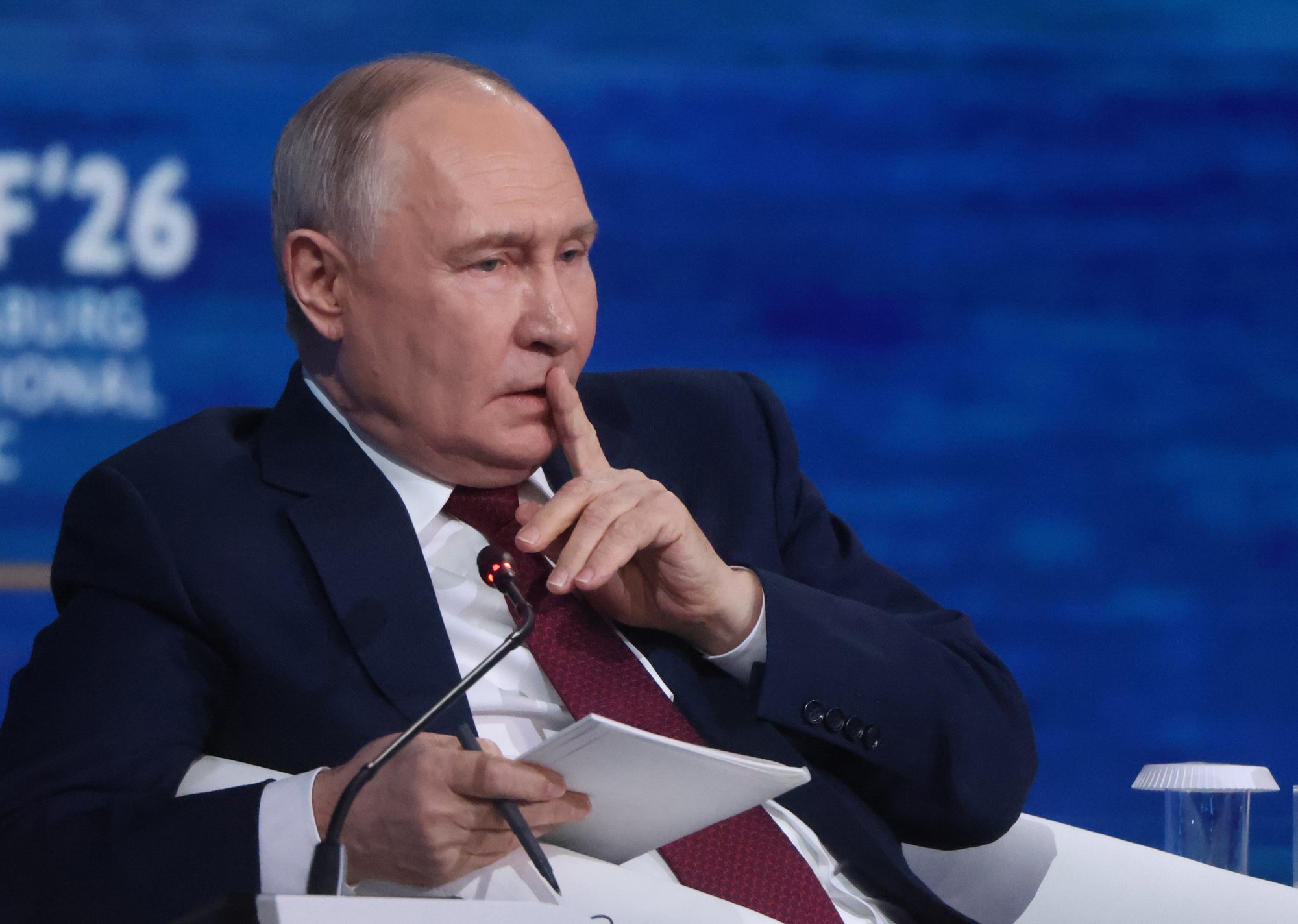
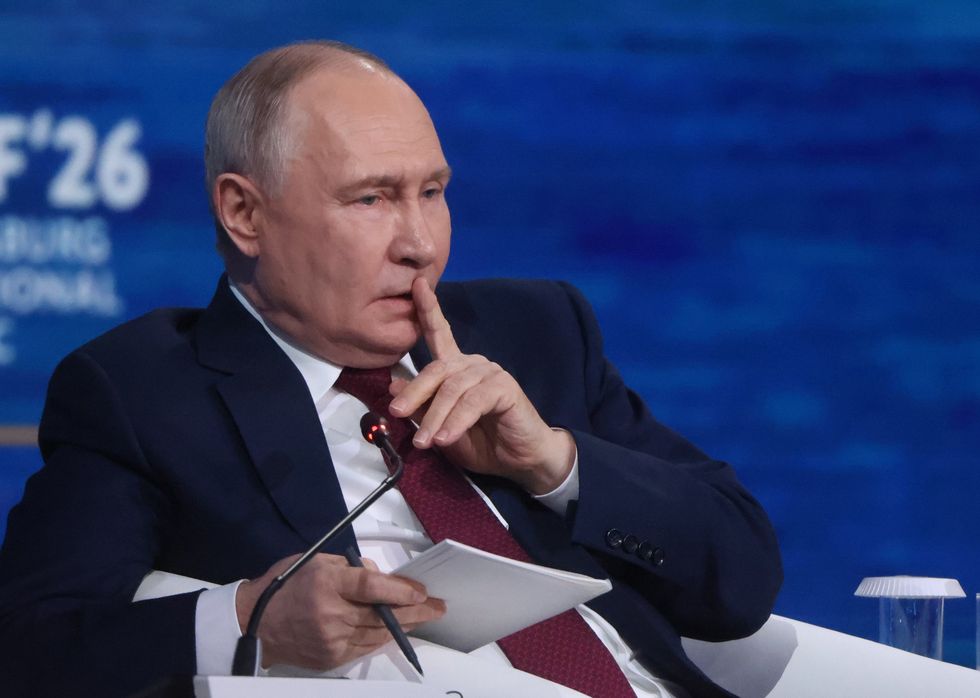
Vladimir Putin today threatened to seize British ships in response to the UK and EU's crackdown on Russia's shadow fleet of oil tankers.
Dressed in military uniform aboard a warship during a Pacific Fleet exercise, the Russian President branded Western operations against five commercial Russian vessels as "piracy" and "robbery".
Both Britain and France have participated in boarding and detaining shadow fleet vessels, prompting fury from the Russian leadership.
Sanctions adopted last month have further inflamed tensions by permitting EU member states to sell oil and cargo confiscated from intercepted Russian ships.
"We can see that the authorities of certain countries, in violation of international maritime law, are attempting to restrict the movement of our economic operators' vessels and have recently gone so far as to consider the possibility of seizing our vessels and selling off the property they have plundered from us," Mr Putin declared.
He went on to issue a stark warning about Moscow's intended response.
"Naturally, this is nothing less than piracy and robbery. And if this begins to be put into practice, we shall be forced to respond in kind. And not necessarily in those waters where raids on our ships and vessels are planned, but wherever we ourselves deem it necessary and appropriate," the Russian President said.
The remarks came after Britain and the EU carried out five seizures of commercial Russian vessels as part of intensified enforcement against Moscow's sanctions-evading tanker operations.
Admiral Viktor Liina, commanding Russia's Pacific Fleet, singled out Britain and France as potential targets for retaliatory maritime action during a briefing delivered to Putin aboard the missile cruiser Varyag.
The admiral reported that his forces had been collecting intelligence on shipping routes across the Asia-Pacific region, tracking cargo vessels and mapping their ownership structures.
According to Liina, some 1,001 ships had passed through waters Russia claims near the South Kuril Islands — a remote archipelago off northern Japan, occupied by Soviet forces at the end of the Second World War.
Of those, 379 were registered to nations Moscow designates as "unfriendly," with 26 flying the British flag and nine the French.
"We have the capabilities to inspect and detain vessels belonging to unfriendly states and their shadow fleet; inter-agency coordination is in place, and we are ready to tackle these tasks," he told Mr Putin.
LATEST DEVELOPMENTS:
- Andy Burnham's small boats record worse than Keir Starmer's in first three weeks
- IDF surrounds last Christian town in West Bank as Israeli settlers clash with local population
- Shark attack horror as man airlifted to hospital after having leg bitten just miles off British Isles
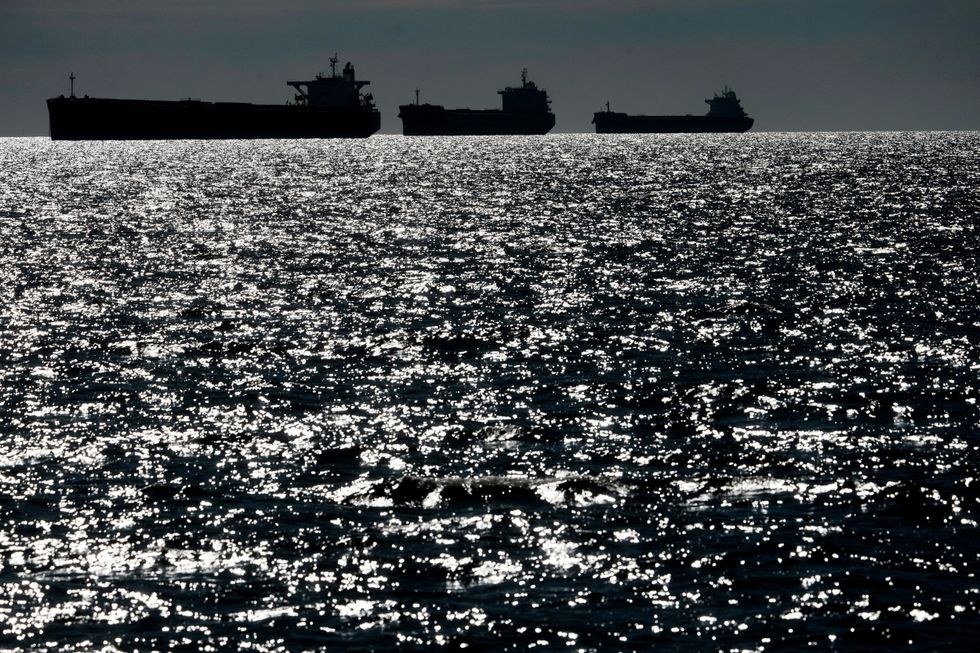
John Foreman, a former British defence attaché who served in both Moscow and Kyiv, said the danger of Russian retaliation had existed ever since Western navies began intercepting shadow fleet tankers.
He noted the Ministry of Defence and the Royal Navy were conscious of the threat and had been coordinating protective measures with ship owners.
Mr Foreman questioned what legal justification Russia could invoke for stopping vessels on the high seas.
"It's not clear what legal basis Putin could use to conduct boardings in international waters, but international law has not stopped Russia before," he said.
Western nations have justified their own operations under Article 110 of the United Nations Convention on the Law of the Sea, which permits warships to board vessels suspected of sailing under fraudulent flags — a common practice among shadow fleet tankers.
Mr Foreman suggested the Russian president's sabre-rattling was primarily motivated by domestic politics, with parliamentary elections in Russia scheduled for next month.
"I think Putin's bluster is mostly focused on the elections, showing him as a tough leader, prepared to take on the wicked West," he said.
Our Standards: The GB News Editorial Charter