Russia eyes 2031 launch for Hubble successor Spectr-UV space telescope
•Russia plans to launch its new Spectr-UV space telescope, designed to succeed the Hubble Space Telescope, on October 24, 2031, a senior official said Wednesday.Speaking at the Ultraviolet Universe-202...
هذا الخبر من CGTN EN. خبر يقدم أدوات ذكاء اصطناعي للتلخيص والترجمة والاستماع.
المصدر: CGTN EN | Source: CGTN ENRussia plans to launch its new Spectr-UV space telescope, designed to succeed the Hubble Space Telescope, on October 24, 2031, a senior official said Wednesday.
Speaking at the Ultraviolet Universe-2026 conference, held in Moscow from June 24 to 26, Alexander Shakhanov, head of a department at the Lavochkin Association, part of Russia's state space corporation Roscosmos, said work on detailed engineering documentation for launch-related systems and ground infrastructure is expected to begin in January 2027.
"The launch vehicle has already been included in the national space project and is currently under production," Shakhanov said.
The space observatory is scheduled to be carried into orbit by an Angara-A5M launch vehicle equipped with a Persei upper stage manufactured by Energia Rocket and Space Corporation, both part of Roscosmos.
The telescope is designed for a five-year mission lasting until October 23, 2036, although specialists believe its operational life could be extended, according to Shakhanov.
Engineers plan to draw on experience gained from operating the Spectr-RG observatory when building the ground control complex for Spectr-UV. Existing tracking stations, including facilities at Baikonur and Medvezhye Ozyora near Moscow, are expected to be used, along with scientific data reception stations at the Simeiz and Zvenigorod observatories in Russia and the ESSTI observatory in Addis Ababa, Ethiopia.
Earlier, Mikhail Sachkov, director of the Institute of Astronomy of the Russian Academy of Sciences, said that testing of the Spectr-UV telescope is nearing completion.
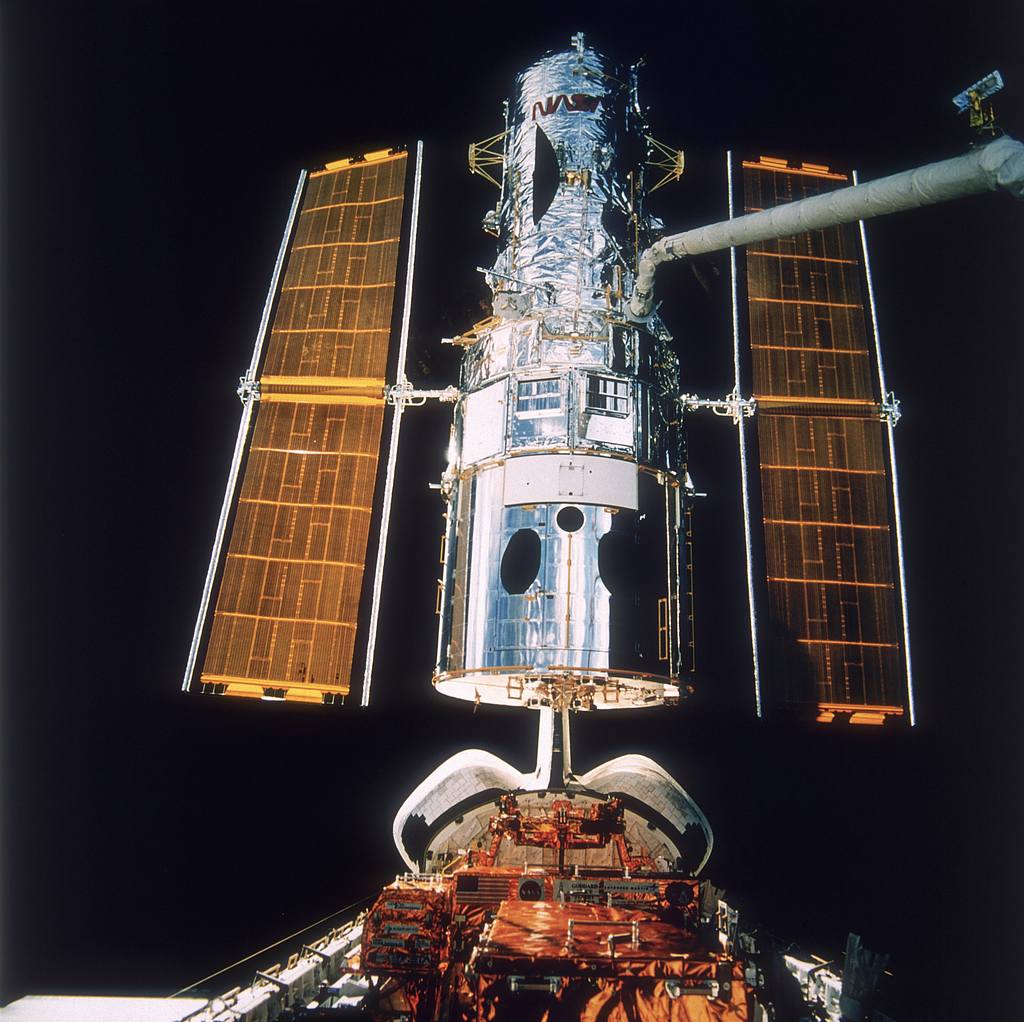
Scheduled for launch in 2031, Spectr-UV is expected to become the world's only space telescope dedicated to ultraviolet observations until at least 2041. Orbiting at an altitude of about 35,000 km, roughly 70 times higher than the Hubble telescope, it is expected to provide new scientific data through its advanced instruments.
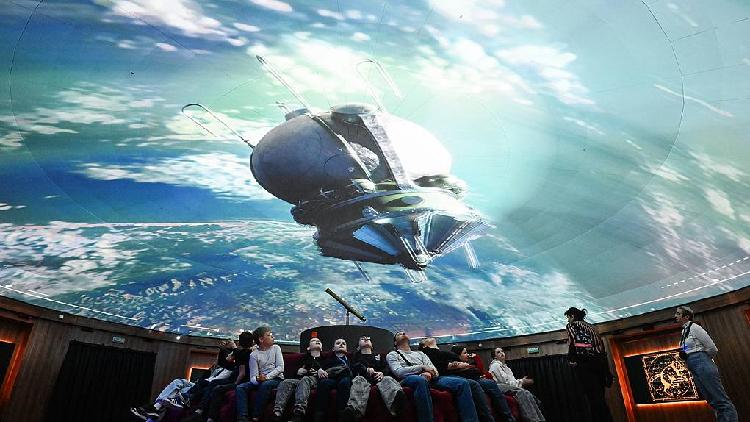
(Cover: Guests watch a space show during the Russian Space Forum at the Russia National Centre in Moscow, Russia, April 9, 2026. /VCG)
ملاحظة تحريرية | Editorial Note: نُشر هذا المقال في الأصل بواسطة CGTN EN. خبر (Khabr) هي منصة إعلامية أردنية مرخّصة تعمل بالذكاء الاصطناعي. نضيف قيمة تحريرية من خلال: تحليل ذكي للأخبار، ملخصات تلقائية، رواية صوتية بالذكاء الاصطناعي، ترجمة متعددة اللغات، وتدقيق الحقائق. هدفنا جعل الأخبار أكثر وضوحاً وسهولةً للقارئ العربي.
This article was originally published by CGTN EN. Khabr is a licensed Jordanian AI-powered news platform (Registration #82086). We add editorial value through: AI-powered news analysis, automated summaries, AI audio narration, multi-language translation (Arabic, English, French, Turkish), and AI fact-checking. Our mission is to make news more accessible and understandable for Arabic-speaking audiences worldwide.