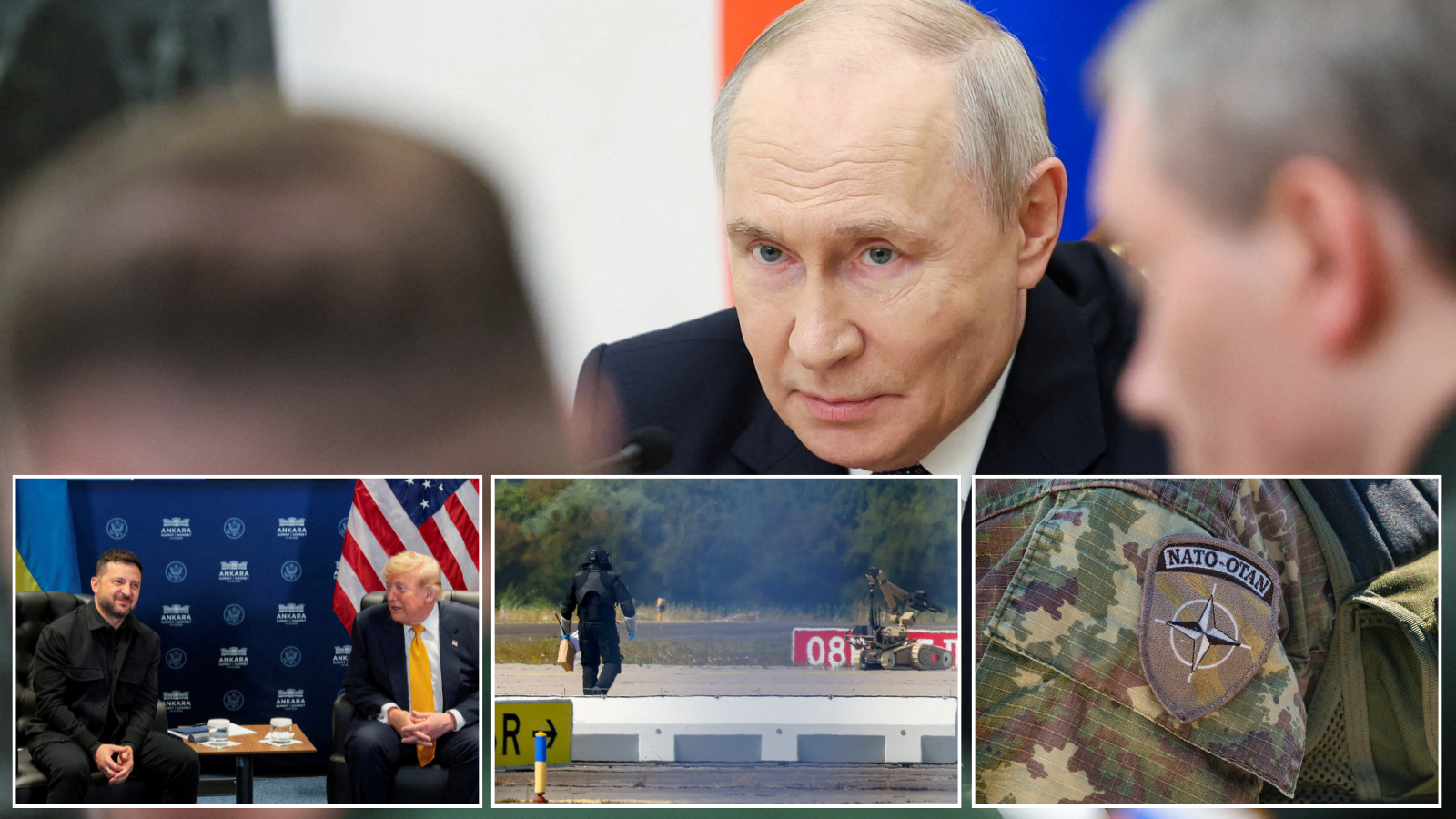
Russia could force a war with Britain in a matter of weeks by attacking a Nato member, US officials have warned.
US officials believe Vladimir Putin may launch a small land invasion or launch cyber attacks across its Nato neighbours in eastern Europe from as early as Autumn.
Intelligence officials in the US had previously purported Russia would not attack another nation while it was still fighting in Ukraine, the Wall Street Journal reports.
However, their latest assessment paints a different picture: President Putin is becoming increasingly squeezed in Ukraine and he may want to prove Russia's dominance by attacking a different enemy.
Kyiv's drones have made significant damage on Russia's army and its infrastructure, while Putin's forces are making smaller gains on the frontline, incurring many casualties.
Setting his sights elsewhere, Putin has conducted probing attacks on Nato nations, such as Estonia, Lithuania, Latvia, Romania and Poland.
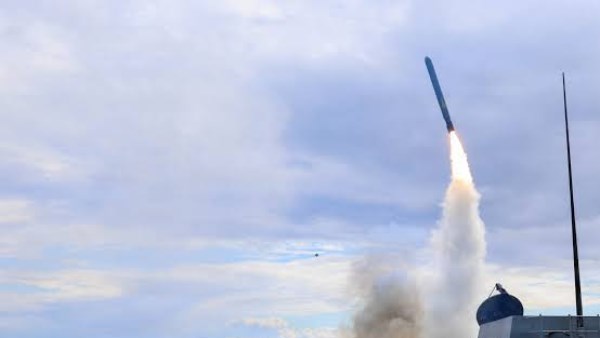
A Russian missile landed in Poland last week and an explosive drone was discovered at a German airport on Wednesday.
Straying drones from Russia have become a frequent occurrence in eastern Europe since the Ukraine war began in February 2021.

Ukraine has also accused Russia of intentionally rerouting drones into Nato airspace through electronic jamming, which uses powerful radio frequencies or electromagentic pulses to disrupt navigation systems.
A Russian attack on a Nato nation while the Ukraine war plays would break the alliance, US officials warned.
Heather Conley, senior fellow with the American Enterprise Institute, said: "It has always been a goal of Russia’s to challenge the credibility of Nato and to separate the United States from its allies."
The US has had a dwindling stockpile of critical weapons required to confront Russia, as they have transferred these to Ukraine to support their frontline efforts.
LATEST DEVELOPMENTS
- Vladimir Putin 'preparing to test Andy Burnham' as UK intelligence fears direct Nato confrontation
- I used to work for a US Department for War centre — here is why Nato is broken
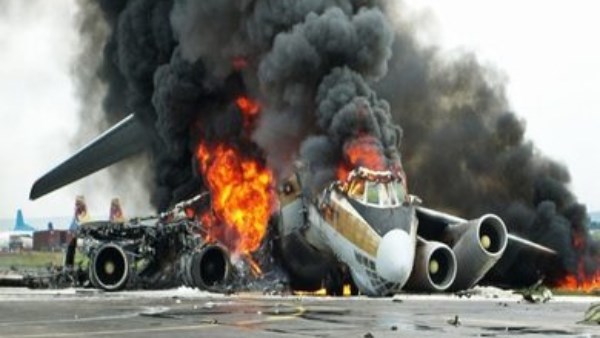
- Nato fighter jet crash-lands and explodes at holiday hotspot in front of horrified tourists

This includes the long-range Precision Strike Missiles and Army Tactical Missile Systems, as well as short-range missiles, officials said.
However, the Pentagon called the shortage of munitions claims false and White House spokeswoman Anna Kelly said the US has "more than enough" weapons to "serve all of President Trump's strategic goals".
US President Donald Trump has alluded to leaving the 32-strong alliance since some Nato members were reluctant to support America in its military operation against Iran.
In June, Mr Trump announced he was planning to reduce the number of US fighter jets in Europe and the amount of warships it makes available for Nato operations, in a bid to "rightsize" its contributions to the alliance.
Plans included reducing the number of F-16 and F-15E fighter jets from around 150 to 100, as well as removing all eight aerial refuelling tanker jets and cutting down on naval reconnaissance aircraft from 26 to 15.
Such a move, along with Mr Trump's frequent threats to drop out of the alliance altogether, has exposed significant cracks in the alliance.
These internal spats within Nato has potentially made attacking a member state more attractive to Putin.
The likelihood of a ground attack is low but is becoming increasingly likely as time goes on, US officials have speculated.
Such an attack would trigger Article 5, which requires all member states to form a collective response.
However, for a less direct offensive, such as a cyberattack, Nato's response is less clear.
Ms Conley said: "This has always been Nato's challenge to respond to a sub-Article 5 attack, and it’s been very true that to this point, Nato allies have preferred not to escalate."
Estonia was subject to a series of suspected-Russian cyberattacks in 2007.
It decided to deal with the issue bilaterally, with Nato not meaningfully involved.
Colonel Martin O’Donnell, a Nato spokesman, said the alliance was "ready to deter and defend as necessary", assuring it was "always thinking through and preparing for any number of scenarios".
Our Standards: The GB News Editorial Charter