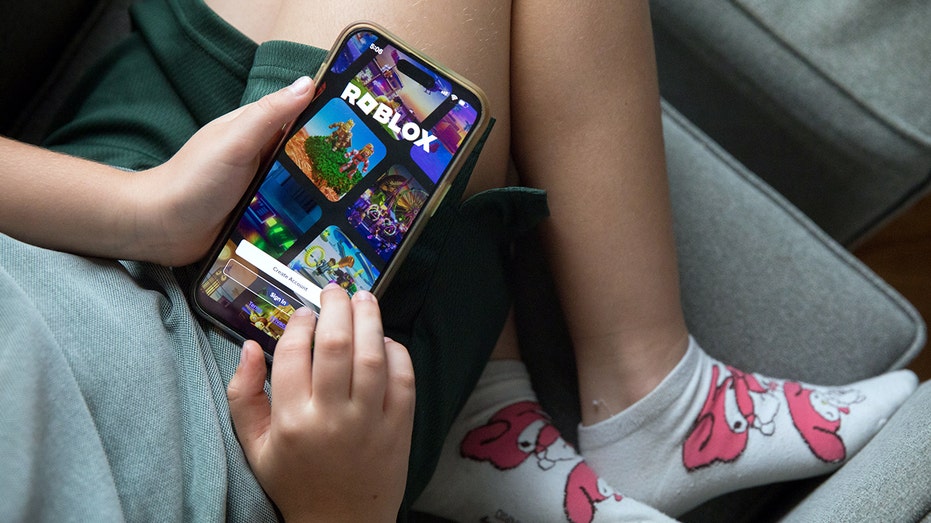
If your child plays Roblox, they are part of a massive global audience. Roblox has reported more than 144 million daily active users, with a large share made up of kids and teens who log in to play games, create content and connect with friends. That reach is exactly why a new change rolling out in early June matters.
Roblox is introducing two new account types designed to better match what kids play and who they can talk to based on age. The shift centers on structure. Instead of one shared experience with layered controls, Roblox is building separate environments for different age groups. As a result, content, chat and parental controls will adjust automatically as a child grows.
Sign up for my FREE CyberGuy Report
OPENAI TIGHTENS AI RULES FOR TEENS BUT CONCERNS REMAIN
Roblox is dividing younger users into two groups, each with its own rules and experience.
This is the most restricted environment. It is designed for younger children who need tighter guardrails.
The idea here is simple. Kids see a limited version of Roblox that removes riskier content and disables communication.
AUSTRALIA REMOVES 4.7M KIDS FROM SOCIAL MEDIA PLATFORMS IN FIRST MONTH OF HISTORIC BAN
This group gets more flexibility, but still within limits.
At this stage, Roblox assumes users can handle a broader range of experiences, but still keeps filters in place.
Not every game makes the cut. Roblox is adding a continuous evaluation system that runs behind the scenes. Here's how it works:
Creators must verify their identity, enable two-step security and maintain a Roblox Plus subscription.
Older users, age 16 and up, effectively test new games first. Roblox studies how they interact and reviews reports before exposing those games to younger players.
Games receive maturity ratings such as Minimal, Mild or Moderate. Certain categories, like social hangouts or free-form drawing, are excluded by default for younger users. This layered approach combines AI moderation, human review and real-world gameplay signals.
Roblox is expanding the same age-check system it introduced earlier this year for chat.
If a user does not complete an age check, they face stricter limits. They can only access lower-rated games and cannot use chat. Once verified, the system automatically moves them into the correct account type.
There is no need to manually switch settings over time.
This automatic progression is designed to simplify things for families while keeping protections in place at each stage.
Roblox is also expanding what parents can do.
These tools give parents more direct control instead of relying only on broad content filters.
Later this year, Roblox plans to align with the International Age Rating Coalition framework. That includes familiar systems like ESRB in the U.S. and PEGI in Europe. The goal is to make ratings clearer and more consistent across regions.
This update changes how Roblox works at a fundamental level. Instead of asking parents to constantly adjust settings, the platform builds age-appropriate experiences from the start. It also reflects a broader shift in tech. Platforms are under pressure to design safety into the product, not tack it on later.
As Larry Magid, CEO of ConnectSafely, an organization focused on helping families navigate digital safety, put it:
"By combining age assurance, stronger creator accountability, and parental controls, Roblox is helping set a higher standard for how platforms can better protect younger users while preserving positive online experiences."
Think your devices and data are truly protected? Take this quick quiz to see where your digital habits stand. From passwords to Wi-Fi settings, you’ll get a personalized breakdown of what you’re doing right and what needs improvement. Take my Quiz here: Cyberguy.com.
Roblox is not removing risk entirely. No platform can. What it is doing is tightening the structure around how kids interact with content and other players. For parents, this could make things simpler. For kids, the experience will feel more tailored to where they are in life. The bigger question is whether this becomes the norm across gaming and social platforms.
If platforms start shaping experiences based on age by default, does that improve safety or limit how kids explore and learn online? Let us know by writing to us at Cyberguy.com.
Sign up for my FREE CyberGuy Report
Copyright 2026 CyberGuy.com. All rights reserved.