ROBERT MAGINNIS: God, duty and the return of moral clarity at West Point
On Saturday morning, I sat watching the rain fall over the United States Military Academy as another generation of cadets marched across Michie Stadium and into the Long Gray Line. The scene stirred memories I had not revisited in years. I graduated from West Point in 1973, and I tuned in partly to refresh my memory before a television interview later that afternoon. By the end of the ceremony, something more important had happened: for the first time in many years, I heard a commencement address at West Point that spoke honestly about God, duty, sacrifice, and war.
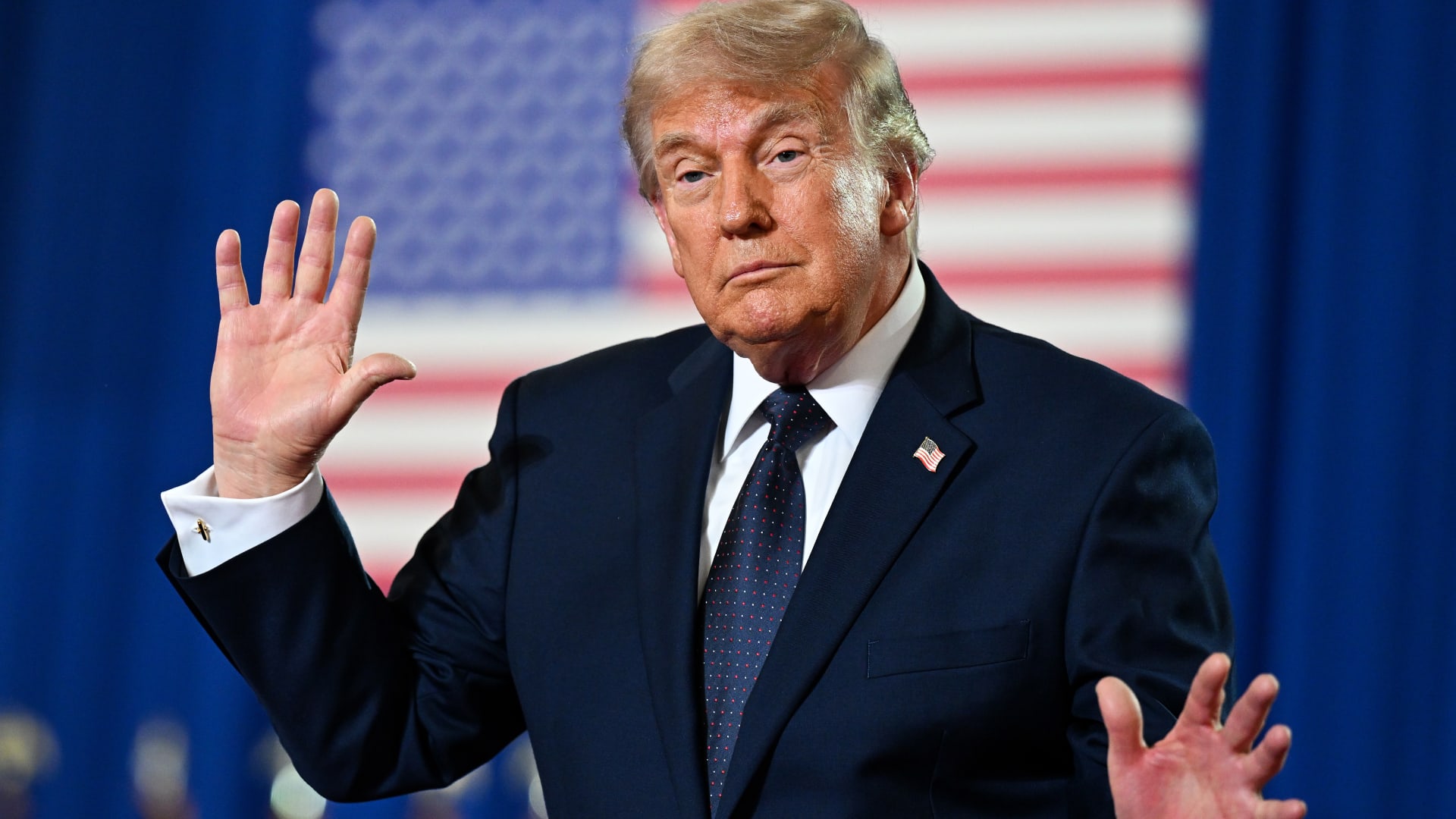
The speaker was Secretary of War Pete Hegseth. Years ago, after retiring from the Pentagon, I joined the Family Research Council and eventually became its vice president for policy. During the summer of 2000, we had several interns, including a young Princeton student and basketball player named Pete Hegseth. He was intelligent, personable, disciplined, and openly grounded in his Christian faith even then. My children liked him immediately.
Years later, I watched Pete emerge as a prominent television personality on Fox News, where I have also spent many years as a military analyst. But beyond television, Pete served his country in uniform, deploying to Iraq and Afghanistan with the Army National Guard and later advocating tirelessly for veterans. That background gave him credibility before the 994 graduates seated before him Saturday morning.
Unlike many recent commencement speakers, he did not give a carefully sanitized speech meant to offend no one. Instead, he offered these future officers something they rarely hear from Washington: a candid account of the calling they had chosen.
The centerpiece of Hegseth’s address came from Isaiah 6:8: "Whom shall I send, and who will go for us? … Here am I! Send me." That verse could hardly be more fitting. These young men and women are not simply collecting diplomas like graduates at most universities — they are becoming commissioned officers in the United States Army. Many will eventually lead soldiers in combat. Some will deploy to dangerous places within months. Some may never come home.
West Point has always understood that weight. Founded in 1802 by President Thomas Jefferson, the academy exists for one purpose: to produce leaders of character capable of defending the nation. Its graduates have fought in every major conflict from the Civil War through Iraq and Afghanistan. The motto — "Duty, Honor, Country" — was not crafted for comfort or corporate success. It was forged in sacrifice.
My own graduation in 1973 came during another troubled era. The Vietnam War was winding down, though Americans were still dying overseas, the Middle East was unstable, and Cold War competition with the Soviet Union dominated strategic thinking. Our commencement speaker was Admiral Thomas H. Moorer. My classmates entered an Army struggling through one of the most difficult transitions in its history.
Today’s cadets inherit a world equally dangerous and considerably more complex. Russia’s war in Ukraine continues. China openly pressures Taiwan. Iran fuels proxy violence across the Middle East. Artificial intelligence, cyber warfare, autonomous drones, and information operations are reshaping the battlefield faster than military institutions can adapt — and unlike the Cold War, this competition offers no long plateau of managed stability. Into that world, Hegseth delivered a message that military culture has long needed to hear again openly.
For years, too many military leaders and public officials behaved as though references to God or Scripture were somehow out of place in official ceremonies. Yet combat, of all human experiences, is where such questions press hardest. Under fire, questions about courage, morality, sacrifice, and eternity are not philosophical abstractions — they are immediate and consequential. Hegseth recognized that truth and chose not to sidestep it.
He also went directly after an institutional failure that has occupied the Pentagon in recent years: the military’s absorption with diversity, equity, and inclusion programs that displaced readiness and standards. Hegseth praised the academy’s return to merit while reemphasizing "Duty, Honor, Country" as the framework for what commissioned officers owe their nation. He reminded the graduates that the military exists to fight and win the nation’s wars — a point that should never have required restating, but in the current climate, clearly did.
HERE'S HOW WE CAN LIVE AND WORK WITH ARTIFICIAL INTELLIGENCE WITHOUT LOSING OUR HUMANITY
Combat ultimately settles every question an ideology sidesteps. No framework survives contact with an enemy determined to kill, and the officer’s irreducible obligation under fire is moral clarity — the judgment to act when information is incomplete, the courage to bear responsibility for decisions made in conditions no training exercise fully replicates, the faith to lead men and women through circumstances that will break anyone not anchored in something beyond themselves.
One part of Hegseth’s speech stayed with me particularly. He spoke about his seven children at the ceremony and said he would be proud if one day his own son answered the nation’s call by saying, "Send me." As I listened, I thought about the continuity represented at West Point — every graduating class joining a chain stretching back more than two centuries. Every era brings different technology, different threats, a different strategic context, but the republic’s dependence on men and women willing to place service above self does not change.
That reality settled over me again as the Corps of Cadets sang the poetic hymn "The Corps" following the ceremony. Those words, first sung on the steps of the Cadet Chapel on June 12, 1910, and part of every West Point graduation since 1911, still echo faintly from fifty-three years ago. The Long Gray Line endures.
That continuity is precisely what is at stake as today’s graduates enter an Army increasingly shaped by machine-assisted decision-making, autonomous systems, and cyber capabilities that their predecessors could not have imagined. As I explore at length in The New AI Cold War and AI for Mankind’s Future, this technology is reshaping the character of modern warfare in ways that raise profound moral questions — but it cannot supply the moral judgment that distinguishes a leader from an instrument. That judgment is formed in character, and character is shaped by precisely the kind of honest reckoning Hegseth offered Saturday morning.
America does not merely need technically proficient officers. It needs leaders who understand both the horrors of war and the moral responsibility that accompanies command — young men and women still willing to answer the ancient call that has summoned every generation of soldiers before them: Here am I, Lord. Send me.