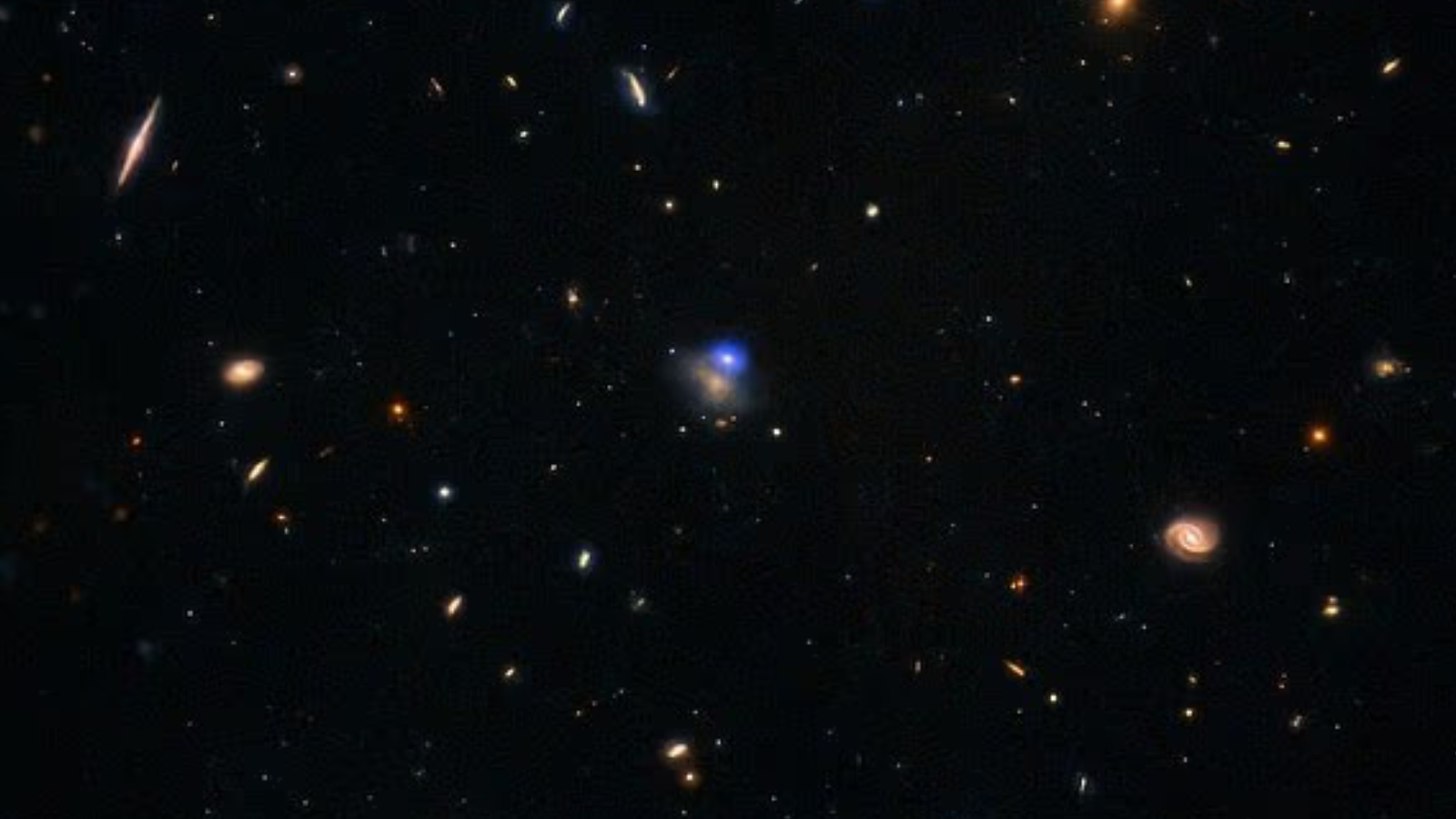
Researchers stunned after detecting eerie blue flashes emerging from depths of cosmos
•Researchers have been left stunned after detecting eerie blue flashes emerging from the depths of space.The strange phenomena, known as Luminous Fast Blue Optical Transients (LFBOTs), are among the ra...
•TRENDING Stories Videos Your Say Dr Anya Nugent from the Harvard & Smithsonian Center for Astrophysics said the bizarre events are "unlike anything we have observed before."Now, scientists believ...
•"That interaction can produce a very hot, bright flash of light on a short timescale."Wolf-Rayet stars may be uniquely suited to producing these events because their hydrogen-free makeup matches the u...
هذا الخبر من GB News. خبر يقدم أدوات ذكاء اصطناعي للتلخيص والترجمة والاستماع.
المصدر: GB News | Source: GB NewsResearchers have been left stunned after detecting eerie blue flashes emerging from the depths of space.
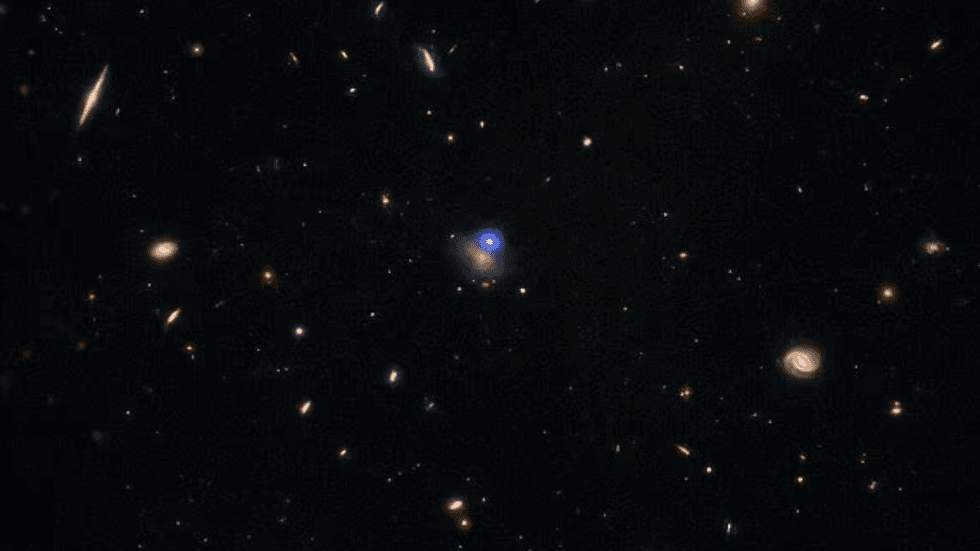
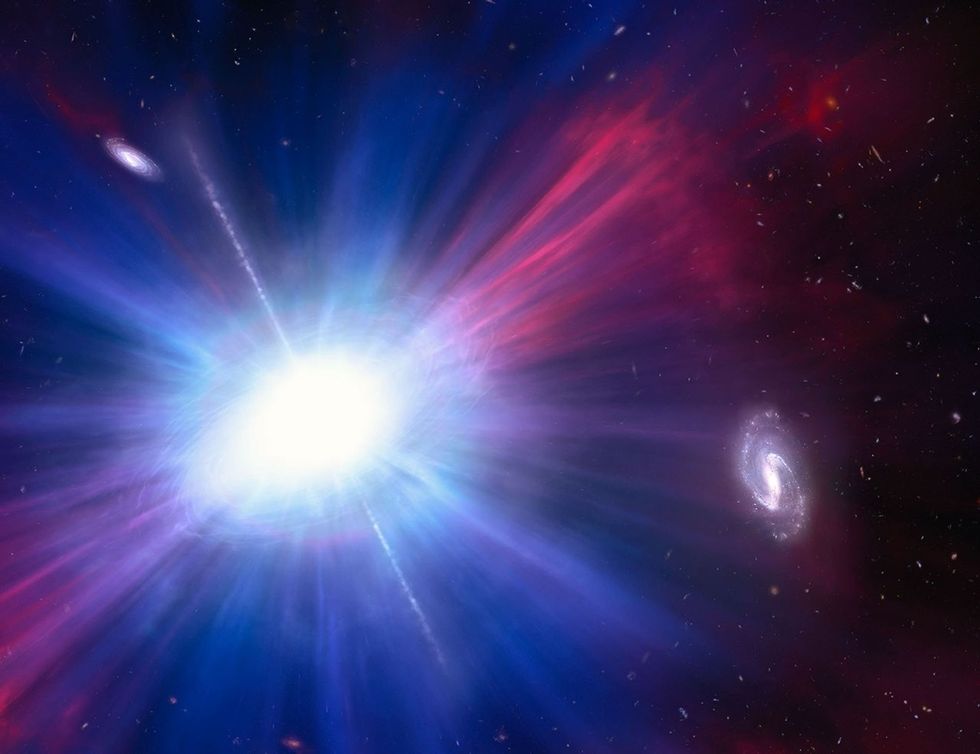
The strange phenomena, known as Luminous Fast Blue Optical Transients (LFBOTs), are among the rarest cosmic events ever recorded, with just 14 detected since they were first identified in 2018.
These violent flashes can shine up to 100 times brighter than a typical supernova, yet unlike normal stellar explosions they reach peak brightness and vanish again within just days.
They also remain an intense blue colour throughout, suggesting they stay extraordinarily hot from beginning to end.
TRENDINGStoriesVideosYour SayDr Anya Nugent from the Harvard & Smithsonian Center for Astrophysics said the bizarre events are "unlike anything we have observed before."
Now, scientists believe they may finally be closing in on what causes the unsettling cosmic bursts.
Researchers think the eerie flashes could be triggered when ultradense objects such as black holes or neutron stars violently collide with massive Wolf-Rayet stars - rare, extremely luminous stars that have already shed their hydrogen outer layers.
The process is believed to begin in binary star systems, where two huge stars orbit one another.
Over time, one star strips away the outer layers of its companion, eventually exposing its blazing helium core as a Wolf-Rayet star.
The larger star then collapses in a supernova, leaving behind either a black hole or neutron star.
That stellar remnant can continue feeding on its companion before eventually plunging into its core - unleashing the spectacular blue flash.
Professor Brian Metzger of Columbia University told the Daily Mail: "When the compact object plunges into the Wolf-Rayet star, it can rapidly accrete the stellar [material] and release a huge amount of gravitational energy.
SPACE - READ THE LATEST:
- Scientists discover SHORTCUT to the Moon in breakthrough for space exploration
- Archaeologists stunned as ancient civilisation reveals itself below Nasa's Artemis II launch site
- NASA logs record-breaking solar burst as scientists forecast dangerous space weather events
"Some of that energy drives powerful outflows or jets, which then collide with material around the star.
"That interaction can produce a very hot, bright flash of light on a short timescale."
Wolf-Rayet stars may be uniquely suited to producing these events because their hydrogen-free makeup matches the unusual signatures astronomers have observed.
Prof Metzger added: "They can also have dense material around them from earlier episodes of mass loss, which gives the explosion something to crash into and helps power the observed emission.'
The theory could explain another major mystery - why many of the blue flashes appear in the distant outer edges of galaxies, sometimes tens of thousands of light-years from galactic centres.
Scientists believe previous supernova blasts may have hurled these binary systems far into deep space.
Although researchers caution more data is needed, the Vera C. Rubin Observatory’s upcoming decade-long survey is expected to dramatically improve understanding of these bizarre deep-space events.
Our Standards: The GB News Editorial Charter
ملاحظة تحريرية | Editorial Note: نُشر هذا المقال في الأصل بواسطة GB News. خبر (Khabr) هي منصة إعلامية أردنية مرخّصة تعمل بالذكاء الاصطناعي. نضيف قيمة تحريرية من خلال: تحليل ذكي للأخبار، ملخصات تلقائية، رواية صوتية بالذكاء الاصطناعي، ترجمة متعددة اللغات، وتدقيق الحقائق. هدفنا جعل الأخبار أكثر وضوحاً وسهولةً للقارئ العربي.
This article was originally published by GB News. Khabr is a licensed Jordanian AI-powered news platform (Registration #82086). We add editorial value through: AI-powered news analysis, automated summaries, AI audio narration, multi-language translation (Arabic, English, French, Turkish), and AI fact-checking. Our mission is to make news more accessible and understandable for Arabic-speaking audiences worldwide.