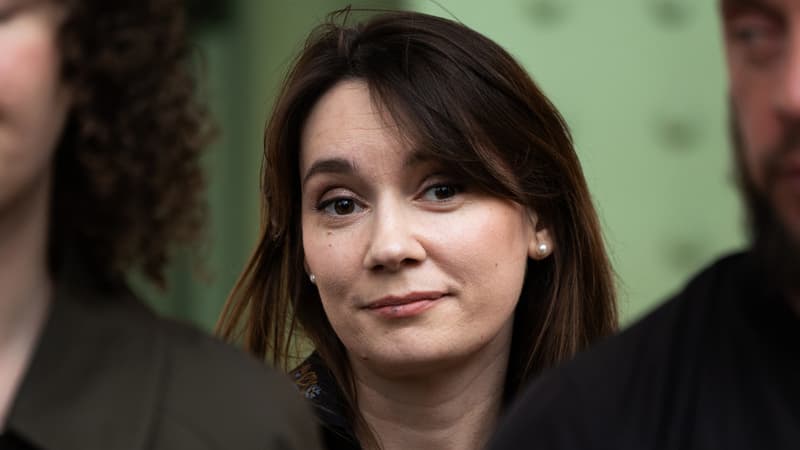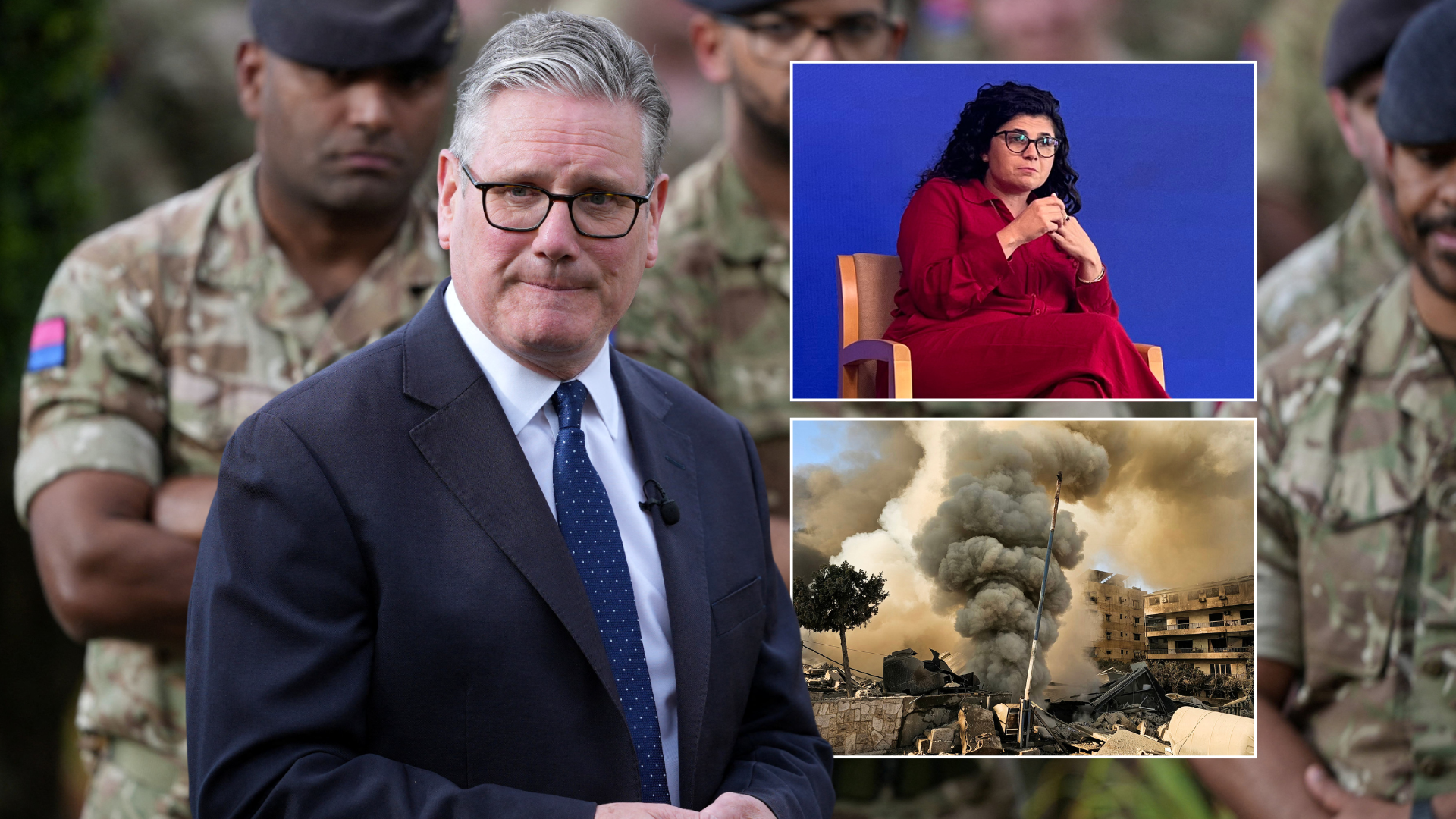
Israel’s Deputy Foreign Minister has accused Britain of acting with “immense weakness” following the Iran war, as the country’s frustrations with Sir Keir Starmer’s actions in the Middle East have been revealed.
Speaking to GB News in Jerusalem, Sharren Haskel warned it was now “questionable whether we can rely” on the UK as an ally, despite the end of hostilities between the United States and Islamic Republic.
Her remarks mirrored frustrations in Washington, as President Donald Trump branded the Prime Minister's refusal to support offensive operations in the Middle East a "very foolish mistake" and suggested the special relationship was "not what it was".
The People's Channel can also reveal the criticisms went well beyond Ms Haskel, with other senior Israeli officials expressing similar concerns about future alliances with Britain.
"It is questionable whether we can rely on the UK and that's very dangerous," the Israeli Deputy Minister of Foreign Affairs said.
“I think there was a huge disappointment... You need to understand that what they did shows immense weakness.”
Serious criticisms were also lodged by Asher Fredman, Director for Israel at the Abraham Accords Peace Institute think-tank.
“Israel did not have high hopes for a European kinetic contribution to the war, but one would want to believe that a country like the UK would be willing to show some muscle in terms of defending its interests,” he stated.

“It seems like the UK, like the European Union, like France, like Germany, was more interested in making statements, resolutions, holding conferences and maybe making some protestations.”
While Downing Street consistently stressed the operations against Iran were not “our war”, the Labour leader also declared the “utterly abhorrent” regime in Tehran should never be allowed to possess nuclear weapons.
During the conflict, the UK’s armed forces flew defensive sorties against Iranian aggression, protecting British citizens, assets and Gulf allies.
The UK's relationship with Israel stretches back to the Balfour Declaration of 1917 and the British Mandate for Palestine, although ties were often strained during the Jewish state's founding and early years.
LATEST DEVELOPMENTS
- Donald Trump accused of handing Iran lifeline as regime and UK proxies ‘emboldened’ by peace deal
- Future of ANOTHER British overseas territory under threat as Cyprus warns island ‘must not become target’
- 'Major gap' in Britain's defences leaving citizens exposed to ballistic missile attacks

In recent decades, the two countries have developed close diplomatic, intelligence and defence links. However, relations have become increasingly strained under Labour, with ministers criticising Israel's conduct in Gaza following the October 7 massacre by Hamas and moving towards recognition of a Palestinian state.
Ms Haskel argued the UK and Europe’s posture had emboldened hostile powers worldwide, even after the tenuous US-Iran peace deal was signed in Versailles on Wednesday.
She went on to say: “I think that the enemies of the free world are watching very, very closely. They understand that the red lines drawn years ago are now very far apart.
“They are not afraid to provoke; they will not be afraid to attack later on as the deterrence that Europe presented as a force for freedom, for democracy, has eroded to the point where there's no real deterrence."

To that end, Ms Haskel pointed to the decaying state of British and European defence.
Last week, former defence secretary John Healey and armed forces Minister Al Carns resigned in protest at insufficient funding under the long-delayed Defence Investment Plan (DIP).
In the wake of the dramatic departures, the UK’s Chief of the Defence Staff also admitted the Armed Forces will be forced to “scale back” training and operations if more funding is not made available.
She remarked: “I think we are at a very dangerous point right now, and many countries need to look in and to truly understand whether they are capable of defending themselves if a war were to begin tomorrow, and I can tell you that most European countries are not ready.”

Britain's military limitations were exposed during the conflict, with UK sovereign bases on Cyprus coming under attack from Iranian proxies in Lebanon.
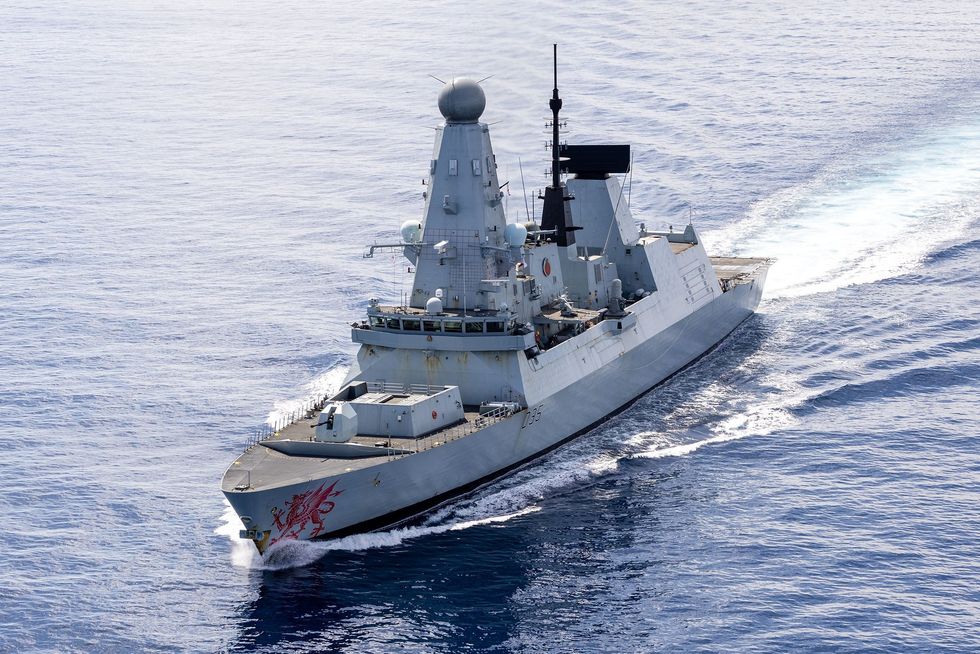
HMS Dragon was dispatched to defend the island, but only after a three-week refit to see the destroyer equipped for its ad hoc deployment.
The affair, including Dragon’s delayed arrival from Portsmouth, triggered a fierce debate among Cypriots on the future of the UK’s bases on the island.
Britain’s lack of independent ballistic missile defence was further exposed after two Iranian rockets were fired at Diego Garcia, a joint UK-US base on the Chagos Islands.

The airbase avoided damage after US interceptors engaged one incoming missile, while another suffered a mid-air malfunction.
Despite major concerns, the UK and France are spearheading a multinational task force to ensure safe passage through the Strait of Hormuz, with HMS Dragon expected to lead these efforts.
However, Israeli officials felt this mission was too little too late.
Dr Eyal Hulata, a former Israeli national security advisor and head of the country's security council, told Britain's News Channel: “(Britain and Europe) don't seem to have any real impact on the situation on the ground or on the seas.

“I don't know if they wanted to have an impact on it (the Strait of Hormuz), maybe they did, and they couldn't, maybe they really didn't.”
Mr Trump was similarly critical of British naval assets being deployed to the Middle East, telling allies: “We don't need people that join wars after we've already won!”
Mr Hulata speculated rows between Nato members and Mr Trump had contributed to the apparent lack of action.
“Maybe it's more important for them to have a fight with Mr Trump over the future of Nato and Greenland," he claimed. "I think that's a mistake, and I've been saying this to European diplomats.”

Frustration with the UK’s response to the war was not limited to Israel and the US, as voices far closer to home raised concern.
“I fear we lack the courage and means to stand up for what is right on the world stage, emboldening powers like Iran’s extremist dictatorship,” former naval officer Stuart Fawcett commented.
“The question we need to ask ourselves now is what do we stand for in terms of our defence policy doctrine as a Western democratic nation? We need to answer that question first before we can implement any kind of future response.”
Mr Fawcett argued the UK could have joined efforts to keep the Strait open throughout the war without joining US and Israeli strikes on Iran directly.
He said: “We opted not to, and my concern is how that reflects on us and what we stand for as a nation.”
Mr Fawcett added: “We need to reflect on the fact that sometimes military intervention abroad is necessary to protect our domestic freedoms.”
When contacted for comment, a Foreign Office spokesman shared a statement from the Prime Minister on the conflict.
It read: “The urgent reopening of the Strait of Hormuz with unconditional and unrestricted freedom of navigation is essential.
“We are committed to playing our part to achieve this, in accordance with our respective constitutional requirements, including through a strictly defensive and independent mission to reassure commercial shipping and conduct mine clearance operations.
“We will work intensively with the US, Iran and regional partners to seize this moment, maintain momentum and achieve a long-term diplomatic settlement."
Our Standards: The GB News Editorial Charter