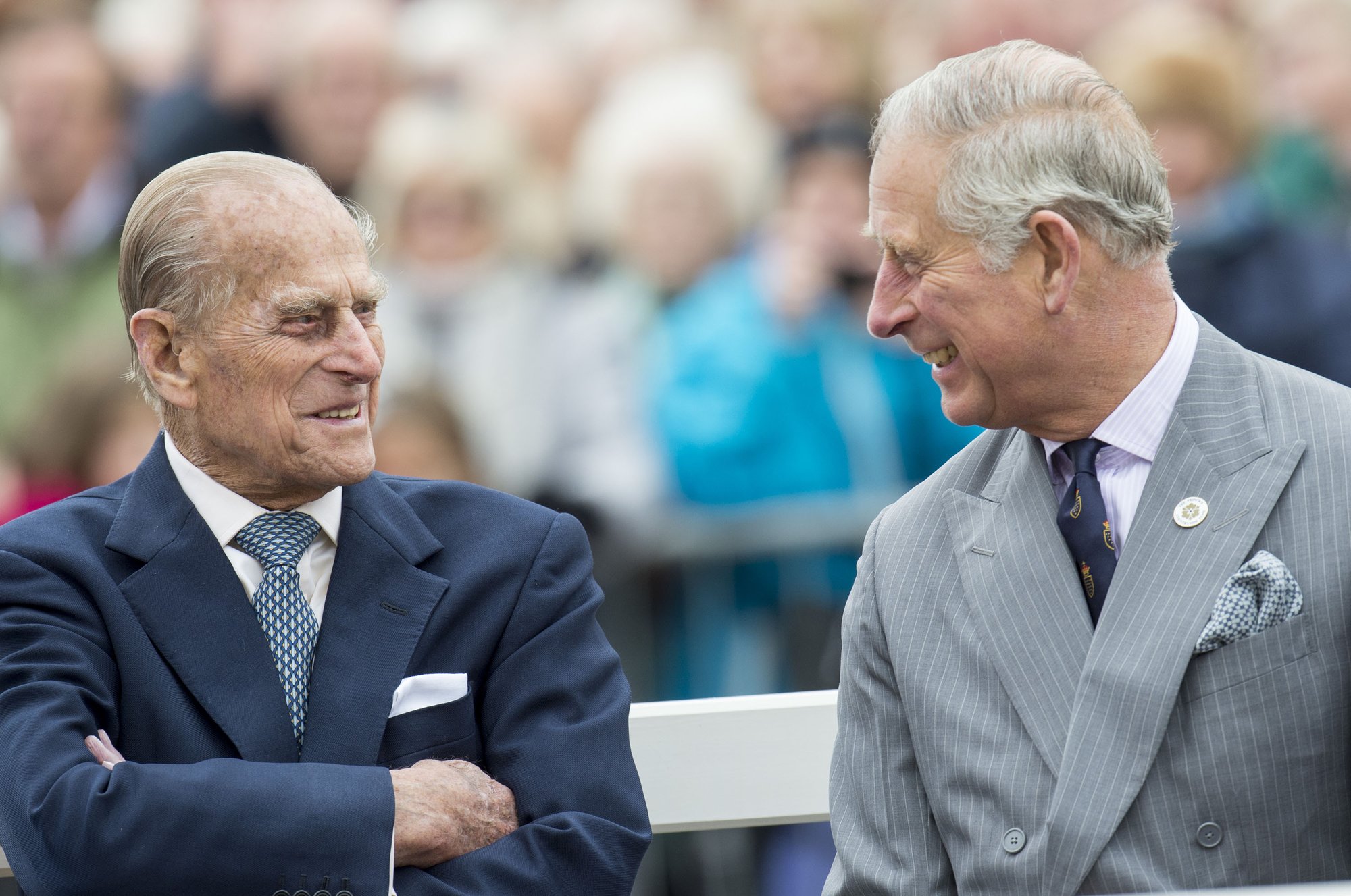
Prince Philip moved ancient font to Charles in Scotland to surround him with ‘English beauty’
•Prince Philip once arranged for a magnificent 12th-century Norman font to be transported hundreds of miles from a crumbling Shropshire church to Gordonstoun School in Scotland, it has been revealed.Th...
•His wish was that the young prince would be "surrounded by ancient objects of English beauty."The ancient stone font had sat inside St Michael's Church in the tiny hamlet of Upton Cressett, which had...
•Rather than allow the ornate artefact to gather dust in a storage facility, Philip intervened to give it a new purpose.Philip had come across the font during a visit to St Michael's alongside Ivor Bul...
هذا الخبر من GB News. خبر يقدم أدوات ذكاء اصطناعي للتلخيص والترجمة والاستماع.
المصدر: GB News | Source: GB NewsPrince Philip once arranged for a magnificent 12th-century Norman font to be transported hundreds of miles from a crumbling Shropshire church to Gordonstoun School in Scotland, it has been revealed.
The Duke of Edinburgh organised the remarkable relocation in 1962, the year his son, then Prince Charles, began attending the Moray boarding school. His wish was that the young prince would be "surrounded by ancient objects of English beauty."
The ancient stone font had sat inside St Michael's Church in the tiny hamlet of Upton Cressett, which had ceased holding services in 1958 and fallen into serious disrepair. Rather than allow the ornate artefact to gather dust in a storage facility, Philip intervened to give it a new purpose.
Philip had come across the font during a visit to St Michael's alongside Ivor Bulmer-Thomas, a former MP who was collaborating with him on efforts to safeguard disused historic churches across the country.
TRENDINGStoriesVideosYour SayThe Grade I-listed church had been chosen to demonstrate the plight of neglected rural places of worship, and it did not disappoint - the building was in a "terrible state" when the duke arrived to inspect it.
The church was locked up and its contents, the font among them, were destined for storage.
Mr Bulmer-Thomas would subsequently establish the Redundant Churches Fund, an organisation that evolved into the Churches Conservation Trust. King Charles now serves as the Trust's patron - a fitting connection given the font's extraordinary journey on his behalf.
Author and journalist William Cash, whose parents acquired the Upton Cressett estate during the 1970s, has shed light on Philip's thinking behind the unusual decision.
"They went to see it, and Prince Philip apparently said [of the font], 'I think that would be really good if it was moved to Gordonstoun, because I want my son to be surrounded by ancient objects of English beauty'," Mr Cash recounted.
"I think Philip thought, 'What a waste to have it just sitting in a storage unit'."
Known as the "Gordonstoun font," the piece resembles a large stone barrel - a classic example of a Norman tub font, adorned with intricate carvings on its exterior and fitted with a lead-lined basin within.
Mr Cash marvelled at the logistics involved, given its considerable size. "This is a strange story that to this day most people don't know about," he said.
LATEST ROYAL NEWS
- Prince Philip was a 'born leader' but had issues with his anger, school report reveals
- King hails Commonwealth Games for 'bringing nations closer together' in new statement
- King joining forces with Prince Harry at Invictus Games 'would mean the world to Duke of Sussex'
The font occupied a place in Gordonstoun's modern chapel throughout the King's years at the school before making the long journey back to Shropshire in the 1970s.
Though St Michael's no longer hosts regular worship, the font still serves its original purpose from time to time. Mr Cash himself was baptised in it, as were other members of his family.
Visitors who stumble upon this tucked-away corner of the Shropshire countryside are "flabbergasted" to discover the font's royal associations.
"Frankly they find it almost impossible to believe that this font has moved so many hundreds of miles for the King's aesthetic benefit," Mr Cash said.
He added: "It always feels like something out of an Arthurian legend, like this was a font that was fit for a king, a Norman font with roots going back pretty much to the age of William the Conqueror."
Steve Tarling, a community officer at the Churches Conservation Trust - which now has responsibility for St Michael's - painted a vivid picture of the setting in which the font resides.
"You could imagine someone out of the Brothers Grimm having a wedding in there," he said, calling it "a really lovely, picturesque, almost fairy tale chapel" and "a nice little oasis of calm in what is quite beautiful countryside."
Mr Tarling sensed that locals had considered it an "honour" for Philip to select their font as a companion for his son, though they were equally "grateful" when it came home.
Without it, he suggested, something essential would be absent from the chapel.
"I think it completes the picture," he said. "It's like the cherry on top of the cake."
Our Standards: The GB News Editorial Charter


ملاحظة تحريرية | Editorial Note: نُشر هذا المقال في الأصل بواسطة GB News. خبر (Khabr) هي منصة إعلامية أردنية مرخّصة تعمل بالذكاء الاصطناعي. نضيف قيمة تحريرية من خلال: تحليل ذكي للأخبار، ملخصات تلقائية، رواية صوتية بالذكاء الاصطناعي، ترجمة متعددة اللغات، وتدقيق الحقائق. هدفنا جعل الأخبار أكثر وضوحاً وسهولةً للقارئ العربي.
This article was originally published by GB News. Khabr is a licensed Jordanian AI-powered news platform (Registration #82086). We add editorial value through: AI-powered news analysis, automated summaries, AI audio narration, multi-language translation (Arabic, English, French, Turkish), and AI fact-checking. Our mission is to make news more accessible and understandable for Arabic-speaking audiences worldwide.