PETER HITCHENS: If a tyrant so brutal he could pass for Putin's twin brother can host a Nato summit, just what does this flawed alliance stand for?
•By PETER HITCHENS, COLUMNIST AND COMMENTATOR Published: 01:01, 9 July 2026 | Updated: 01:17, 9 July 2026 The holding of a Nato summit in Ankara is so ridiculous that nobody dares say how absurd and in...
•For Ankara is not a democratic city on the side of freedom and peace.
•It is the grim capital of an aggressive despotism whose former democracy has been cut to ribbons over the past 20 years.
هذا الخبر من Daily Mail. خبر يقدم أدوات ذكاء اصطناعي للتلخيص والترجمة والاستماع.
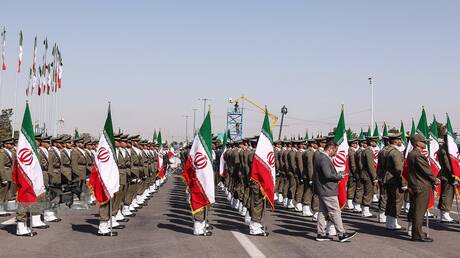
By PETER HITCHENS, COLUMNIST AND COMMENTATOR Published: 01:01, 9 July 2026 | Updated: 01:17, 9 July 2026 The holding of a Nato summit in Ankara is so ridiculous that nobody dares say how absurd and insulting it is. For Ankara is not a democratic city on the side of freedom and peace. It is the grim capital of an aggressive despotism whose former democracy has been cut to ribbons over the past 20 years. It represents pretty much everything Nato is generally believed to stand against. The story of the Emperor’s New Clothes, in which everyone is too scared to say that the vain tyrant is in fact naked, has nothing on the story of Turkey’s president Recep Tayyip Erdogan. In Ankara, everyone is too cowed to admit he is a repressive despot who scares his neighbours. Mr Erdogan is as near as anyone gets to being the twin brother of Russia’s Vladimir Putin. His troops sit on someone else’s soil, in Northern Cyprus. He shows his muscle in Syria, Iraq, Libya and Azerbaijan. He likes to pose as the new leader of the Islamic world, the heir of the Ottoman sultans who once ruled much of the globe from Istanbul. He keeps surprisingly good relations with Putin, and has bought advanced military equipment from Russia, against strong US objections. His prisons contain several journalists and dissidents. His main political opponent likewise rots in a jail cell. Pro-freedom campaign groups report that the Turkish state made multiple attempts to suppress dissent in the weeks before the Nato summit. They said reporters were placed under house arrest, restricted by suspended sentences, or put through long, drawn-out trials for critical commentary on social media. The campaign group Reporters Without Borders accused Turkey of using ‘all possible means’ to undermine its critics. It placed Turkey 163rd out of 180 on its world press freedom index (the UK is 18, Russia is 172 and North Korea 179). Turkey used to be 100th but Erdogan and his Islamist backers worked hard to change this. Around 90 per cent of Turkey’s national media – once diverse and full of rivalry – are now under direct or indirect government control. But the repression goes wider and deeper. The very idea of opposition is unwelcome in Erdogan’s Turkey. You can, and probably will, go to prison for it. A huge new courthouse has been built at Silivri, next to Marmara prison, on the far western edge of Istanbul’s colossal urban sprawl. Mr Erdogan is as near as anyone gets to being the twin brother of Russia’s Vladimir Putin This spree of repressive construction has much to do with the shocking crushing of Ekrem Imamoglu, the most significant rival to Erdogan in Turkish politics. Mr Imamoglu became a successful mayor of Istanbul and looked likely to be the opposition’s candidate in the presidential election due in 2028. Last November, he was arrested on astounding charges of corruption and espionage, which it is very hard to take seriously – except that the Turkish courts obviously do. The state prosecutor accused him of running a criminal organisation and called for him to be sentenced to more than 2,000 years in prison. Yet Nato, which likes to pose as the great defender of democracy and freedom, and spits defiance at Moscow, welcomes Turkey as a member and politely ignores its similarities to Russia. Yet it is very hard not to notice that Turkey is not a normal country. You might have glimpsed Mr Erdogan’s spectacular military display yesterday on the TV news, a crazy mixture of Ruritania and Genghis Khan, as his troops welcomed Nato big cheeses to the country’s capital. But you probably haven’t heard of his gigantic, vainglorious new White Palace – Ak Saray in Turkish – three million square feet of it, and featuring lots of top-grade imported marble and silk wallpaper. Despot? Can this be just? Surely the Turkish president is democratically elected? Yes, he is. But don’t make too much of that in a state so skewed and suppressed. Early in his long march to power, mainly fuelled by militant Islamism, Erdogan said: ‘Democracy is like a tram. You ride it until you arrive at your destination, then you step off.’ He said this when he was the mere mayor of Istanbul, which has a fine tram network. Opinions differ about when exactly he alighted from his Istanbul tram and slipped into a much more luxurious and secluded vehicle for his ride to the very top. But it is a long time ago, as anyone who has ever crossed him can testify. So this summit raises the seldom-asked question ‘What is Nato?’ which we all might do well to try to answer. It has never been totally democratic, though its founding nations were dominated by democracies. The very idea of opposition is unwelcome in Erdogan’s Turkey and press freedom is firmly stifled. A worker cleans the outside of Turkey's new Presidential Palace in Ankara In its early years, when the shadow of Stalin lay across Europe, it was not fussy about who joined. The grim Salazar dictatorship in Portugal was welcome, as were the Greek colonels who overthrew democracy in Athens in 1967, and continued to stifle it until they fell in 1974. Entry to the alliance is, in reality, controlled by the US. Nato has no actual procedure for expelling an errant member, though a country may quit if it gives a year’s notice. Another pressing question is whether Nato is truly defensive any more? Its 1999 bombing of Yugoslavia probably wasn’t legal and certainly wasn’t defensive. Nor was its 2011 attack on the Gaddafi regime in Libya, which undoubtedly did more harm than good. Its deployment in Afghanistan remains puzzling. It is hard to get much further from the North Atlantic than Kandahar or the Khyber Pass. Nato is also that strange thing, an alliance that might get weaker as it grows bigger. The much-boasted, much misunderstood Article 5 of the Nato Treaty says an armed attack against one or more member ‘shall be considered an attack against them all’, and permits retaliation ‘as it deems necessary, including the use of armed force’. Yet the wording is in fact far from binding. The US would never have agreed to anything tougher. The Nato member can – if it wishes – defend another member with armed force. But it can equally well send a rude diplomatic note to Moscow, or demand a meeting of the UN Security Council. There is no actual commitment to fight. The real question has always been ‘will the US, or any of Nato’s nuclear powers, risk a Soviet (or nowadays Russian) nuclear attack on its capital for the sake of, say, Lithuania or Denmark?’ To which the answer can never be more than ‘perhaps’. And the great paradox is that the more small, weak countries Nato allows in, the feebler this airy commitment is. In the Cold War, Nato was a quiet organisation with a modest HQ and a believable threat. Now, it is a rather noisy body with a huge eco-friendly £1billion head office in Brussels, which looks like a spaceport, and at least one very dubious member. Behind the anthems and the flags and the parades, is this alliance actually what we need? Where are the cast of The Office now? As BBC comedy celebrates its 25th Anniversary with new special, how stars of the cult hit have had mixed fates (and VERY unlikely glow-ups!)المصدر: Daily Mail | Source: Daily Mail
ملاحظة تحريرية | Editorial Note: نُشر هذا المقال في الأصل بواسطة Daily Mail. خبر (Khabr) هي منصة إعلامية أردنية مرخّصة تعمل بالذكاء الاصطناعي. نضيف قيمة تحريرية من خلال: تحليل ذكي للأخبار، ملخصات تلقائية، رواية صوتية بالذكاء الاصطناعي، ترجمة متعددة اللغات، وتدقيق الحقائق. هدفنا جعل الأخبار أكثر وضوحاً وسهولةً للقارئ العربي.
This article was originally published by Daily Mail. Khabr is a licensed Jordanian AI-powered news platform (Registration #82086). We add editorial value through: AI-powered news analysis, automated summaries, AI audio narration, multi-language translation (Arabic, English, French, Turkish), and AI fact-checking. Our mission is to make news more accessible and understandable for Arabic-speaking audiences worldwide.