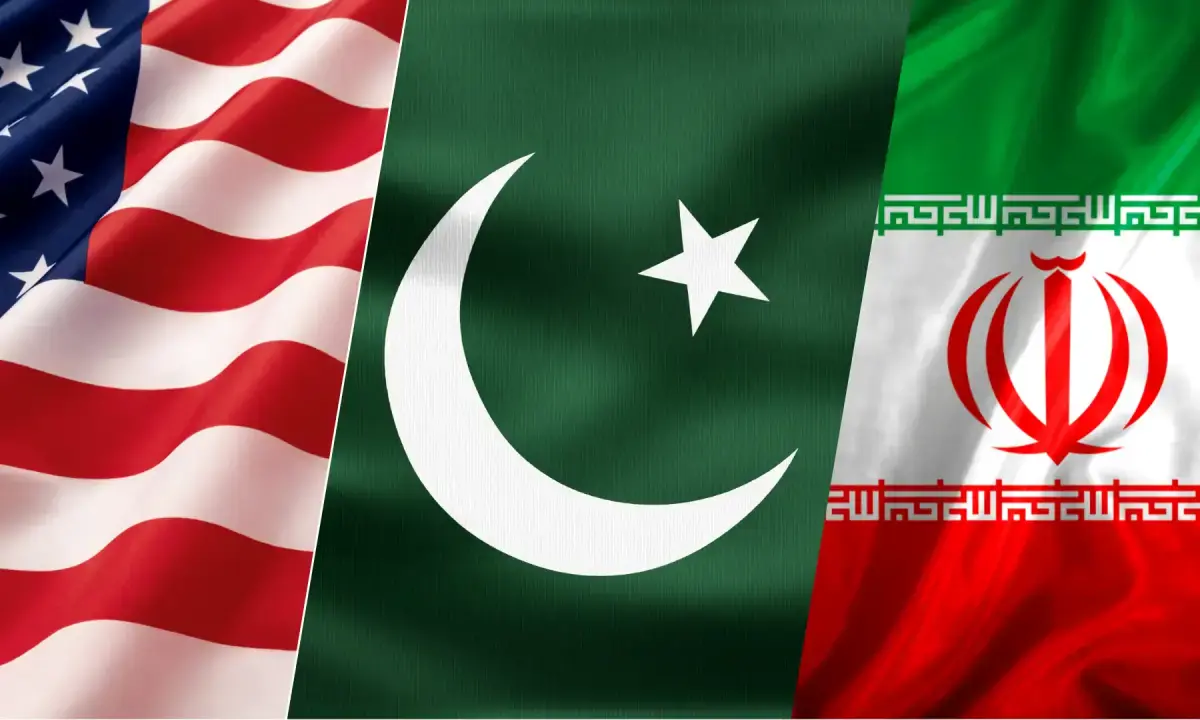
• Vows to support US, Iran in reaching a peaceful settlement
• PM, army chief review mediation efforts, arrangements for talks
• Israeli strikes in Lebanon threaten to derail negotiations
• Iran says it was ready to retaliate before Pakistan intervened
• Warns continued attacks could make talks ‘meaningless’
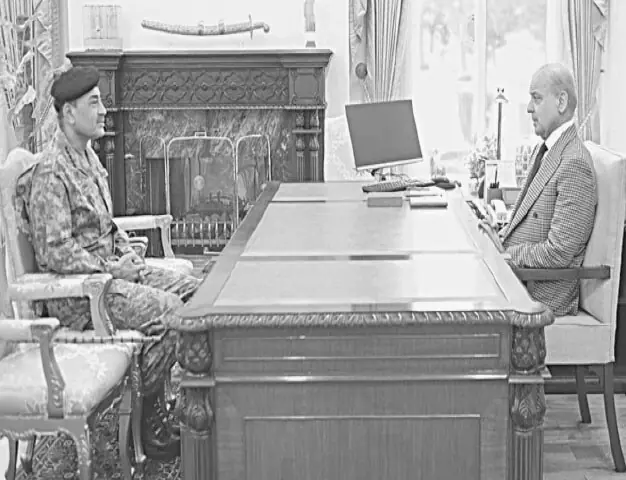
ISLAMABAD: Pakistan on Thursday vowed to support Iran and the United States in reaching a peaceful settlement as Israeli strikes in Lebanon continued to weigh on the prospects of the upcoming dialogue, with Islamabad stepping up diplomatic engagement to keep a two-week ceasefire between Tehran and Washington from collapsing.
The commitment came during a meeting between Prime Minister Shehbaz Sharif and Chief of Army Staff and Chief of Defence Forces Field Marshal Asim Munir, where they reviewed the progress of Pakistan’s mediatory efforts and finalised arrangements for the talks.
“They expressed satisfaction over the de-escalation achieved so far and stressed the need for maintaining peace and ceasefire by all parties,” an official statement said.
“They appreciated the restraint demonstrated by all sides and reiterated Pakistan’s commitment to facilitate and provide all-out support to both sides to arrive at a peacefully negotiated settlement,” it added.
Iranian deputy foreign minister Saeed Khatibzadeh, in a TV interview, disclosed that their forces were last night all set to respond to the ceasefire violation when Pakistan intervened and conveyed messages that the United States would stop Israel.
The Prime Minister’s Office said PM Shehbaz lauded the commitment of the parties involved and wished them success in their pursuit of peace, as Islamabad positioned itself as a central facilitator at a time when the ceasefire remains under visible strain due to violations.
PM Shehbaz simultaneously launched a round of intensive diplomatic outreach, holding telephone conversations with multiple world leaders with a consistent focus on the worsening situation in Lebanon and the need to uphold the ceasefire to enable negotiations.
Iranian President Masoud Pezeshkian, in a statement, warned that “the repeated aggression by the Zionist entity against Lebanon is a flagrant violation of the initial ceasefire agreement and a dangerous indicator of deceit and lack of commitment to potential accords”.
“The continuation of these aggressions will render negotiations meaningless; our hands will remain on the trigger, and Iran will never abandon its Lebanese brothers and sisters,” he added.
In separate conversations with Qatar’s Emir Sheikh Tamim bin Hamad Al Thani, French President Emmanuel Macron, Bahrain’s King Hamad bin Isa Al Khalifa, Austrian Chancellor Christian Stocker, German Chancellor Friedrich Merz and Italian Prime Minister Giorgia Meloni, PM Shehbaz reiterated the urgency of preserving the ceasefire and preventing further escalation.
The foreign leaders expressed concern over continued hostilities in Lebanon and emphasised that adherence to the truce would be critical for the success of the Islamabad talks.
Separately, Deputy Prime Minister and Foreign Minister Ishaq Dar also engaged in a series of diplomatic contacts to consolidate international backing ahead of the talks.
Mr Dar spoke with British Foreign Secretary Yvette Cooper, EU High Representative Kaja Kallas, Uzbekistan Foreign Minister Bakhtiyor Saidov, South Africa’s Minister of International Relations Ronald Lamola, Azerbaijan Foreign Minister Jeyhun Bayramov, Saudi Foreign Minister Faisal bin Farhan, and Turkish Foreign Minister Hakan Fidan.
The flurry of calls underlined growing international concern that Israeli operations in Lebanon, which Iran insists must be part of any ceasefire framework, could derail the diplomatic process before it begins.
Preparations in capital
Pakistan is set to host the first direct high-level negotiations between the United States and Iran beginning April 11, following a two-week ceasefire brokered by Islamabad earlier this week after nearly six weeks of conflict.
Preparations in the capital have been extensive. Authorities have declared April 9 and 10 public holidays, placed parts of Islamabad under restricted access, and implemented stringent security protocols. A major hotel has been reserved for the delegations, while logistics and security arrangements have been fast-tracked.
The Iranian delegation, initially expected late Thursday, has postponed its arrival until Friday, while the first US delegation, including senior envoy Steve Witkoff and other officials, is also due to arrive the same day. Vice President JD Vance is expected to reach Islamabad in the early hours of Saturday. A sizeable US security advance team is already present.
The talks are expected to centre on Iran’s 10-point proposal, which Washington has accepted “in principle” as a framework for negotiations. The proposal includes demands for an end to aggression, full sanctions relief, recognition of Iran’s nuclear enrichment rights, withdrawal of US forces from the region, compensation for war damage and cessation of hostilities across all fronts, including Lebanon.
Officials and analysts say the Islamabad talks offer a rare diplomatic opening but face significant structural challenges.
At the core are starkly divergent positions. The United States is expected to press for verifiable limits on Iran’s nuclear programme, including restrictions on enrichment and potential removal of nuclear material, while Iran is insisting on full sanctions removal, recognition of its nuclear rights and compensation for wartime damage.
The status of the Strait of Hormuz remains another critical flashpoint, with Iran retaining the ability to regulate or restrict maritime traffic, giving it significant leverage over global energy flows.
Perhaps the most immediate risk, however, is the Lebanon factor. Without a clear understanding of whether the ceasefire extends to Israeli operations there, the negotiations risk being undermined by events on the ground.
The deep trust deficit between Washington and Tehran further complicates matters. Iranian officials have repeatedly expressed scepticism about US intentions, while Washington continues to apply pressure, including through economic measures and military signalling.
The absence of a neutral guarantor and the influence of external actors not directly involved in the talks, particularly Israel, add to the uncertainty.
Most assessments suggest that while a limited, tactical agreement, possibly involving phased sanctions relief and partial nuclear concessions could be within reach, a comprehensive settlement addressing broader regional dynamics is unlikely in the initial round.
Russian newswire TASS, while quoting an unnamed Iranian source, said that Iran would want the end of the war to be formalised in a resolution of the UN Security Council. Regarding uranium enrichment, it said that Iran remains committed to a previously exchanged agreement.
Published in Dawn, April 10th, 2026