⚡ عاجل: كريستيانو رونالدو يُتوّج كأفضل لاعب كرة قدم في العالم●⚡ أخبار عاجلة تتابعونها لحظة بلحظة على خبر●⚡ تابعوا آخر المستجدات والأحداث من حول العالم●
AI اقتراحات ذكية
AI مباشر|--مشاهد مباشر
878,338مقال404مصدر نشط228قناة مباشرة4,514خبر اليوم
Dubai: Pakistan has intensified its diplomatic and military outreach across the Middle East this week in a coordinated effort aimed at easing regional tensions, as Prime Minister Shehbaz Sharif toured key Gulf capitals while the country’s army chief held high-level talks in Iran.
The parallel engagements in Saudi Arabia, Qatar, Türkiye and Tehran underscore Islamabad’s growing effort to position itself as a facilitator of dialogue at a time when conflict dynamics in the region have raised concerns over energy security, trade stability and broader geopolitical escalation.
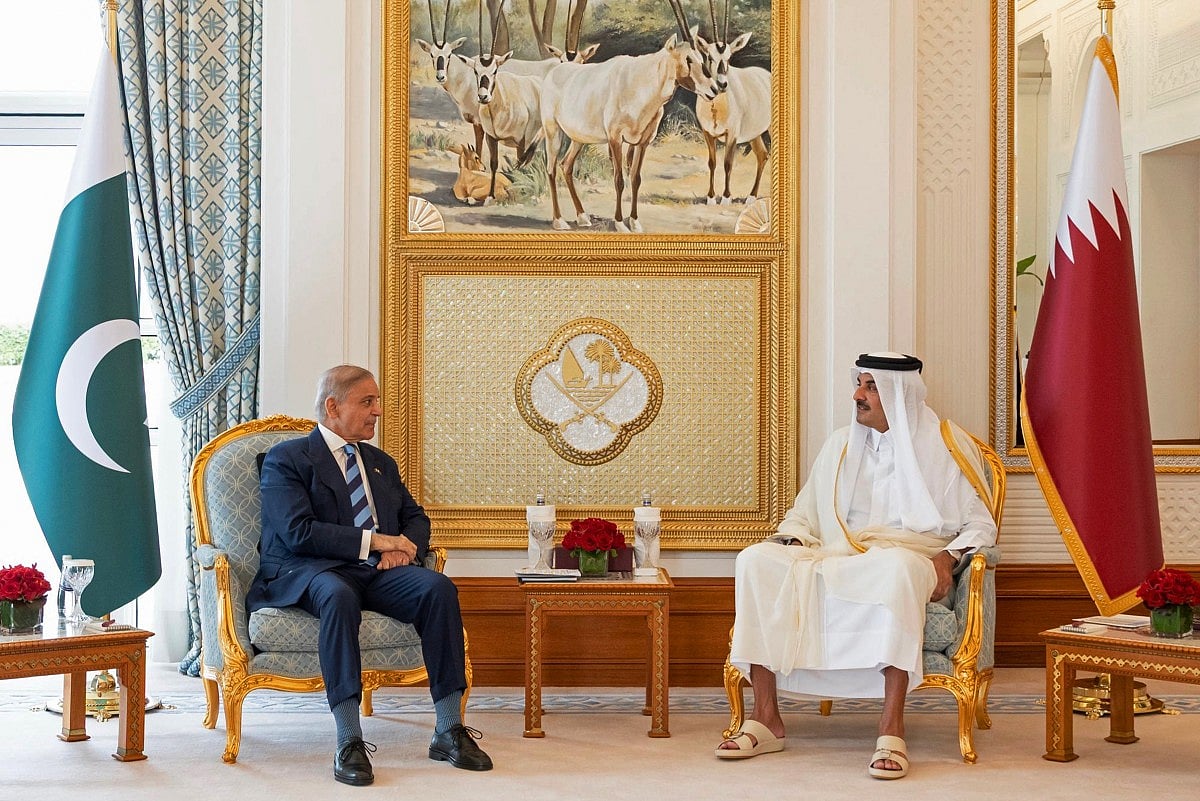
This handout photograph taken and released by Qatar's Amiri Diwan on April 16, 2026 shows Qatar's Emir Sheikh Tamim bin Hamad Al-Thani (R) speaking with Pakistan's Prime Minister Shehbaz Sharif during their meeting in Doha.
Prime Minister Sharif’s four-day diplomatic visit, running from April 15 to 18, has already taken him to Saudi Arabia and Qatar, with Türkiye next on the itinerary. According to the Pakistan Foreign Office, the visits are focused on “ongoing bilateral cooperation as well as regional peace and security,” with a strong emphasis on de-escalation and coordinated international responses to instability in the Middle East.
Doha visit
In Doha, Sharif met Qatar’s Emir Sheikh Tamim bin Hamad Al Thani shortly after his arrival on Thursday, where both leaders discussed the rapidly evolving regional situation. The prime minister said both sides “underscored the importance of de-escalation, dialogue, and close international coordination to ensure peace and stability.”
Qatari Minister of State for Foreign Affairs, Sultan bin Saad Al-Muraikhi receiving Prime Minister Muhammad Shehbaz Sharif and Pakistani delegation upon their arrival at Doha Airport. 16 April, 2026. pic.twitter.com/slcZ0VcKWj
He reiterated Pakistan’s condemnation of recent attacks affecting Qatar and other regional states, adding, “We conveyed our full solidarity with the brotherly people of Qatar.” Sharif also expressed appreciation for Qatar’s gesture of sending fighter jets to escort his aircraft upon entering Qatari airspace, calling it a reflection of “exceptionally warm and generous hospitality.”
The Qatari Emir, in turn, praised Pakistan’s role in promoting diplomatic engagement, reportedly expressing “deep appreciation for Pakistan’s pivotal role in supporting efforts to de-escalate tensions in the region.” Both leaders agreed on the importance of maintaining secure energy supply chains and avoiding further disruption in global markets.
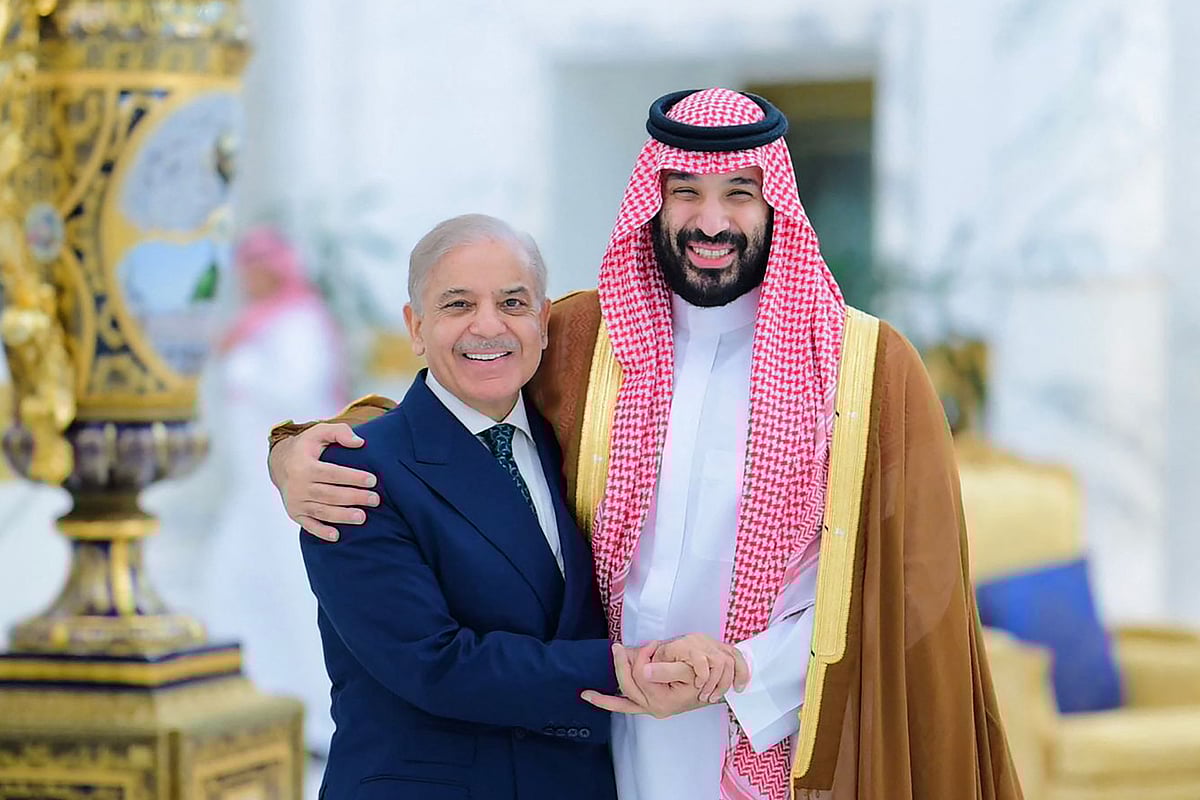
I had the pleasure and honour of meeting my dear brother, His Royal Highness Crown Prince Mohammed bin Salman, in Jeddah today.
During the course of which, I conveyed Pakistan’s unwavering solidarity with the Kingdom and expressed my deep appreciation of its patience and… pic.twitter.com/C6fIobxM58
Earlier in Saudi Arabia, Sharif met Crown Prince Mohammed bin Salman in Jeddah in what officials described as a warm and constructive exchange focused on strengthening bilateral ties and promoting regional stability. The prime minister also visited Madina, where he offered prayers at the Prophet’s Mosque, underscoring the spiritual dimension of his visit.
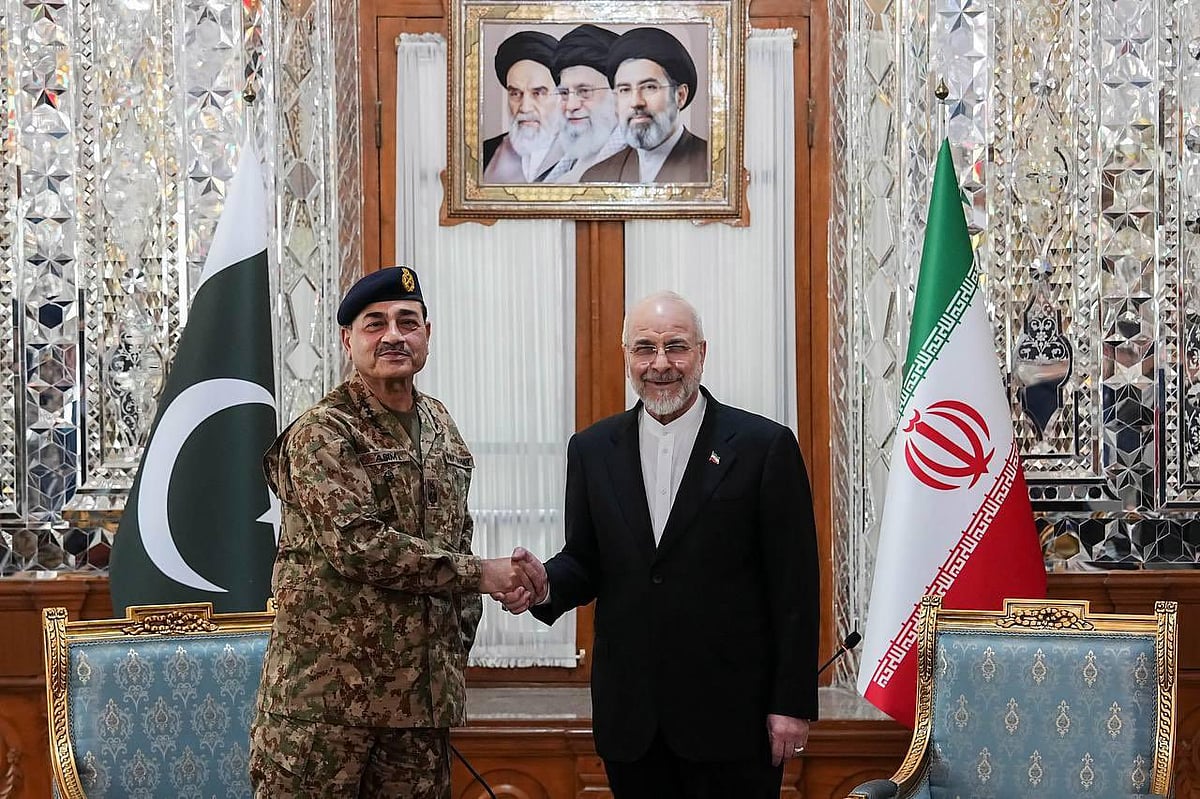
Pakistan army chief Asim Munir meets Iran speaker Ghalibaf during his visit to Iran.
Field Marshal in Iran
Separately, Pakistan’s military leadership added weight to Islamabad’s diplomatic messaging. Field Marshal General Asim Munir travelled to Iran, where he met senior Iranian officials involved in regional negotiations, including figures linked to previous US — Iran dialogue efforts.
Iranian state media confirmed meetings between General Munir and parliamentary speaker Mohammad Bagher Ghalibaf, who has played a role in earlier rounds of indirect talks. Discussions reportedly focused on regional stability and the need to prevent further escalation in the Gulf.
Stabilising force
The combined civilian and military outreach reflects Pakistan’s attempt to act as a stabilising force amid heightened tensions following months of hostilities involving Iran, Israel and the United States. Regional energy corridors, particularly through the Strait of Hormuz, remain a central concern for global markets and Gulf economies.
Pakistan has already positioned itself as a facilitator in earlier diplomatic contacts between Tehran and Washington, hosting exploratory discussions in Islamabad that contributed to a fragile ceasefire framework. Officials say those efforts remain active.
Field Marshal Syed Asim Munir, NI (M), HJ, #COAS & CDF of #Pakistan arrives in Tehran, #Iran
— Pakistan Armed Forces News (@PakistanFauj) April 15, 2026
“Our role as a mediator and facilitator did not stop when the Islamabad talks concluded. It continued,” said foreign ministry spokesperson Tahir Andrabi earlier this week, signalling Islamabad’s intent to stay engaged in backchannel diplomacy.
Analysts say Pakistan’s outreach reflects both geopolitical necessity and strategic positioning. By engaging simultaneously with Tehran and key Gulf capitals, Islamabad is attempting to preserve balance in relationships that are economically vital and politically sensitive.
Turkiye visit
Prime Minister Sharif is expected to carry this message further at the Antalya Diplomacy Forum in Türkiye, where Pakistan will present its position alongside other global leaders. Officials say the focus will remain on “dialogue over confrontation” and “collective security over unilateral escalation.”
The outcome of this coordinated diplomatic effort remains uncertain, but the tone emerging from regional capitals suggests cautious openness to de-escalation. Sharif himself has stressed that stability in the region is “not optional but essential for global economic and energy security.”
ملاحظة تحريرية | Editorial Note:
نُشر هذا المقال في الأصل بواسطة Gulf News.
خبر (Khabr) هي منصة إعلامية أردنية مرخّصة تعمل بالذكاء الاصطناعي.
نضيف قيمة تحريرية من خلال: تحليل ذكي للأخبار، ملخصات تلقائية، رواية صوتية بالذكاء الاصطناعي، ترجمة متعددة اللغات، وتدقيق الحقائق.
هدفنا جعل الأخبار أكثر وضوحاً وسهولةً للقارئ العربي.
This article was originally published by Gulf News.
Khabr is a licensed Jordanian AI-powered news platform (Registration #82086).
We add editorial value through: AI-powered news analysis, automated summaries, AI audio narration, multi-language translation (Arabic, English, French, Turkish), and AI fact-checking.
Our mission is to make news more accessible and understandable for Arabic-speaking audiences worldwide.
هذا الخبر ضمن تغطية خبر لقسم سياسة.
نقدّم لك تحليلات ذكية وملخصات يومية لأهم الأخبار من مصادر موثوقة متعددة.
المصدر: Gulf News.
يوجد 6 مقالات مرتبطة بهذا الموضوع.
This article is part of Khabr's coverage of Politics.
We provide AI-powered analysis, summaries, and multi-source aggregation to keep you informed.
Source: Gulf News.
Tags: regional calm, Sharif, Iran talks.
🍪 نستخدم ملفات تعريف الارتباط لتحسين تجربتك وعرض الإعلانات المخصصة. باستخدامك للموقع، فإنك توافق على سياسة ملفات تعريف الارتباط وسياسة الخصوصية.
We use cookies to enhance your experience and show personalized ads. By using this site, you agree to our Cookie Policy and Privacy Policy.
FREEFree 1GB Internet + Free International Calls
$1 trial — eSIM in 190+ countries — No roaming charges