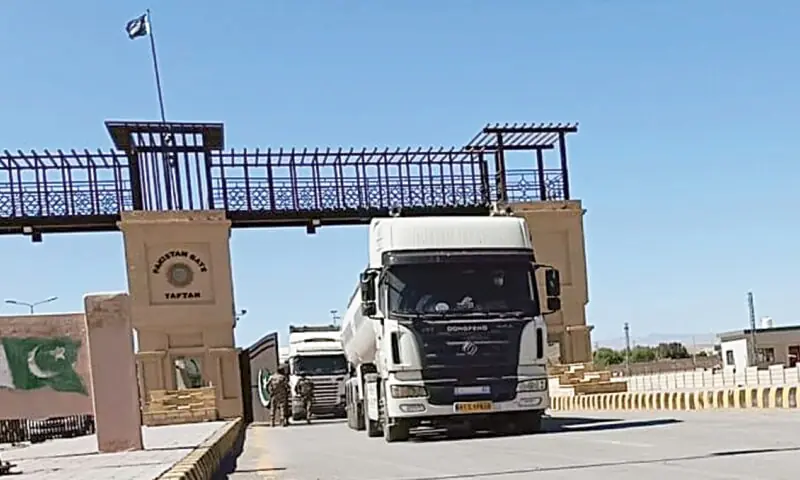
ISLAMABAD: As maritime trade becomes more uncertain due to the Gulf crisis, Pakistan has permitted exporters to continue shipping food and pharmaceutical products to Iran via land routes without using mandatory banking instruments.
Simultaneously, the federal government has permitted the export of rice to Central Asian Republics and Azerbaijan via the land route through Iran. The decision was communicated to customs field formations through an official message issued by the commerce ministry.
According to the decision, the government has permitted the export of 10 food items to Iran via land route without the need for financial instruments. These items include rice, seafood, potatoes, meat, onions, maize, citrus fruits, bananas, tomatoes, and frozen chicken. Two other non-food items are pharmaceutical products and tents.
Exemptions will be granted to exporters for the export of these items to Iran for three months — from March 24 to June 21. The exemption also covers rice exports routed through Iran’s land corridor, including shipments to Central Asian Republics and Azerbaijan.
Waives banking instrument requirement; exporters can ship food, medicines via land
The federal government has extended the long-standing relaxation introduced to support cross-border trade with Iran in the absence of formal financial channels. However, exporters will still need to submit an undertaking to ensure that export proceeds are repatriated within the required timeframe.
“This is a routine extension in exemption from banking instruments for trade with Iran,” a commerce ministry official said, requesting anonymity.
Pakistan also runs a distinct barter trade system with Iran, established to circumvent financial restrictions and encourage bilateral trade through goods exchange arrangements.
The decision to extend financial instruments arises amid regulatory changes introduced following Pakistan’s placement on the Financial Action Task Force grey list, when the State Bank of Pakistan, in 2016, made it compulsory for all external trade to be conducted through formal banking instruments.
The move significantly disrupted trade with Iran, where international sanctions and the absence of banking channels constrained payment settlements.
In compliance with FATF requirements, amendments were made to the Export Policy Order, requiring that all exports from Pakistan adhere to the Foreign Exchange Rules, regulations, and procedures notified by the State Bank of Pakistan.
Exporters initially challenged the requirement in court and obtained a stay order, allowing them to continue transactions through informal or alternative mechanisms. The stay was lifted in October 2024, reinstating the requirement for banking-based trade, but exporters once again approached the government seeking relief from the obligations of financial instruments.
Since then, the government has been granting regular exemptions, usually lasting three to six months, to facilitate exports of essential goods to Iran, according to a commerce ministry official.
Officials maintain that food items and medicines exported to Iran do not fall under international sanctions, allowing such trade to proceed under relaxed conditions.
In an effort to strengthen border management and enhance documentation of cross-border flows, Pakistan has established a new customs station at Jeerak in Panjgur district along the Pakistan-Iran border. The facility aims to facilitate passenger movement, regulate personal baggage, and channel informal trade into the formal economy.
Designated as the fifth crossing point for trade and transit with Iran, the initiative builds on earlier steps, including the opening of the Kohak Cheedgi crossing in January 2025 and the Gabd Rimdan border point in December 2024. These new customs stations will promote documented imports and exports while discouraging smuggling by offering a regulated, accessible trade route for local traders.
Published in Dawn, March 28th, 2026