For years, Silicon Valley’s biggest AI question has been whether artificial intelligence will live inside the smartphone — or replace it altogether.
Now, OpenAI appears to be betting on the device billions already carry in their pockets.
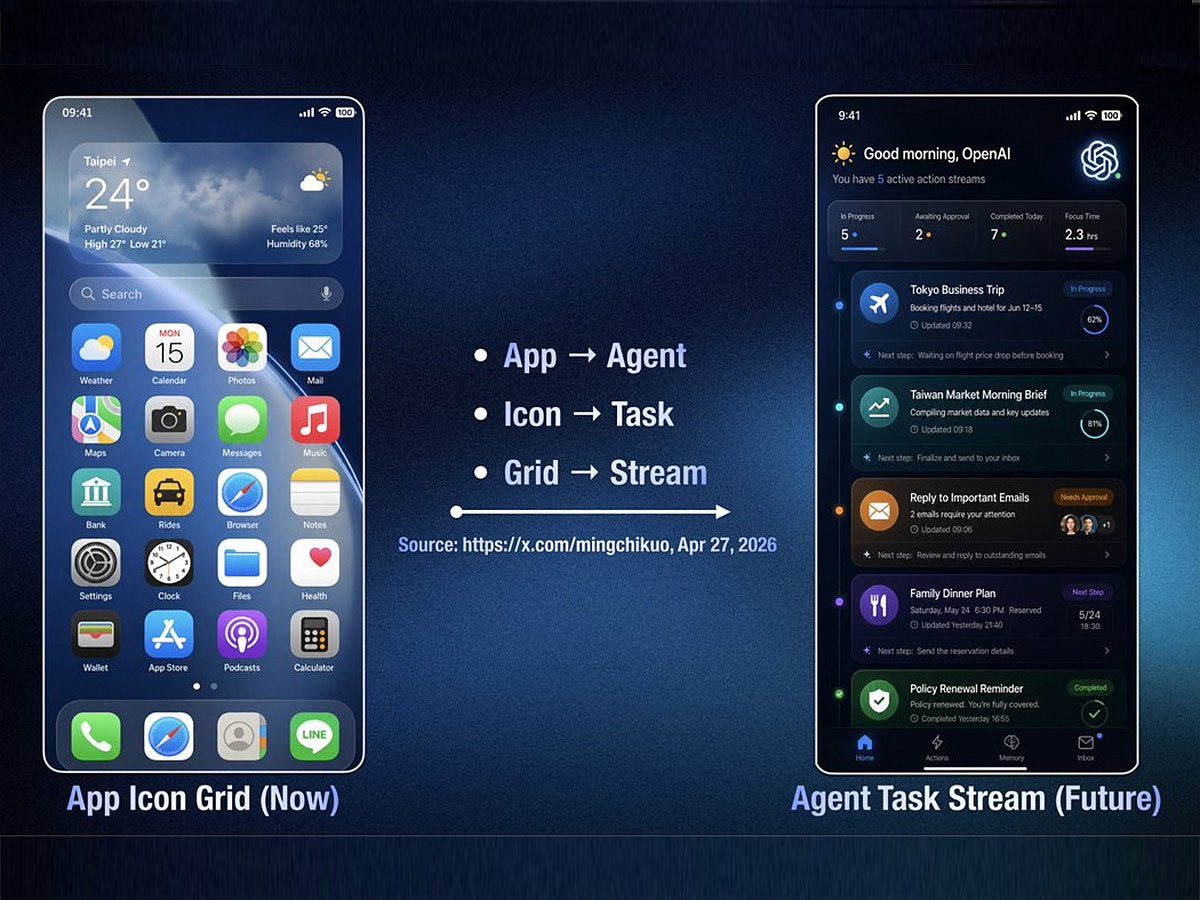
According to a report from 9to5Google, OpenAI is working on its own smartphone built around AI agents — software designed not simply to answer questions, but to carry out tasks on a user’s behalf, from booking travel to managing schedules, messaging contacts, and navigating apps autonomously.
Get updated faster and for FREE: Download the Gulf News app now - simply click here.
The concept marks a notable shift in how the industry imagines mobile computing’s next chapter.
Instead of tapping through rows of apps, users could interact with a single intelligent interface — an AI layer that understands intent, context, and behavior, then quietly completes tasks in the background. The phone, in this model, becomes less of an app launcher and more of an execution engine for digital actions.
Behind the scenes, the reported supply chain suggests OpenAI is thinking at scale.
Apple analyst Ming-Chi Kuo says the company is working with Qualcomm and MediaTek on smartphone processors, while Luxshare Precision — one of Apple’s major hardware partners — is expected to handle system co-design and manufacturing. Reuters reported that mass production is tentatively targeted for 2028, though neither OpenAI nor the chipmakers have publicly confirmed the project.
That timeline matters because OpenAI has already been moving steadily toward consumer hardware.
Its multibillion-dollar acquisition of Jony Ive’s io Products signaled ambitions far beyond software, while CEO Sam Altman has repeatedly argued that current computing devices were not built for the AI era. Until now, most speculation centered on a new standalone category — something closer to a wearable, companion device, or ambient assistant. A smartphone would be a far more direct challenge to incumbents like Apple and Samsung Electronics.
The idea also arrives after a string of cautionary lessons in AI hardware.
Devices like Humane’s AI Pin and Rabbit’s R1 promised post-smartphone computing, but struggled with limited functionality, latency, and unclear daily utility. Analysts increasingly say consumers may not want a new category of device — they may simply want AI deeply embedded into the one they already own.
That is where an agent-first smartphone could be different.
Rather than replacing the handset, OpenAI appears to be exploring how to rebuild it around autonomous software — a phone that understands what users want done, not just what they type.
If that vision becomes real, the biggest disruption to the smartphone may not be a foldable screen, thinner hardware, or faster chips.
It may be a phone where the most important app is the operating intelligence itself.