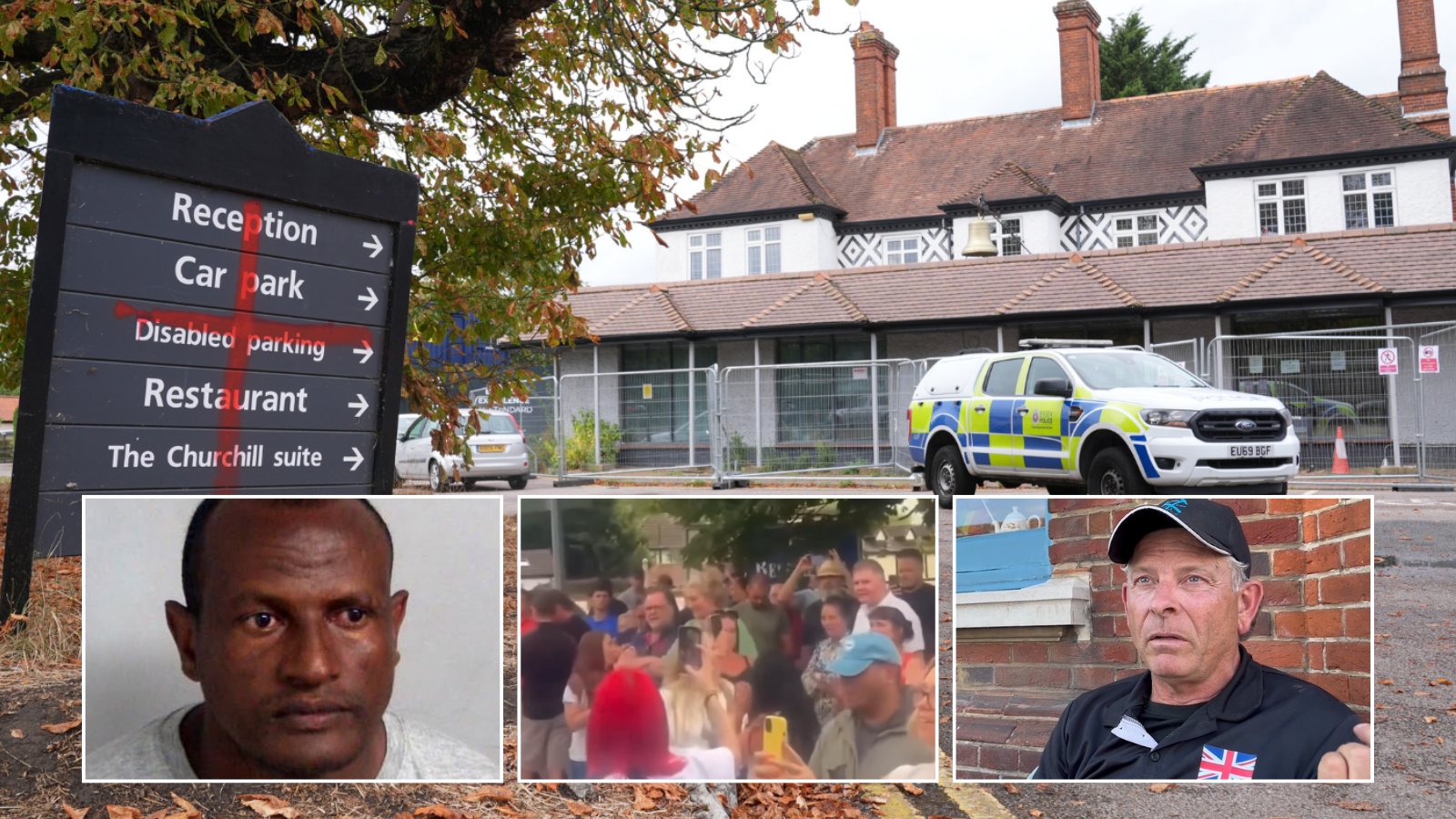
One year on, Epping residents remember the battle over The Bell Hotel: 'Schoolgirls are scared now!'
•One of Britain’s most notorious migrant hotels finally closes its doors for good this weekend — but the closure comes after a year of turmoil for the town.The Bell Hotel in Epping, Essex, will no long...
•TRENDING Stories Videos Your Say One of these occupants was Hadush Kebatu, the Ethiopian national who ventured into the Epping town centre last July, just eight days after arriving in Britain, an...
•Following his conviction, Kebatu was mistakenly released from HMP Chelmsford and given a £500 payment after threatening to disrupt his deportation to Africa.After a year of unrest, residents of the 13...
هذا الخبر من GB News. خبر يقدم أدوات ذكاء اصطناعي للتلخيص والترجمة والاستماع.
المصدر: GB News | Source: GB NewsOne of Britain’s most notorious migrant hotels finally closes its doors for good this weekend — but the closure comes after a year of turmoil for the town.
The Bell Hotel in Epping, Essex, will no longer operate as accommodation for asylum seekers as of July 11 after the Government terminated the Home Office contract last month.
It forms part of Home Secretary Shabana Mahmood's plan to close all asylum hotels by 2029, transferring more than 20,000 foreigners to new locations — namely disused military barracks.
The Bell Hotel garnered national attention 12 months ago, when hundreds of people gathered for weekly protests objecting to the site’s use of housing for predominantly fighting age foreign men.
TRENDINGStoriesVideosYour SayOne of these occupants was Hadush Kebatu, the Ethiopian national who ventured into the Epping town centre last July, just eight days after arriving in Britain, and sexually assaulted a woman and 14-year-old schoolgirl, which ignited mass protests throughout the summer.
Following his conviction, Kebatu was mistakenly released from HMP Chelmsford and given a £500 payment after threatening to disrupt his deportation to Africa.
After a year of unrest, residents of the 13th-century market town expressed relief at The Bell Hotel's closure, while maintaining concerns about the community being changed forever.
Steve Davis, 59, who has lived in the town for decades, noted the case of Kebatu as a catalyst for local outrage and told GB News: “If I was the father of this young girl, I would be pulling my hair out. Before he was arrested, he was also reported for other incidents that took place on Epping high road after school time.”
The tradesman pointed to Essex Police's response at the time, which he said was “slow at angling everything within the Epping community".
However, he acknowledged the strain on resources the series of events caused the force, which had to deploy masses of officers, implement dispersal orders and make arrests
Mr Davis noted how once the protests had amassed national attention, most of the demonstrators came from outside the county to bolster support and not always with genuine intent.
“Not a lot of the Epping community took part in that; a lot of people came into the area”, he claimed.
Some 25 people were arrested for offences including violent disorder and assault of emergency workers over the duration of the protests.
Lee Gower, 43, who punched, kicked and shoved officers, was later jailed for two years and nine months.
Meanwhile, Keith Silk, 33, Jonathan Glover, 47, and Charlie Land, 24, formed part of an "aggressive mob" and were convicted of committing “serious public disorder”.
Nevertheless, those living at The Bell Hotel had been accused of causing disturbances in the town.
Beyond the renowned case of Kebatu, Mohammed Sharwarq, 32, assaulted a cleaner, a head chef and two residents at the hotel last August.
The Syrian, who travelled to the UK via a small boat, was jailed for 16 weeks, having also slapped, kicked and charged at another resident.
Amid all the chaos, Mr Davis praised the actions of the "Pink Ladies" — a peaceful anti-immigration movement that originated alongside the violent disorder.
The group was formed last summer by Orla Minihane, a former vice-chair of the Reform UK local branch, who is now affiliated with Restore Britain.
LATEST DEVELOPMENTS
- I saw anger in Epping. Labour won't fix the problem by moving migrants to barracks – Adam Brooks
- Epping asylum hotel closure date confirmed as Home Office terminates contract
- Epping asylum hotel evacuated as all residents removed amid 'safety concerns'
The strategy was to present a "milder" community face, aiming to distance the protests from the division associated with previous male-dominated rallies.
Mr Davis said: “They’ve been having protests every Sunday evening. I give them the big thumbs up because they are all standing together as women concerned about their daughters.”
On the lasting effects of the last year in Epping, Mr Davies commented: “It’s that magical word called time.
“It’s been going on for 12, 15 months. Personally, I believe The Bell Hotel should stay as it is. Everything will heal itself and come to a closure.”
Another loser of the Bell Hotel saga was the Conservative-led Epping Forest District Council, with a fight to stop asylum seekers being housed at the site costing a whopping £566,000.
A spokesman for the council said it had battled to contest the building's use "in the interests of local residents" of the town.
The legal bill consumed 2.64 per cent of the local authority's £21.4million budget for the 2026/27 financial year, attempting to appeal against the High Court ruling back in March.
Council leader Chris Whitbread said at the height of the carnage, he would "find the money" to battle any appeal process.
Lawyers for the council argued Somani Hotels Ltd, which owned The Bell Hotel, breached planning laws by housing asylum seekers. Part of the council’s scorching legal bill included costs awarded to the Government and Somani Hotels Ltd, amounting to £66,000 and £95,000, respectively.
The local authority spokesman said it was "completely unfair" to award these costs, saying it was Whitehall policies "that led to the appalling incidents".
She said: "Legal action was not taken against the Home Office, despite their wholly unsuitable use of the hotel for asylum seeker accommodation.
"This was demonstrated by a number of serious offences committed by its occupants last year."
Michael Rawlands, 69, said the wave of protests last year “really annoyed everybody, really causing a lot of trouble in town.”
He described incidents of protesters smashing shopfront windows and parading into pubs as “loud, rude and annoying”, before being asked to leave.
The retired veteran told the People’s Channel: “One of my neighbour’s cats had a really serious injury and I believe one of them probably kicked it.”
Speaking on the lasting impact former occupants of The Bell Hotel had on the community, he added: “Schoolgirls are scared now because of that guy (Kebatu).
“They’re not from this culture anyway, so they don’t know what is allowed and what is not allowed. But that doesn’t allow them to take carte blanche and do whatever the hell they like.”
Mr Rawlands questioned the authenticity of the closure, claiming to still see occupants “up the road now”.
“It made people a lot warier," he concluded of the year of unrest.
Others conveyed feelings of “unfairness”, claiming The Bell Hotel and other asylum accommodation were unfair on British taxpayers funding their upkeep, despite struggling to get by themselves.
Some took a more stark approach, with one saying: “It’s about time they pull it down. They take liberties in this country and it doesn’t help that the party in power are clueless on how to manage it.”
A longtime local, who wished to remain anonymous, revealed to GB News she had been approached to teach English to migrant occupants of the hotel, but refused on principle.
Beyond residents and the council, Essex Police suffered immensely over the summer of 2025 and beyond, with one incident seeing eight officers assaulted.
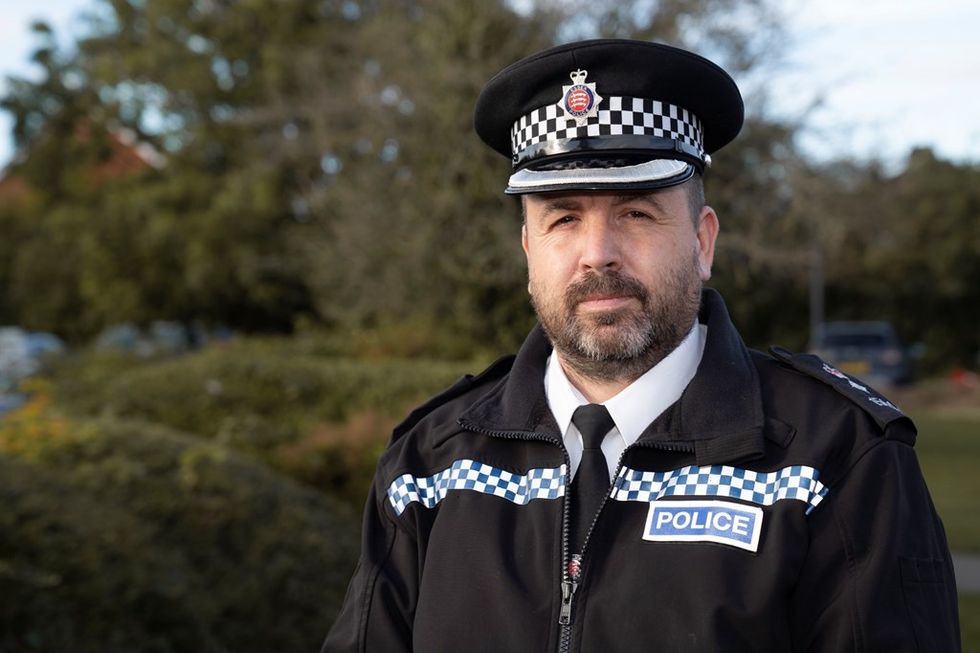
Stuart Hooper, Assistant Chief Constable with Essex Police, told The People’s Channel: “The resources required for this policing operation should not be underestimated. Thousands of hours of work, from hundreds of officers - often in incredibly challenging environments - were necessary all through the last 12 months. Whilst, of course, this significantly impacted upon the force, it shows our commitment to keep people safe and to ensure that protests were safe and lawful for everyone concerned.”
The force also enacted dispersal orders covering the entire town, banning face coverings and separating large loitering groups. All to great effort.
Addressing criticism of the force’s response, ACC Hooper responded: “When crimes are committed in Epping, we take action - regardless of who is responsible. The original offence which sparked community concern, and subsequent protest, in the summer of 2025 resulted in an immediate police response, an arrest and criminal charges being secured within hours.Equally, when a minority of people attending protests outside The Bell Hotel crossed the line from lawful protest into criminality, we acted just as robustly, often in very challenging circumstances.”
Over the course of a year’s worth of disorder, dozens of arrests were made, and those responsible for violent disorder, assaults, criminal damage and other offences have been brought before the judicary.
Many have received significant prison sentences, with more than 15 years of custodial sentences imposed by June 2026 and further offenders convicted and awaiting sentencing.
The ACC added: “Throughout this period, our focus was not only on preventing crime and bringing offenders to justice, but on protecting the wider Epping community. The impact of the ongoing protests was felt far beyond the immediate area around the hotel. Residents in the town spoke of fear and uncertainty, businesses were disrupted, roads were blocked and people were unable to go about their daily lives.
“Peaceful protest is a democratic right and we worked hard to facilitate lawful demonstrations for everyone who wanted to make their voices heard. However, anyone who believed that right extended to violence, intimidation, disorder or criminal damage was mistaken and was dealt with robustly. Our message has been consistent from the outset: if you commit a crime in Epping, we will investigate it, we will identify you and we will work tirelessly to bring you before the courts - whoever you are.”
The Home Office claims to be working closely with stakeholders across the UK, including other departments and authorities, to deliver commitments to reduce the cost of asylum accommodation and end the use of asylum hotels by the end of this Parliament.
Ministers are working to “fairly disperse asylum seekers across the country”, listening to local concerns to reduce the impact on communities.
A Home Office spokesman told Britain's News Channel: “We have closed The Bell Hotel, and it is no longer being used to house asylum seekers. This Government will continue to close other asylum hotels, moving asylum seekers into basic accommodation, including ex-military sites. The population in asylum hotels has fallen by nearly 20 per cent in the last year, and by 45 per cent since the peak under the previous government, helping reduce asylum support costs by nearly £1billion."
Our Standards: The GB News Editorial Charter


ملاحظة تحريرية | Editorial Note: نُشر هذا المقال في الأصل بواسطة GB News. خبر (Khabr) هي منصة إعلامية أردنية مرخّصة تعمل بالذكاء الاصطناعي. نضيف قيمة تحريرية من خلال: تحليل ذكي للأخبار، ملخصات تلقائية، رواية صوتية بالذكاء الاصطناعي، ترجمة متعددة اللغات، وتدقيق الحقائق. هدفنا جعل الأخبار أكثر وضوحاً وسهولةً للقارئ العربي.
This article was originally published by GB News. Khabr is a licensed Jordanian AI-powered news platform (Registration #82086). We add editorial value through: AI-powered news analysis, automated summaries, AI audio narration, multi-language translation (Arabic, English, French, Turkish), and AI fact-checking. Our mission is to make news more accessible and understandable for Arabic-speaking audiences worldwide.