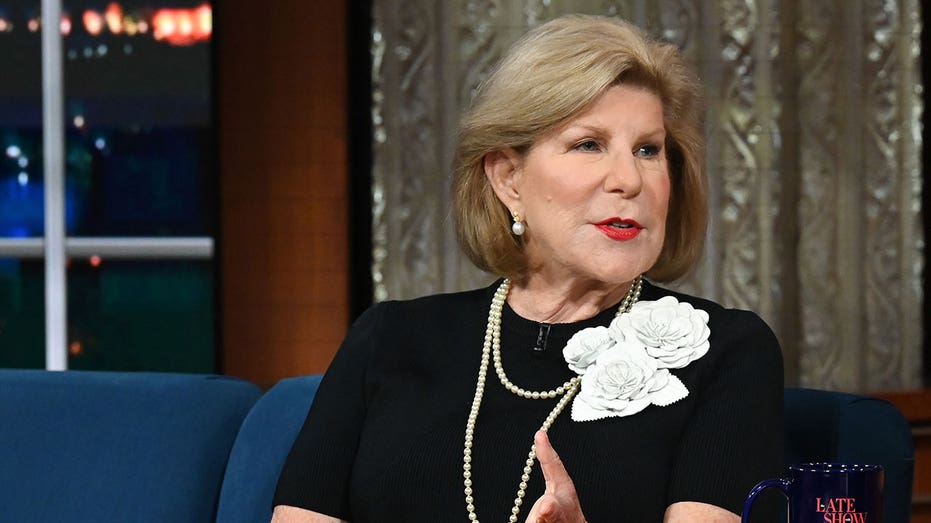
NPR’s Nina Totenberg long history of controversies, from plagiarism and ethics concerns to Alito retraction
•NPR legal affairs correspondent Nina Totenberg may have stunned the media industry on Tuesday when she erroneously reported that Supreme Court Justice Samuel Alito was retiring, but the veteran journa...
•The 82-year-old Totenberg, who has been a working journalist for over five decades, published the story headlined, "Justice Samuel Alito, who wrote the opinion overturning Roe v.
•Wade, retires," but quickly replaced it with an editor’s note insisting it was "erroneously published." Totenberg, who then tried to explain the debacle on "All Things Considered," has been no strange...
هذا الخبر من Fox News. خبر يقدم أدوات ذكاء اصطناعي للتلخيص والترجمة والاستماع.
المصدر: Fox News | Source: Fox NewsNPR legal affairs correspondent Nina Totenberg may have stunned the media industry on Tuesday when she erroneously reported that Supreme Court Justice Samuel Alito was retiring, but the veteran journalist is no stranger to gaffes and controversies.
The 82-year-old Totenberg, who has been a working journalist for over five decades, published the story headlined, "Justice Samuel Alito, who wrote the opinion overturning Roe v. Wade, retires," but quickly replaced it with an editor’s note insisting it was "erroneously published."
Totenberg, who then tried to explain the debacle on "All Things Considered," has been no stranger to mistakes and other controversies during her storied career.
NPR RETRACTS FALSE REPORT CLAIMING JUSTICE SAMUEL ALITO IS RETIRING FROM THE SUPREME COURT
Totenberg was fired for plagiarism when she worked as a staff writer for the since-shuttered National Observer in 1972, which the Columbia Journalism Review wrote about in 1995.
"Totenberg simply took several paragraphs and verbatim quotes from a Washington Post report about former House Speaker Thomas P. O'Neill, who was about to become majority leader, and dropped them into her own story about him, without attributing a single word to the Post," Trudy Lieberman wrote for the CJR.
Totenberg admitted that she "should have been punished" when recalling the incident two decades later.
"I was in a hurry. I used terrible judgment," Totenberg told CJR at the time. "The fact I used so many direct quotes obligated me morally to credit the Post. I should have been punished. I have a strong feeling that a young reporter is entitled to one mistake and to have the holy bejeezus scared out of her to never do it again."
NPR REVEALS HOW A MISHEARD ANNOUNCEMENT LED TO IT FALSELY CLAIMING JUSTICE ALITO WAS RETIRING
Totenberg irked Legal Times reporter Aaron Freiwald in 1987 when she reported then-Supreme Court nominee Douglas Ginsburg had exaggerated on his resume. Freiwald told Vanity Fair that her story "bore an alarming resemblance to what I had just given her," but Totenberg failed to credit him.
"I was very upset," Freiwald said at the time.
In 1992, Vanity Fair wrote that Totenberg was "having a terrible week" after she was widely criticized by prominent Republicans for reading portions of Anita Hill's confidential affidavit to NPR listeners and "nearly torpedoing Clarence Thomas's Supreme Court nomination." Hill accused Thomas of sexual harassment.
"First, a feverish Alan Simpson, the Republican Senator from Wyoming, assailed Totenberg's methods, motives and ethics while both were guesting on Nightline. Following the show, Simpson accosted her in the street where the two had a full-tilt epithet-strewn melée," Vanity Fair wrote, noting that Simpson said it would be "absurd" to call Totenberg an "objective" reporter.
"Having barely regained her equanimity from attacks from conservative senators who accused her of ruining the lives of both Thomas and Hill, Totenberg then found herself at the bull's-eye center of a media catfight among the Washington press corps," Vanity Fair added.
In 1995, Totenberg took heat after suggesting Republican Sen. Jesse Helms, who had proposed that Congress reduce spending on AIDS research, would "get AIDS from a transfusion or one of his grandchildren will get it" as a form of "retributive justice."
"It was a stupid remark. I'll pay for it for the rest of my life," Totenberg told NPR in 2010.
Totenberg managed to pop up in headlines once again in 2020 following the death of Justice Ruth Bader Ginsburg.
Totenberg penned an obituary for NPR in which she revealed that she was "close friends" with Ginsburg for her entire Supreme Court tenure. Totenberg, who covered the Supreme Court for NPR, did not publicly disclose the friendship until Ginsburg, a progressive justice long revered by the political left, died.
Totenberg wrote about how Ginsburg and her husband would often "scoop me up" for a night out or "dinner at their apartment."
"I always felt those evenings as a kind of embrace," Totenberg wrote.
The revelation prompted the Washington Post to publish a piece by longtime media reporter Paul Farhi about whether the relationship constituted a "conflict for NPR."
Farhi reported Totenberg’s closeness to someone she was tasked with covering objectively raised questions about conflicts of interest and could lead readers to believe NPR reporting was slanted to help a friend.
"Traditional journalistic practice is to avoid such entanglements, or at least disclose them so that readers can judge for themselves," Farhi wrote.
"Totenberg and NPR rarely did the latter; her friendship with Ginsburg was almost never mentioned in the hundreds of news stories, interviews and features Totenberg has done about the court over the years," he continued, noting that she dismissed concerns that her relationship compromised her journalism.
Poynter Institute media writer Tom Jones disagreed, writing that it was a "close friendship that a journalist really should not have with someone they cover."
"The friendship should not have happened. Or, if the friendship was that important, Totenberg should have recused herself from covering Ginsburg or the Supreme Court," Jones wrote.
Totenberg made waves again in 2022 when Supreme Court sources and a law clerk for Justice Neil Gorsuch disputed a viral NPR report that claimed the conservative justice refused to wear a mask on the bench despite requests from Justice Sonia Sotomayor to do so.
Totenberg’s story, "Gorsuch didn't mask despite Sotomayor's COVID worries, leading her to telework," reported Chief Justice John Roberts ordered the justices to wear masks because of the omicron surge since Justice Sotomayor has diabetes. Totenberg cited "court sources" to report Sotomayor herself expressed she "did not feel safe in close proximity to people who were unmasked" before Roberts made the decision.
CLICK HERE FOR MORE COVERAGE OF MEDIA AND CULTURE
"They all did. Except Gorsuch, who, as it happens, sits next to Sotomayor on the bench. His continued refusal since then has also meant that Sotomayor has not attended the justices' weekly conference in person, joining instead by telephone," Totenberg wrote. "Gorsuch, from the beginning of his tenure, has proved a prickly justice, not exactly beloved even by his conservative soulmates on the court."
At the time, Fox News’ Shannon Bream quickly reported that Totenberg’s story was "not accurate."
"A source at the Supreme Court says there has been no blanket admonition or request from Chief Justice Roberts that the other justices begin wearing masks to arguments," Bream said. "The source further stated Justice Sotomayor did not make any such request to Justice Gorsuch. I’m told, given that fact, there was also no refusal by Justice Gorsuch."
NPR stood by Totenberg’s reporting despite Sotomayor and Gorsuch issuing a statement saying that she did not ask him to wear a mask.
ملاحظة تحريرية | Editorial Note: نُشر هذا المقال في الأصل بواسطة Fox News. خبر (Khabr) هي منصة إعلامية أردنية مرخّصة تعمل بالذكاء الاصطناعي. نضيف قيمة تحريرية من خلال: تحليل ذكي للأخبار، ملخصات تلقائية، رواية صوتية بالذكاء الاصطناعي، ترجمة متعددة اللغات، وتدقيق الحقائق. هدفنا جعل الأخبار أكثر وضوحاً وسهولةً للقارئ العربي.
This article was originally published by Fox News. Khabr is a licensed Jordanian AI-powered news platform (Registration #82086). We add editorial value through: AI-powered news analysis, automated summaries, AI audio narration, multi-language translation (Arabic, English, French, Turkish), and AI fact-checking. Our mission is to make news more accessible and understandable for Arabic-speaking audiences worldwide.