New dinosaur species with neck as long as cricket pitch discovered in Thailand
•New dinosaur species with neck as long as cricket pitch discovered in ThailandImage source, Artwork by Pakorn ChotchaiyapornImage caption, Artwork by Pakorn ChotchaiyapornByAmy WalkerPublished30 minut...
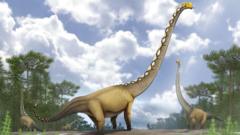
•The plant-eating dinosaur, named Uragasaurus kalasinensis, is thought to have lived about 150 million years ago.It had an unusually long neck and measured up to 20m (66ft) - roughly the length of a cr...
•More than 90% of the fossils excavated from the site were dinosaur fragments.When the survey team went to explore the site it found other fossils such as dinosaur teeth and bones.
هذا الخبر من BBC News. خبر يقدم أدوات ذكاء اصطناعي للتلخيص والترجمة والاستماع.
New dinosaur species with neck as long as cricket pitch discovered in ThailandImage source, Artwork by Pakorn ChotchaiyapornImage caption, Artwork by Pakorn ChotchaiyapornByAmy WalkerPublished30 minutes agoPalaeontologists in Thailand say they have discovered a new species of dinosaur from fossils found in Kalasin Province in the country's north-east. The plant-eating dinosaur, named Uragasaurus kalasinensis, is thought to have lived about 150 million years ago.It had an unusually long neck and measured up to 20m (66ft) - roughly the length of a cricket pitch.Dr Apirat Nilphanaphan from Thailand's Mahasarakham University, the study's lead author, told BBC Thai that the specimen was part of a large fossil collection from a site first identified in 2008, when a local man found fragments resembling serpent scales.The site where the discovery was made, Phu Noi, contained a wide variety of fossils from the Late Jurassic period. More than 90% of the fossils excavated from the site were dinosaur fragments.When the survey team went to explore the site it found other fossils such as dinosaur teeth and bones. However, the fossil that led to the discovery of the new species was a recovered dorsal vertebra — a bone from the middle or upper back — which showed distinctive characteristics.A CT scan revealed that the dinosaur belonged to the Mamenchisauridae family of sauropod dinosaurs, characterised by their extremely long necks, which likely helped them reach vegetation at different heights.While most fossils from the Mamenchisauridae family have been found in China, this discovery is the first of its kind in Thailand.The scan also revealed unique characteristics, including a Y-shaped arrangement of supporting bones known as laminae.Niphanaphan told BBC Thai the features, in particular a unique air-cavity structure, were "unlike any other dinosaur in the world... That's what sets it apart".He said he smashed his keyboard after realising they had di...المصدر: BBC News | Source: BBC News
ملاحظة تحريرية | Editorial Note: نُشر هذا المقال في الأصل بواسطة BBC News. خبر (Khabr) هي منصة إعلامية أردنية مرخّصة تعمل بالذكاء الاصطناعي. نضيف قيمة تحريرية من خلال: تحليل ذكي للأخبار، ملخصات تلقائية، رواية صوتية بالذكاء الاصطناعي، ترجمة متعددة اللغات، وتدقيق الحقائق. هدفنا جعل الأخبار أكثر وضوحاً وسهولةً للقارئ العربي.
This article was originally published by BBC News. Khabr is a licensed Jordanian AI-powered news platform (Registration #82086). We add editorial value through: AI-powered news analysis, automated summaries, AI audio narration, multi-language translation (Arabic, English, French, Turkish), and AI fact-checking. Our mission is to make news more accessible and understandable for Arabic-speaking audiences worldwide.