NASA logs record-breaking solar burst as scientists forecast dangerous space weather events
•NASA has logged a record-breaking solar burst as scientists forecast dangerous space-weather events.The longest solar radio burst ever has been observed, lasting 19 days and shattering the previous re...
•TRENDING Stories Videos Your Say However, unlike typical solar radio bursts, which last only a few hours to a few days, this one kept going.The burst is known as a Type IV burst, a specific categ...
•Type IV bursts are produced by reservoirs of electrons trapped within the sun's magnetic fields, which generate radio waves as the electrons move.The Sun is made of plasma, with electrons and protons...
هذا الخبر من GB News. خبر يقدم أدوات ذكاء اصطناعي للتلخيص والترجمة والاستماع.
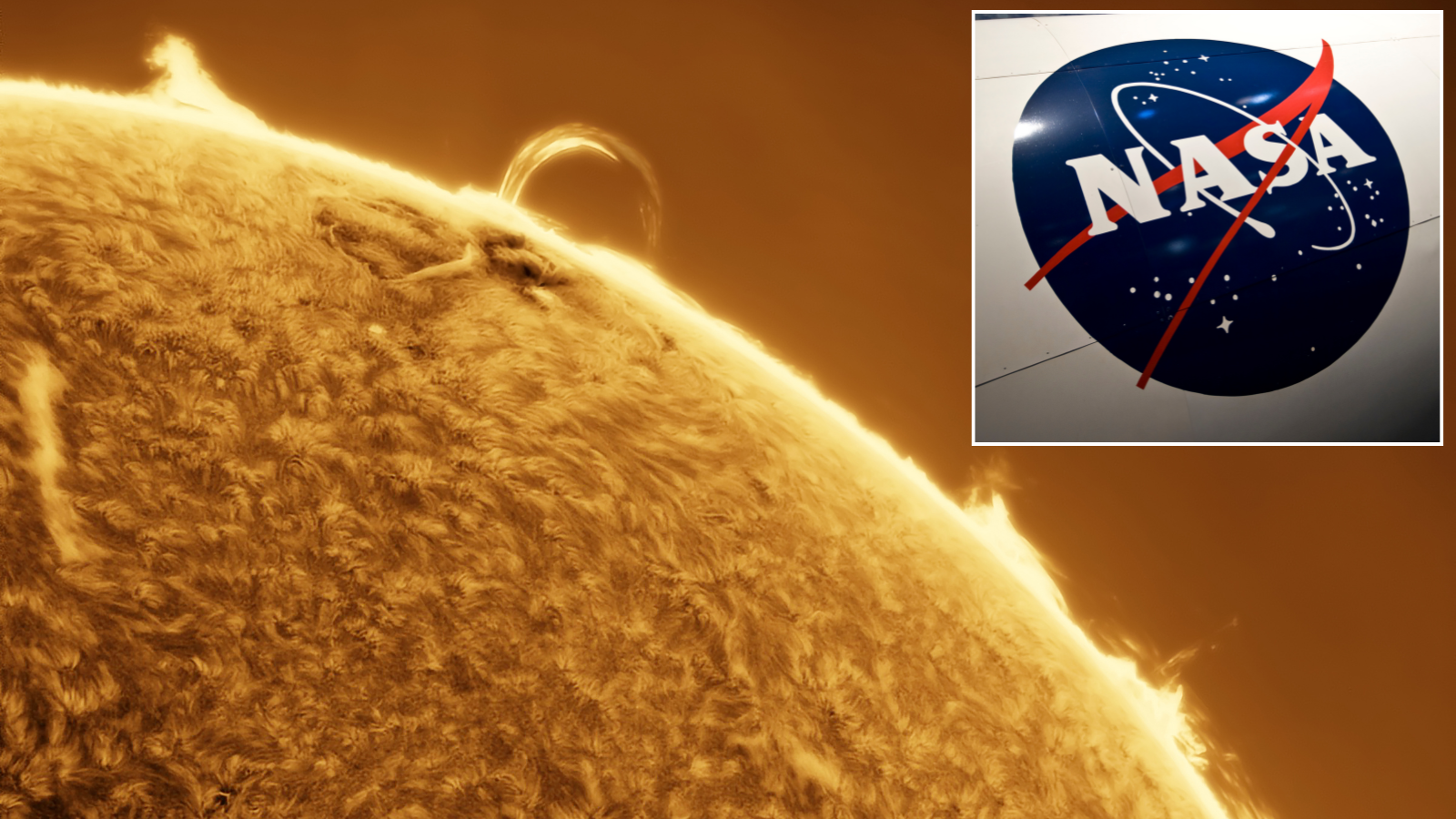
المصدر: GB News | Source: GB NewsNASA has logged a record-breaking solar burst as scientists forecast dangerous space-weather events.
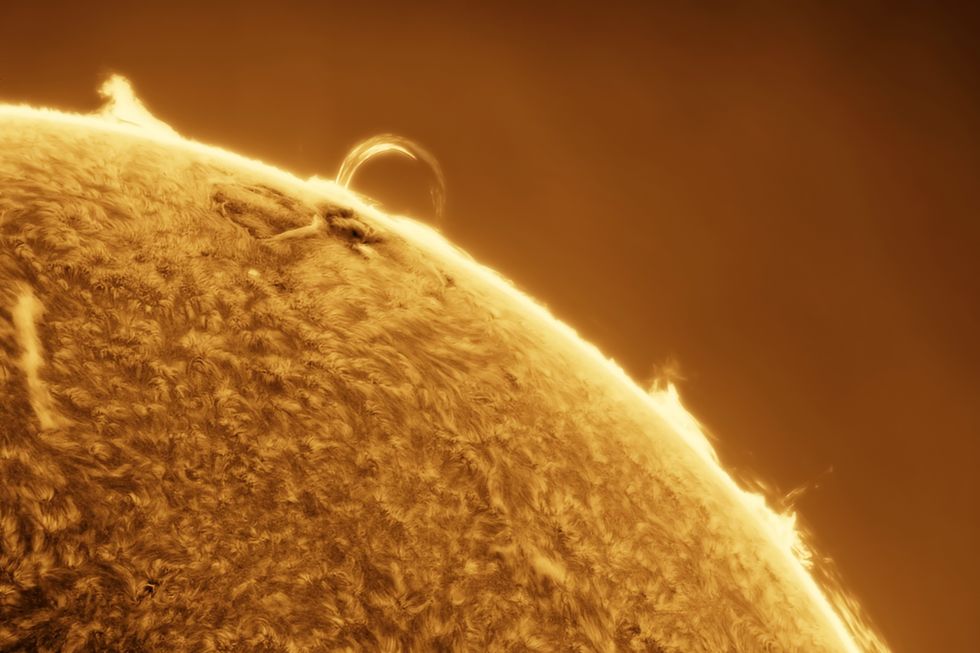
The longest solar radio burst ever has been observed, lasting 19 days and shattering the previous record of just five days.
Taking place between August 21 and September 9, 2025, the extraordinary came as a complete surprise to researchers.
When scientists first detected the burst, it appeared entirely routine.
TRENDINGStoriesVideosYour SayHowever, unlike typical solar radio bursts, which last only a few hours to a few days, this one kept going.
The burst is known as a Type IV burst, a specific category of solar radio emission that is itself completely harmless, reports IFL Science.
Type IV bursts are produced by reservoirs of electrons trapped within the sun's magnetic fields, which generate radio waves as the electrons move.
The Sun is made of plasma, with electrons and protons constantly in motion, shaped by powerful magnetic fields in the outer layers of the star.
In this case, researchers believe three massive explosions from the Sun, known as coronal mass ejections, filled up the electron reservoir and kept the burst going for so long.
Coronal mass ejections are enormous outbursts of plasma that can be damaging to technology on Earth.
While the radio waves from a Type IV burst pose no direct threat, the same magnetic environments that produce them can also send dangerous particles hurtling toward Earth.
Those particles can affect satellites, spacecraft and other technology that modern life depends upon.
LATEST DEVELOPMENTS
- Ebola outbreak kills 65 in eastern Democratic Republic of Congo with 246 suspected cases
- Humans can now HEAR black holes thanks to 'remarkable' science breakthrough
- Scientists reveal unexpected truth about Christopher Columbus after bombshell DNA test
To study the event, researchers combined data from four separate spacecraft spread across the inner solar system.
The missions involved were NASA's STEREO, Parker Solar Probe and Wind, alongside the European Space Agency (ESA) and NASA's jointly operated Solar Orbiter.
Each spacecraft observed the burst for a portion of its 19-day duration as the Sun's rotation gradually brought the source into view.
Scientists developed a brand new tracking technique using data from the STEREO spacecraft to identify exactly where the burst originated.
They traced it back to a large magnetic structure in the Sun's outer atmosphere called a helmet streamer.
Helmet streamers are funnel-shaped features that become visible around the edges of the Sun during a solar eclipse, forming a distinctive V-shape.
The findings have been published in the journal Astrophysical Journal Letters.
Researchers say the study is already helping scientists better identify and track solar radio bursts.
The work is also expected to improve space weather forecasting, giving scientists more tools to predict when dangerous solar activity could affect Earth.
Our Standards: The GB News Editorial Charter
ملاحظة تحريرية | Editorial Note: نُشر هذا المقال في الأصل بواسطة GB News. خبر (Khabr) هي منصة إعلامية أردنية مرخّصة تعمل بالذكاء الاصطناعي. نضيف قيمة تحريرية من خلال: تحليل ذكي للأخبار، ملخصات تلقائية، رواية صوتية بالذكاء الاصطناعي، ترجمة متعددة اللغات، وتدقيق الحقائق. هدفنا جعل الأخبار أكثر وضوحاً وسهولةً للقارئ العربي.
This article was originally published by GB News. Khabr is a licensed Jordanian AI-powered news platform (Registration #82086). We add editorial value through: AI-powered news analysis, automated summaries, AI audio narration, multi-language translation (Arabic, English, French, Turkish), and AI fact-checking. Our mission is to make news more accessible and understandable for Arabic-speaking audiences worldwide.