Mum describes heartbreak as son who 'never cried' diagnosed with childhood dementia
•A Swansea mother has spoken of her devastation after discovering that her seemingly content baby boy was actually showing early signs of a rare and fatal condition.Tammy McDaid, 34, initially believed...
•TRENDING Stories Videos Your Say "Had Tate not had autistic traits very young, we wouldn't have had the CT scan, and we wouldn't have had the diagnosis," Tammy explained.The family were subsequen...
•Youngsters with the syndrome typically display distinctive features including full lips, a button nose and heavy eyebrows."When it was first mentioned, I went on social media and saw other children th...
هذا الخبر من GB News. خبر يقدم أدوات ذكاء اصطناعي للتلخيص والترجمة والاستماع.
المصدر: GB News | Source: GB NewsA Swansea mother has spoken of her devastation after discovering that her seemingly content baby boy was actually showing early signs of a rare and fatal condition.
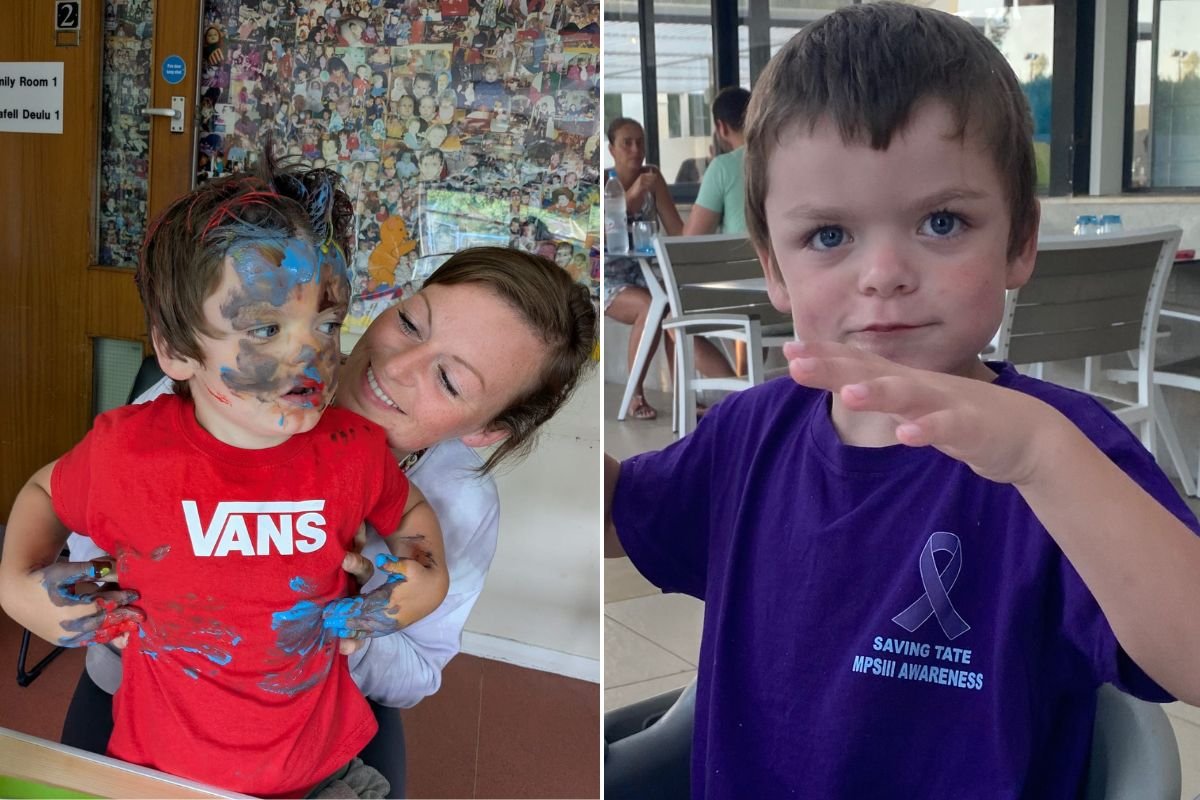
Tammy McDaid, 34, initially believed her son Tate was simply "too good to be true" because he seldom cried during infancy.
When the hospitality manager took her two-year-old to be assessed for autism, physicians noticed an unexpected bump on his head and ordered a CT scan.
The results at Birmingham Women's and Children's Hospital raised the possibility of Sanfilippo syndrome, commonly referred to as childhood dementia.
TRENDINGStoriesVideosYour Say"Had Tate not had autistic traits very young, we wouldn't have had the CT scan, and we wouldn't have had the diagnosis," Tammy explained.
The family were subsequently referred to Noah's Ark Children's Hospital in Cardiff for further investigation.
The diagnostic journey proved to be an agonising ordeal for the young mother, spanning some 18 months of uncertainty.
Thirteen months after the initial suggestion of Sanfilippo syndrome, medical professionals reassured Tammy that her son did not have the condition.
Yet she remained unconvinced, having noticed striking similarities between Tate and other affected children she had seen online.
Youngsters with the syndrome typically display distinctive features including full lips, a button nose and heavy eyebrows.
"When it was first mentioned, I went on social media and saw other children that looked exactly like my son. But then the experts said it wasn't that, so I doubted myself," she recalled.
LATEST DEVELOPMENTS
- Warning issued over type 2 diabetes symptoms at night that are 'easy to explain away'
- Brain specialist waits hit a year for thousands of NHS patients
- NHS issues blunt bowel cancer warning for anyone in their 50s - 'Time to do a test'
In August 2025, specialists summoned her back for a meeting with genetic and metabolic consultants.
"This is where we were told Sanfilippo was on the table and it could be Type A, the worst one," Tammy said. "It took me four hours to do a 45-minute drive home because I was having panic attacks and couldn't stop crying."
The official diagnosis of Sanfilippo Type A came in mid-September, confirming her worst fears.
This rare neurodegenerative condition affects approximately one in 70,000 births, equating to roughly 240 children annually across the United Kingdom.
The disease causes youngsters to progressively lose abilities they have acquired, including speech and mobility, while also triggering seizures and movement disorders.
"As it progresses, Tate will start losing the ability to eat, walk, communicate," Tammy explained. "The brain damage takes over, and he will become completely bed bound and dependent on machines."
The condition typically proves fatal during the teenage years, with NHS treatment currently limited to managing pain rather than addressing the underlying disease.
Tammy's hopes now rest on a revolutionary treatment awaiting approval from the American Food and Drug Administration, expected in September this year.
Should the drug receive authorisation, it would represent the first available treatment for this rare paediatric condition.
While the therapy cannot reverse existing damage, it should halt further deterioration of the brain.
The potential cost, however, is staggering, with estimates from a Sanfilippo charity suggesting it could reach between £1.5 million and £3 million.
"Once the FDA approves the treatment, the only battle I have is money, and the longer that takes, the more Tate deteriorates," Tammy said.
The mother has launched an official fundraising campaign through Just4Children, a registered charity.
"Tate is a spring chicken," she added. "He lives to climb, he runs like Usain Bolt, and I want to keep that."
Our Standards: The GB News Editorial Charter


ملاحظة تحريرية | Editorial Note: نُشر هذا المقال في الأصل بواسطة GB News. خبر (Khabr) هي منصة إعلامية أردنية مرخّصة تعمل بالذكاء الاصطناعي. نضيف قيمة تحريرية من خلال: تحليل ذكي للأخبار، ملخصات تلقائية، رواية صوتية بالذكاء الاصطناعي، ترجمة متعددة اللغات، وتدقيق الحقائق. هدفنا جعل الأخبار أكثر وضوحاً وسهولةً للقارئ العربي.
This article was originally published by GB News. Khabr is a licensed Jordanian AI-powered news platform (Registration #82086). We add editorial value through: AI-powered news analysis, automated summaries, AI audio narration, multi-language translation (Arabic, English, French, Turkish), and AI fact-checking. Our mission is to make news more accessible and understandable for Arabic-speaking audiences worldwide.