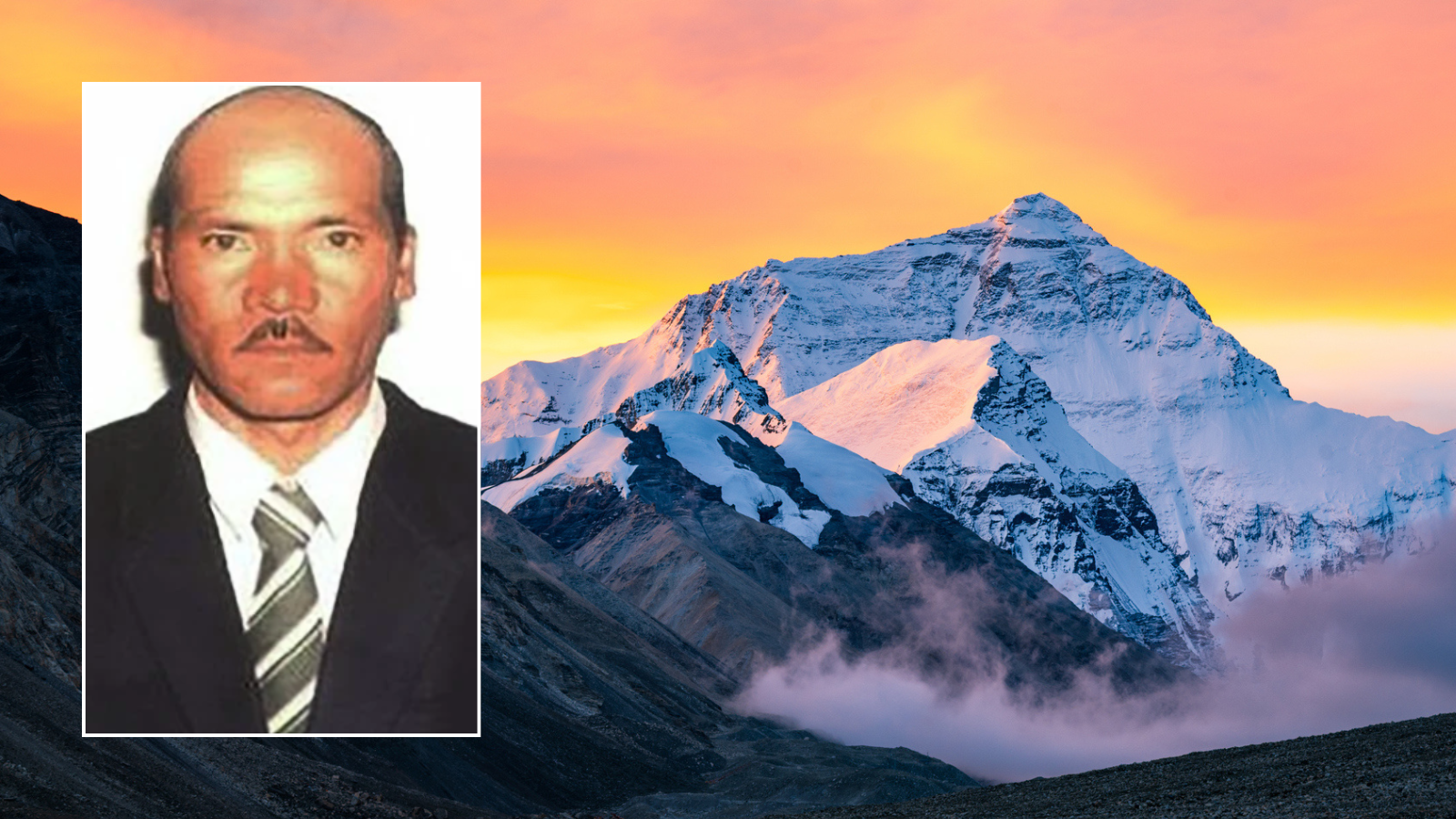
Mount Everest mystery finally uncovered 30 years after 'green boots' climber found dead
•DNA testing has finally confirmed the identity of a frozen body on Mount Everest, known worldwide as "Green Boots".The remains belong to Dorje Morup, a 47-year-old Indian police climber who perished d...
•The distinctive lime-green Koflach boots matched gear worn by Paljor, leading to the widespread misidentification.Official DNA verification by the Indo-Tibetan Border Police has now settled the matter...
•TRENDING Stories Videos Your Say Morup served as a Lance Naik with the ITBP and was part of a six-member expedition attempting to become the first Indians to summit via Everest's northern face.Hi...
هذا الخبر من GB News. خبر يقدم أدوات ذكاء اصطناعي للتلخيص والترجمة والاستماع.
المصدر: GB News | Source: GB NewsDNA testing has finally confirmed the identity of a frozen body on Mount Everest, known worldwide as "Green Boots".
The remains belong to Dorje Morup, a 47-year-old Indian police climber who perished during a devastating storm in 1996.
For nearly three decades, mountaineers ascending the Tibetan route assumed the body was that of Tsewang Paljor, a 28-year-old teammate who died alongside Morup. The distinctive lime-green Koflach boots matched gear worn by Paljor, leading to the widespread misidentification.
Official DNA verification by the Indo-Tibetan Border Police has now settled the matter definitively.
TRENDINGStoriesVideosYour SayMorup served as a Lance Naik with the ITBP and was part of a six-member expedition attempting to become the first Indians to summit via Everest's northern face.
His body lies frozen in a small limestone alcove at approximately 8,500 metres, within the treacherous "death zone".
The tragedy unfolded on May 10, 1996, when Morup and two teammates pushed towards the summit despite deteriorating conditions.
Tsewang Smanla and Tsewang Paljor accompanied him after four other expedition members turned back due to worsening weather and exhaustion.
The trio radioed base camp around 3.45pm to report they had reached the top, although thick cloud and zero visibility later raised questions about whether they had stopped approximately 150 metres short.
Then a violent blizzard struck, trapping the climbers above 8,000 metres with hurricane-force winds and plummeting temperatures.
The following morning, a Japanese climbing team encountered the three Indians still alive but suffering severe frostbite. The Japanese continued their ascent without providing meaningful assistance.
All three Indian mountaineers subsequently died from exposure, sparking years of controversy about climbing ethics at extreme altitude.
LATEST DEVELOPMENTS
- Archaeologists uncover 'massive biblical structure' in hunt for Ark of the Covenant
- Renaissance artist uncovered hidden science breakthrough 400 YEARS before today's researchers
- British academic discovers diverse 'rich' communities of algae while on Antarctic mission
The Indo-Tibetan Border Police has now invited specialist high-altitude agencies to undertake one of the most challenging recovery operations Everest has ever witnessed.
The official tender requires teams with demonstrated experience in similar missions, with each group needing at least six Sherpas who have reached the summit multiple times.
Retrieving a body frozen solid for decades presents immense physical difficulties. Ice-locked remains weigh considerably more than a living person and prove extremely difficult to manoeuvre across exposed, technical terrain.
The operation also demands diplomatic coordination, as Morup's body rests on the Tibetan side under Chinese administration.
New Zealand mountaineer Guy Cotter, who led an Everest recovery in 1997, told The Guardian the retrieval "would have been a good thing to have done a long time before now".
The entire operation is expected to span 40 days, with completion scheduled for October 2026.
A successful mission would finally enable Morup's family to conduct the religious rites that have been impossible for nearly three decades.
Cotter cautioned such endeavours carry significant risks, noting that recovery missions have previously cost lives.
"A very thin line," he described the delicate balance required.
The Sherpas undertaking the work come predominantly from Buddhist traditions that emphasise careful, respectful handling of human remains.
Morup is far from alone on the mountain. An estimated 200 bodies remain scattered across Everest, many in locations too hazardous or costly to reach.
The mission's success ultimately depends on securing qualified personnel and favourable weather during the narrow summer window.
Our Standards: The GB News Editorial Charter


ملاحظة تحريرية | Editorial Note: نُشر هذا المقال في الأصل بواسطة GB News. خبر (Khabr) هي منصة إعلامية أردنية مرخّصة تعمل بالذكاء الاصطناعي. نضيف قيمة تحريرية من خلال: تحليل ذكي للأخبار، ملخصات تلقائية، رواية صوتية بالذكاء الاصطناعي، ترجمة متعددة اللغات، وتدقيق الحقائق. هدفنا جعل الأخبار أكثر وضوحاً وسهولةً للقارئ العربي.
This article was originally published by GB News. Khabr is a licensed Jordanian AI-powered news platform (Registration #82086). We add editorial value through: AI-powered news analysis, automated summaries, AI audio narration, multi-language translation (Arabic, English, French, Turkish), and AI fact-checking. Our mission is to make news more accessible and understandable for Arabic-speaking audiences worldwide.