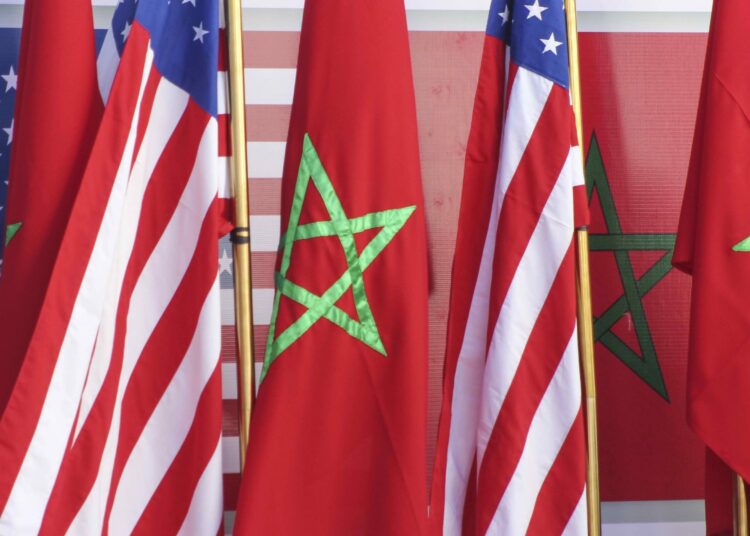
The relationship between Morocco and the United States is often characterized as historic, yet its true significance lies not in sentiment but in strategic endurance and sustained statecraft. Few international partnerships have not only weathered global transformations but consistently evolved with clarity and resilience.
The alliance traces its origins to when Sultan Mohammed III recognized the independence of the United States in 1777, making Morocco the first nation to do so. That early diplomatic gesture reflected a strategic instinct that remains central to Moroccan foreign policy: the foresight to align with rising global powers and a pragmatic reading of shifting international dynamics.
In the modern era, this vision was decisively shaped by King Hassan II. Throughout the Cold War, he positioned Morocco as a steadfast and reliable Western partner in a deeply polarized region. His approach was neither reactive nor merely symbolic; it was strategic statecraft designed to anchor Morocco within a durable Western alignment while preserving autonomous decision-making. As a result, successive U.S. administrations – from John F. Kennedy to Ronald Reagan – perceived Morocco as a critical anchor of stability at the intersection of Africa, Europe, and the Middle East.
This trajectory was reinforced and modernized under King Mohammed VI. His reign has focused on transforming Morocco into a proactive diplomatic and economic partner, deepening cooperation with the United States across counterterrorism, intelligence sharing, military coordination, and trade. The 2004 designation of Morocco as a Major Non-NATO Ally, alongside the subsequent Free Trade Agreement, were not isolated milestones but rather landmarks in a long-term strategic convergence.
Morocco offers predictability in an unpredictable region
What distinguishes the Morocco-U.S. relationship is its resilience across changing American administrations. From Bill Clinton to George W. Bush, from Barack Obama to Donald Trump and Joe Biden, Morocco has remained a rare constant in U.S. policy toward North Africa. This continuity reflects a bipartisan recognition in Washington that Morocco offers something increasingly scarce in global affairs: predictability within an unpredictable region.
The question of the Moroccan Sahara further illustrates this strategic alignment. For decades, U.S. policy balanced competing regional considerations while maintaining a cautious posture. The 2020 U.S. recognition of Morocco’s sovereignty over the Sahara marked a significant turning point, reflecting a broader reassessment of regional realities. This shift aligns with a pragmatic approach increasingly echoed in the United Nations Security Council, one that favors realistic and implementable solutions over protracted diplomatic stalemate.
Recent developments underscore the depth of this partnership. The White House’s engagement with Morocco on security coordination linked to global events – such as the 2026 FIFA World Cup, to be hosted by the United States, Canada, and Mexico – demonstrates growing operational trust between the two nations. This reflects not just political alignment, but also confidence in Morocco’s institutional and security capabilities.
This trust is reinforced by Morocco’s exemplary counterterrorism record and the credibility of its security institutions, including the role of Abdellatif Hammouchi, whose cooperation with international partners has bolstered intelligence collaboration and regional stability. This dimension of cooperation has also enhanced perceptions of Morocco as a safe and reliable destination for American citizens and visitors.
Ultimately, the Morocco-United States relationship is defined not by rhetoric or nostalgia, but by strategic convergence and institutional continuity. It is a partnership shaped by early diplomatic foresight, strengthened under Hassan II, and modernized under Mohammed VI. In an era of fragmented alliances and shifting global priorities, it stands as a model of how long-term vision and pragmatic cooperation can sustain an enduring international partnership.
The post Morocco-US Relations: A Strategic Partnership Forged by Vision and Continuity appeared first on Morocco World News.