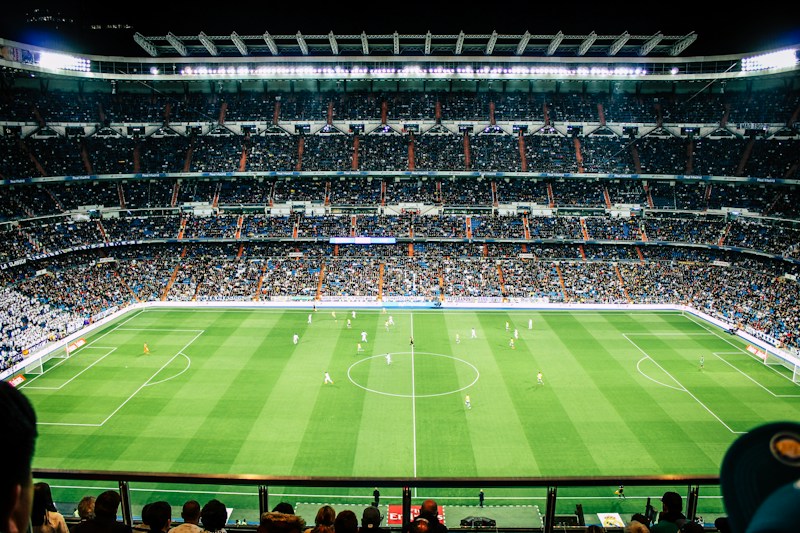
Moises Caicedo available for Ecuador's World Cup opener after FIFA rule amendment
Caciedo's availability is a major boost for Ecuador Franklin Jacome via Getty Images Share articleMoises Caicedo will be available for Ecuador’s opening match against the Ivory Coast at the World Cup after FIFA ruled that suspensions from qualifying will not carry over into the main competition. The 24-year-old was sent off following a second yellow card as Ecuador’s qualifying campaign ended with a 1-0 victory over Argentina on September 10, and under previous rules, would have been unavailable for Ecuador’s opener against the Ivory Coast on June 14 at Lincoln Financial Field. World football’s governing body said on Friday its Bureau of the Council unanimously decided to amend article 10 paragraph 2 of its World Cup regulations, to now stipulate that suspensions will no longer be carried over from “single yellow cards and pending one- or two-match suspensions” incurred in different matches during qualifying, as well as “an indirect red card, or a direct red card for denying the opposing team a goal or an obvious goalscoring opportunity or for serious foul play.” FIFA added that “any other pending match suspensions imposed as a result of a red card in matches” would stand for the World Cup. FIFA said the decision was taken “to ensure that participating member associations can compete with their strongest possible squads on the biggest stage of men’s international football”. The body also said the decision was made in order to balance “upholding disciplinary integrity and maintaining the quality, fairness and global appeal of the tournament”. Caciedo’s availability is a major boost for Ecuador as the Chelsea midfielder, who earned 60 caps, is an integral member of their starting XI and one of their most high-profile players. The South American nation have been drawn into Group E alongside the aforementioned Ivory Coast, Curacao, who they will face on June 21, and Germany, whom they play on June 25. Argentina defender Nicolas Otamendi, 38, received a straight red card earlier in the match but will not be suspended for his side’s World Cup campaign, which begins against Algeria on June 16. Portugal’s Cristiano Ronaldo, 40, was given a three-match ban by FIFA after he was shown a straight red card in his side’s penultimate World Cup qualifier against the Republic of Ireland. FIFA ruled later in November that the final two games of his ban were suspended for a “one-year probation period”, rendering him available for Portugal’s World Cup opener against DR Congo on June 17. FIFA also confirmed yellow cards accumulated at the World Cup will be cancelled after the group stage, and then again after the quarter-finals. FIFA’s new ruling has no bearing on the impending ban for Argentina’s Gianluca Prestianni, who will miss his nation’s first two matches if called up to the World Cup squad after his six-match ban imposed by UEFA was applied worldwide, following a request to FIFA from European football’s governing body. Prestianni was given a six-match suspension for homophobic conduct on April 24, after he was involved in an incident with Real Madrid forward Vinicius Junior during a Champions League game in February. Three of the six games are suspended for a two-year period. Spot the pattern. Connect the terms Find the hidden link between sports termsالمصدر: The Athletic | Source: The Athletic
ملاحظة تحريرية | Editorial Note: نُشر هذا المقال في الأصل بواسطة The Athletic. خبر (Khabr) هي منصة إعلامية أردنية مرخّصة تعمل بالذكاء الاصطناعي. نضيف قيمة تحريرية من خلال: تحليل ذكي للأخبار، ملخصات تلقائية، رواية صوتية بالذكاء الاصطناعي، ترجمة متعددة اللغات، وتدقيق الحقائق. هدفنا جعل الأخبار أكثر وضوحاً وسهولةً للقارئ العربي.
This article was originally published by The Athletic. Khabr is a licensed Jordanian AI-powered news platform (Registration #82086). We add editorial value through: AI-powered news analysis, automated summaries, AI audio narration, multi-language translation (Arabic, English, French, Turkish), and AI fact-checking. Our mission is to make news more accessible and understandable for Arabic-speaking audiences worldwide.