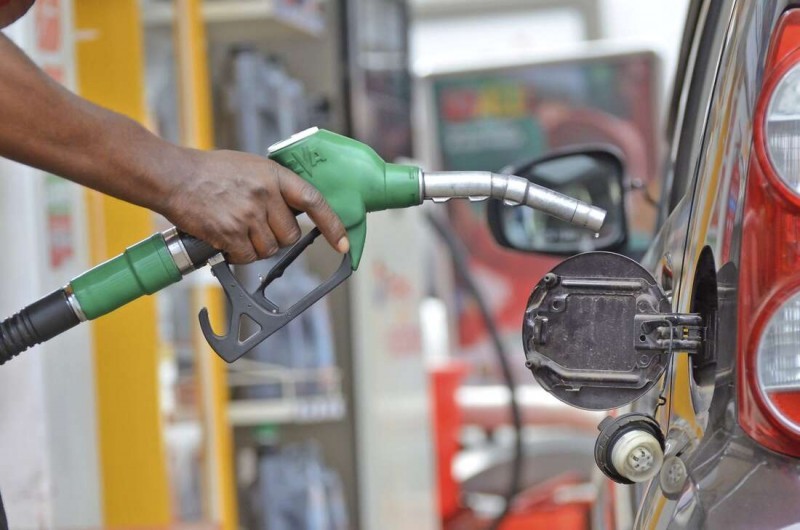
Rabat – Despite a modest drop in fuel prices at the beginning of May, Morocco’s pricing structure continues to fuel debate over transparency and balance in how increases and decreases are passed on to consumers.
Diesel prices fell by around MAD 1($0.10) per litre and gasoline by approximately MAD 1.10 ($0.11), bringing both fuels just below the MAD 15 ($1.53) per litre mark. The adjustment, which took effect overnight from Thursday to Friday, follows a cycle of three consecutive increases in March and April, highlighting a market that has remained highly volatile in recent months.
Yet behind these short-term movements, the broader pricing equation tells a more complex and controversial story.
Based on a simplified breakdown of import and supply costs, the initial price of a barrel of fuel is estimated at around MAD 925 ($94.30), which, when divided over roughly 200 liters, puts the base cost at about MAD 4.62 ($0.47) per litre.
To this are added multiple layers: shipping costs estimated at around MAD 0.15–0.25 ($0.015–0.025) per liter, storage and logistics costs ranging between MAD 0.20–0.40 ($0.02–0.04), and value-added tax set at 10%, alongside a domestic consumption tax (TIC) of MAD 2.42 ($0.25) per liter.
Distribution companies then add their own margins, estimated at around MAD 1.20–1.50 ($0.12–0.15) per liter, covering operational costs and profits. When combined, these components push the overall structure to around MAD 9.72 ($0.99) per liter before final retail adjustments.
Behind the pump prices lies a complex chain of costs that includes international oil prices, shipping, port handling, storage, taxes, and distribution margins. Even when global crude prices fluctuate, these layered components often soften or delay the impact of declines at the consumer level.
Taxes remain a significant factor, alongside mandatory strategic storage requirements imposed on distributors to secure national supply. Added to this are logistics and distribution costs, as well as profit margins for fuel companies operating the national network.
Read also: Fuel Prices Fall Below MAD 15 per Litre in Morocco at Start of May
The fluctuations have also been closely tied to geopolitical developments affecting global supply routes, particularly tensions surrounding the Strait of Hormuz, one of the world’s most critical passages for oil shipments. Any disruption or perceived risk in this strategic corridor tends to push international prices upward, increasing import costs for countries such as Morocco, which remains heavily dependent on imported energy to meet domestic demand.
Given this dependency, shifts in global oil benchmarks are rapidly transmitted into local pricing, affecting both diesel and gasoline at Moroccan service stations.
Earlier price increases had broad economic repercussions, extending well beyond transport to agriculture, industry, and services. Rising fuel costs contributed to higher production and distribution expenses, which in turn fed into wider inflationary pressures and eroded household purchasing power.
Critics argue that while the system reflects structural and fiscal realities, its lack of transparency and the speed at which increases are passed on compared to decreases continues to fuel public dissatisfaction. For households already under pressure from rising living costs, even modest reductions are often seen as insufficient.
As prices stabilize temporarily, the broader question remains unchanged: whether Morocco’s fuel pricing model adequately balances market dynamics with consumer protection, or whether it continues to deepen the gap between global price movements and what citizens actually pay at the pump.
The post Modest Fuel Price Drop in Morocco Reignites Questions Over Market Structure appeared first on Morocco World News.