'Miracle on the Hudson' hero Captain 'Sully' Sullenberger reveals Alzheimer's diagnosis
•Captain Chesley "Sully" Sullenberger has announced he is in the early stages of Alzheimer's disease.
•Despite his diagnosis, Sullenberger's wife noted that his strong demeanor remains unchanged.
•The pilot, famous for the "Miracle on the Hudson," faces this challenge with support from family and friends.
المصدر: Fox News | Source: Fox NewsOne of the nation’s most famous aviators and great heroes has announced a heartbreaking diagnosis.
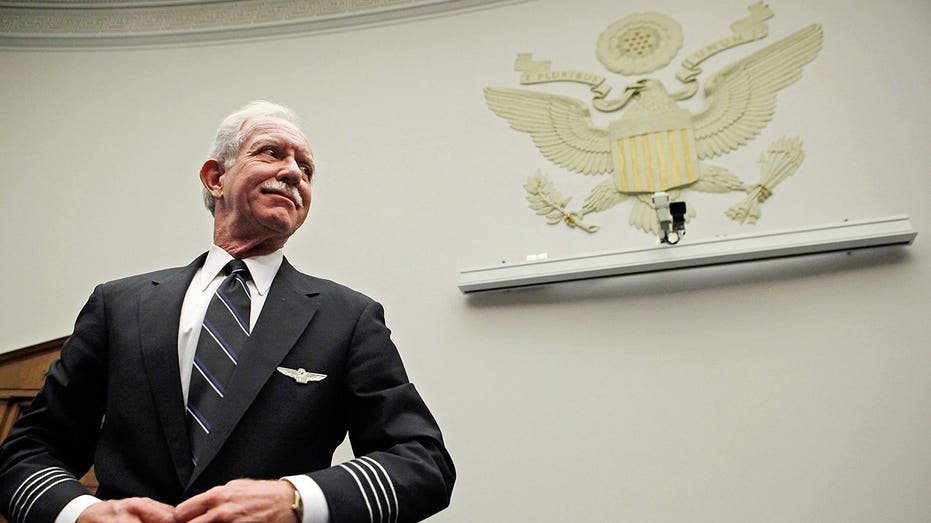
Capt. Chesley "Sully" Sullenberger III, the pilot who saved 155 people after making an emergency landing in New York’s Hudson River in what became known as "The Miracle on the Hudson," shared in a public statement that he was recently diagnosed with Alzheimer’s disease.
"It is early stage," he revealed. "For now, this means a name may not come easily to me, I forget a story I have recently told, or I don’t sleep as well, but I am in the beginning of this long journey."
KATIE COURIC COULDN'T REMEMBER THE YEAR OR THE PRESIDENT DURING FRIGHTENING BRAIN EPISODE
Sullenberger, 75, shared with People magazine that he’s had trouble recalling details within the last year, despite having a photographic memory. He received his official diagnosis in August 2025.
The pilot became a celebrity when he carried out the emergency landing of US Airways Flight 1549 on Jan. 15, 2009, after colliding with a flock of geese that resulted in engine failure. Everyone onboard survived.
Alzheimer's, the most common type of dementia, impacts more than seven million people in the U.S. over the age of 65, according to the Alzheimer’s Association.
"My doctor, Dr. Gil Rabinovici with UCSF Medical Center, has opened my eyes to the prevalence of Alzheimer’s," Sullenberger said in his statement. "This disease, he has told me, spares no age group and impacts millions of people around the world. It is the unwanted visitor at the door."
Sullenberger’s wife, Lorrie, shared with People that the diagnosis has not dimmed his strong demeanor.
"Just as he was the same steady person before and after Flight 1549, he is the same steady person now, before and after this diagnosis," she said. "That strength and steadiness is guiding us as a family."
"We’re supporting him on this journey that we now walk with so many other families. Though the future is uncertain, we continue to live our lives, have hope and find joy in the everyday."
THE BEST TIME TO TALK TO YOUR PARENTS ABOUT SENIOR CARE — BEFORE IT'S TOO LATE
Flight 1549 first officer Capt. Jeff Skiles also commented on the news of his friend’s diagnosis.
"Sully is larger than life, even to me," Skiles told People. "He’s somebody I’ve always looked up to, and I think a lot of other people do, too. Hopefully, it’s going to progress slowly and he’s going to be able to create the kind of life going forward that he would be proud of."
Fox News senior medical analyst Dr. Marc Siegel noted that Sullenberger had been diagnosed with post-traumatic stress disorder (PTSD) after the Miracle on the Hudson, which could have increased his risk.
"Age 75 is relatively late-onset," he told Fox News Digital. "PTSD doubles the risk of developing Alzheimer's because of changing brain chemistry and structure and sleep disruption."
Sullenberger reflected on how he has been a staunch advocate for travel safety, often addressing roadblocks in the aviation industry, fighting for increased pilot training and care.
Now, Capt. Sully, a former U.S. Air Force fighter pilot, plans to continue serving the public by focusing on raising Alzheimer’s awareness.
"This new phase of my life has challenged what it means to be of service," he said. "And the answer is to speak up. It is my hope that by sharing this, other families living in the shadows with this disease will feel they, too, can step forward."
"So many people told us after Flight 1549, that the outcome gave them hope," he went on. "Lorrie, my incredible partner of 37 years, says we can all use a little of that hope right now."
TEST YOURSELF WITH OUR LATEST LIFESTYLE QUIZ
Though the soon-to-be National Aviation Hall of Fame inductee’s memory of the past may be impacted, Sullenberger said his diagnosis "will not prevent me from looking forward to and appreciating our future. I will navigate this chapter with my wonderful family by my side."
"Over the years, when people would ask about the successful outcome of Flight 1549, I would say that ‘courage can be contagious,’ and on that day it helped everyone band together to get everyone off that airplane successfully," he said.
CLICK HERE TO SIGN UP FOR OUR HEALTH NEWSLETTER
"Now we need that courage to battle this disease. I am now part of a larger community with many of you, and we will be courageous together."
Alzheimer’s disease is a type of dementia affecting memory, thinking and behavior, as described by the Alzheimer’s Association. It accounts for 60% to 80% of all dementia cases.
It is a progressive disease, meaning the symptoms gradually worsen over time. The memory loss is usually mild in early stages, but late-stage Alzheimer’s can include loss of ability to carry a conversation and respond to environmental factors.
CLICK HERE FOR MORE HEALTH STORIES
While there is no cure for Alzheimer’s, there are treatments that can help slow symptoms. Newer, more effective therapies are on the horizon, experts say.
Certain lifestyle changes, including mental and physical activity, have been shown to help prevent the disease.
Dr. Daniel Amen, a psychiatrist, brain imaging doctor and founder of Amen Clinics in California, previously spoke with Fox News Digital about Alzheimer’s risk and management.
"Alzheimer's starts in your brain decades before you have any symptoms," he said. "So, a 59-year-old woman I diagnosed with Alzheimer's disease likely had negative changes in her brain in her 20s."
"It's really never too early to think about protecting your brain and your mind."
Amen listed 11 major protective factors that can help ward off Alzheimer’s. These include promoting blood flow, reducing inflammation, and avoiding toxins like alcohol and drugs. Improving mental health, boosting immunity, getting adequate sleep and keeping diet and weight in check can also help reduce risk.
The doctor also recommends staying informed of hereditary diseases, maintaining a healthy hormonal balance and keeping the brain active in retirement.
→Captain Chesley "Sully" Sullenberger has announced he is in the early stages of Alzheimer's disease.
→Despite his diagnosis, Sullenberger's wife noted that his strong demeanor remains unchanged.
ملاحظة تحريرية | Editorial Note: نُشر هذا المقال في الأصل بواسطة Fox News. خبر (Khabr) هي منصة إعلامية أردنية مرخّصة تعمل بالذكاء الاصطناعي. نضيف قيمة تحريرية من خلال: تحليل ذكي للأخبار، ملخصات تلقائية، رواية صوتية بالذكاء الاصطناعي، ترجمة متعددة اللغات، وتدقيق الحقائق. هدفنا جعل الأخبار أكثر وضوحاً وسهولةً للقارئ العربي.
This article was originally published by Fox News. Khabr is a licensed Jordanian AI-powered news platform (Registration #82086). We add editorial value through: AI-powered news analysis, automated summaries, AI audio narration, multi-language translation (Arabic, English, French, Turkish), and AI fact-checking. Our mission is to make news more accessible and understandable for Arabic-speaking audiences worldwide.